Jecheon's Yakchaerak
 KoreaNorth Chungcheong · Jecheon
Jecheon's Yakchaerak: How Korea's Herb Town Put Medicinal Plants on the Dinner Table
Jecheon has been known for its herb trade since the Joseon era. Its food brand Yakchaerak brings those herbs to everyday meals. Here is what the name means, the four herbal seasonings behind it, what to order and how to join the city's food tour.
Jecheon, a City of Herbs
About 70 percent of Jecheon, in northern Chungcheongbuk-do, is forest, so medicinal herbs have always been easy to find here. Its central location made it a crossroads for people and goods, and the herb trade thrived; Jecheon is described as one of the three great herbal medicine markets of the Joseon era. Daegu is always on that list, while the third is given as Jeonju or Yeongju depending on the source. Jecheon is still an herb town. There is an herb market in the city, and a 2025 report says about 30 percent of Korea's medicinal herbs are grown here and about 80 percent of the hwanggi (astragalus root) on the market comes from Jecheon. The city has made herbs part of its identity, hosting events such as an international expo on traditional Korean medicine and natural products, and Yakchaerak is that identity carried over into food.
What Yakchaerak Means
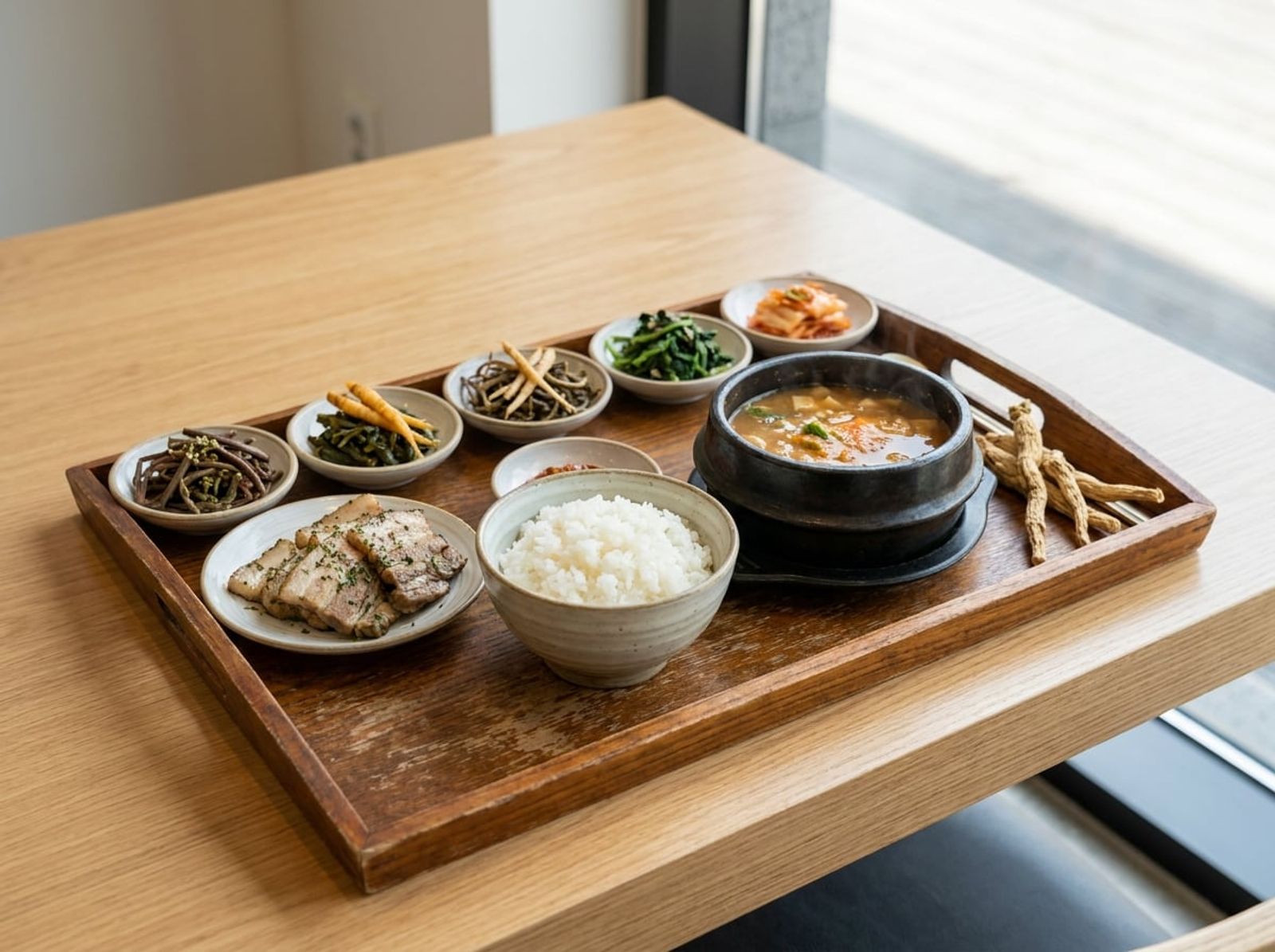
Yakchaerak (藥菜樂) is a citywide food brand that Jecheon launched around 2008 or 2009 (sources differ). Read character by character, it means eating vegetables (菜) that act as medicine (藥) brings joy (樂), and the idea was to bring the town's herbal heritage to the table. Yakchaerak is not the name of a single restaurant but a label shared by local restaurants that use the herbal seasonings developed by the city. So menus vary from place to place: Korean set meals, herbal boiled chicken, bibimbap, leaf-wrap rice and more. What they have in common is Jecheon-grown herbs and mountain greens, and four basic herb-infused seasonings. Look for the Yakchaerak sign outside to find them.
The Four Herbal Seasonings
At the heart of Yakchaerak are four basic seasonings called yaknyeom, a play on yangnyeom (seasoning) using the character for medicine. According to reports, they are soy sauce aged with hwanggi, gochujang made with herbs including angelica root (danggwi), Jecheon's signature herb, a vinegar-based pesto-style sauce, and a vinegared salt made with mulberry leaves. Herbs may sound bitter, but yaknyeom is more about a subtle fragrance that does not overpower the food. You notice a mellow, earthy note of hwanggi in the soy sauce and the sweet aroma of angelica in the gochujang, so first-timers usually find it easy to enjoy. Order bibimbap and it will often come with this herbal gochujang.
What to Order
Dishes you will often see at Yakchaerak restaurants include Yakchaerak bibimbap with herbal gochujang, the Yakchaerak hanjeongsik set meal built around seasonal vegetables and herbs, hanbang baeksuk (chicken slowly simmered with medicinal herbs), and ssambap set meals where herb leaves are served as wraps. There are also herbal and detox dishes and stone-pot set meals using tofu, mushrooms, gondre thistle, hwanggi, mulberry leaves and angelica. If it is your first time, start with bibimbap or a ssambap set, which let you taste the herbs gently. With a group, sharing a hanbang baeksuk is a good idea, but it is slow-cooked, so calling ahead to order can save you a long wait. Around Uirimji Reservoir you can easily find restaurants serving bibimbap with mulberry leaves.
The Gastro Tour and Travel Tips
For an efficient taste of Yakchaerak, consider Jecheon City's Gastro Tour. Launched in 2020, it is a walking food tour of about two hours, stopping at several restaurants downtown or around Uirimji Reservoir to sample street food and meal dishes in small portions. Inspired by Jecheon's history as one of Joseon's great herb markets, some courses include herbal cuisine. Book through the Jecheon City Tour website for groups of 4 to 15; courses and prices can change, so check before booking. Many visitors pair the food with Uirimji, a reservoir said to date back to the ancient Samhan period, and Cheongpung Lake. Stopping at the herb market on the way home to buy hwanggi or herbal tea is a fitting Jecheon finish. Herbs may not suit everyone's constitution or interact with medication, though, so consult a professional if you plan to brew them as remedies.