Chungju Apples
 KoreaNorth Chungcheong · Chungju
Chungju Apples: A Century of Fruit in the City Where Even the Street Trees Bear Apples
Drive into Chungju in autumn and you may see red apples hanging from the street trees. From the first recorded orchard in 1912 to the mountain-basin climate, the apple-tree avenues and seasonal travel tips, here is the story of Chungju apples.
Chungju, Apple Country
Chungju, in northern Chungcheongbuk-do, sits on the Namhan River and Chungju Lake, and if you ask for its signature crop, the answer is apples. Chungju apples received geographical indication status in 2006, which means the name Chungju apple may be used only for apples grown in Chungju to set standards. Apples are now grown throughout the city, with about 2,000 hectares planted in varieties such as Fuji. The city promotes them under an integrated farm-product brand built around its mascot, and Chungju apples are sold to the United States, Taiwan and Vietnam. A Money Today report even said Chungju apples are the only Korean apples exported to the US. Many Koreans associate apples with Gyeongsangbuk-do first, but Chungju is an apple region with just as long a history.
The First Apple Trees of 1912
Chungju's apple history goes back more than a century. According to Money Today, apple growing in Chungju is known to have begun around 1912, when about 50 early-ripening apple trees were planted in what is now the Jihyeon-dong area. Chungju began to make its name as apple country after the 1920s, when Gukgwang (Ralls Janet), the leading variety of the time, was planted on a large scale. Gukgwang was once among the most common apples in Korea but has since been replaced by newer varieties such as Fuji. Inside the Chungju apple experiment station in Dongnyang-myeon is the Chungju Fruit Science Museum, described as Korea's first, where you can see a timeline of 100 years of apple growing in Chungju and apple products.
Why Chungju Apples Taste So Good
Chungju lies in a basin ringed by mountains. According to city data, the average annual temperature is 11.2°C and annual sunshine is 2,405 hours, with 1,677 hours falling in the April–November growing season alone. Rainfall from April to October is relatively low at 1,300 mm or less, and the soil is described as well-drained and suited to apples. The basin also brings strong daytime sun and sharp nighttime drops in temperature, a wide daily range that is known to benefit apples by helping sugars build up in the fruit and deepening the color. Local growers agree that the soil and climate suit apples, and Chungju apples are praised for a good balance of sweetness and acidity and a crisp bite.
Avenues of Apple Trees
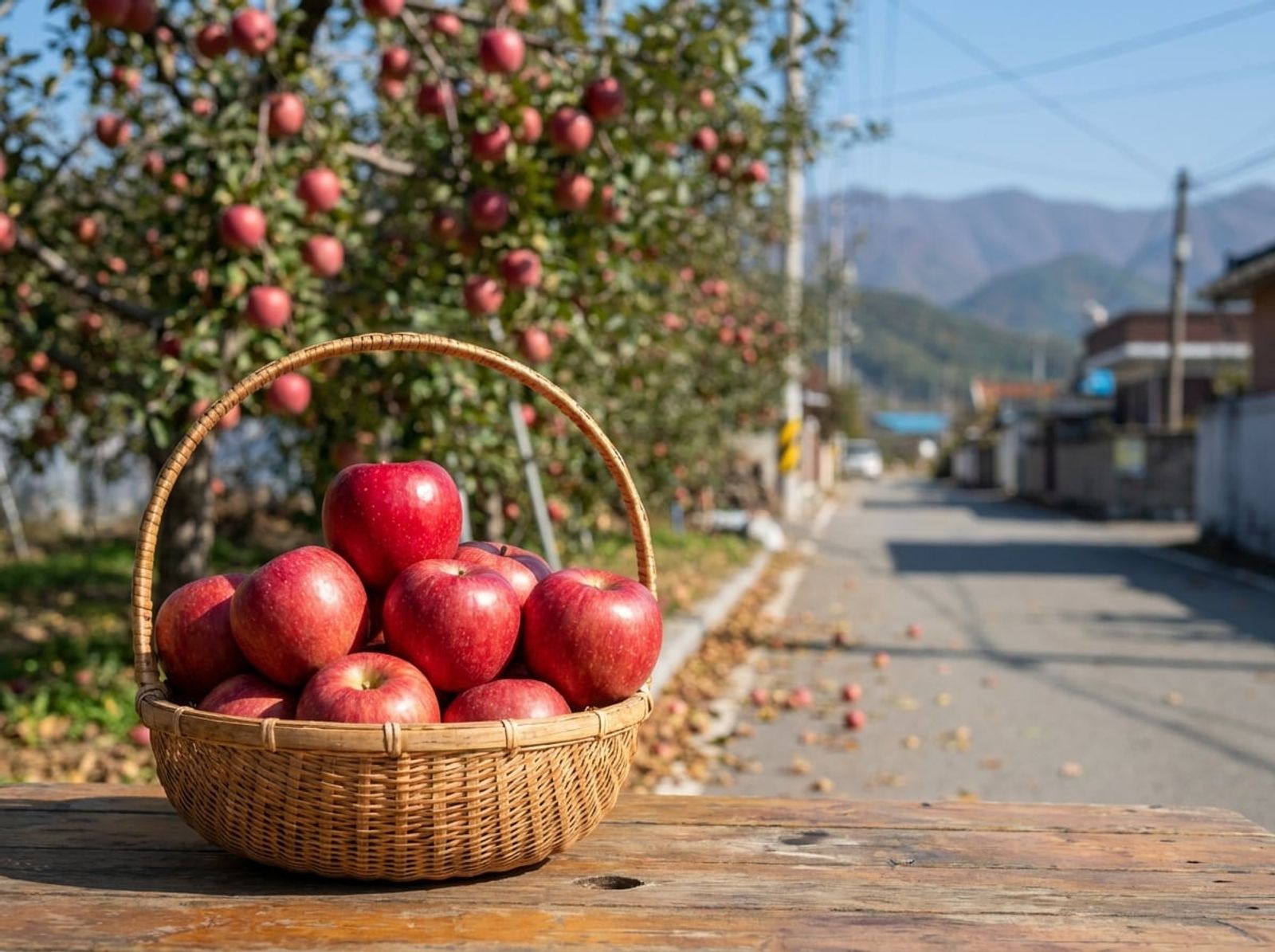
One of Chungju's signature sights is its apple-tree street planting. The city began planting apple trees along its roads in 1997, about 850 of them, and in autumn you can see branches heavy with ripe red apples along roads such as Dalcheon-ro leading into the city. You will meet them on the gateway road that enters via Dalcheon from the Cheongju and Seoul directions. The street-tree apples are not free for the taking. A 2009 report described volunteer caretakers guarding the fruit and, once it was ripe, announcing a date to hand it out to residents and visitors; harvested apples have also gone to welfare facilities. Please enjoy them with your eyes rather than picking them. In 2005 Chungju even donated 120 apple trees to Seoul, which were planted along Cheonggyecheon stream.
When to Go
Autumn is the best time to enjoy Chungju apples. Early varieties appear in summer, but main varieties such as Fuji generally come into season from around October. By then the street-tree apples are red, and new-season apples are easy to buy at farm-product stores, markets and roadside stands. Chungju has also held an apple festival since the late 1990s; dates and venues change annually, so check the Chungju City website before you go. There is plenty to pair with apples: Tangeumdae, where the Silla-era musician Ureuk is said to have played the gayageum, the waterways of the Namhan River and Chungju Lake, and the Suanbo hot springs. When you take apples home, keep them somewhere cool or in the fridge, and bag them separately, since the ethylene gas apples give off makes other fruit and vegetables ripen faster.