Hoengseong Hanwoo
 KoreaGangwon · Hoengseong
Hoengseong Hanwoo: From a Famous Cattle-Market Town to Korea's Best-Known Beef Brand, and How to Eat It
Hoengseong in Gangwon has long been home to a major cattle market and is now one of Korea's most famous sources of hanwoo, native Korean beef. Here is how Hoengseong beef became a brand, how it reached summit banquet tables and how to enjoy it at the market and the autumn festival.
What Hanwoo Is, and Why Hoengseong
Hanwoo is Korea's native cattle breed, sold under its own name to distinguish it from imported beef. Korea has many regional hanwoo brands, and Hoengseong is among the first names most Koreans think of. The market is a big part of why. A town market in Hoengseong already appears in a reference work compiled in 1770, and during the Japanese colonial era it was so large it was called "the biggest market outside Dongdaemun." Its cattle market in particular was long counted among the four biggest in the country, so cattle were traded and eaten here in large numbers.
Becoming a Brand
Hoengseong beef earned its name through years of local effort. Reports say the county began a serious push to make its hanwoo a premium brand in 1995, and that the herd descends from a 700 kg Hoengseong bull that was champion at the 1984 national livestock fair. According to the local livestock cooperative, bull calves are castrated at four to six months and raised under a premium beef program, then aged four to six days in a chilling room after slaughter. International events are often cited as the turning point. Hoengseong hanwoo was chosen as an official banquet ingredient for the 2005 APEC summit in Busan and the 2010 G20 summit in Seoul. Thanks to that record, the Hoengseong name now works almost like a guarantee on holiday beef gift sets.
How Hanwoo Is Eaten
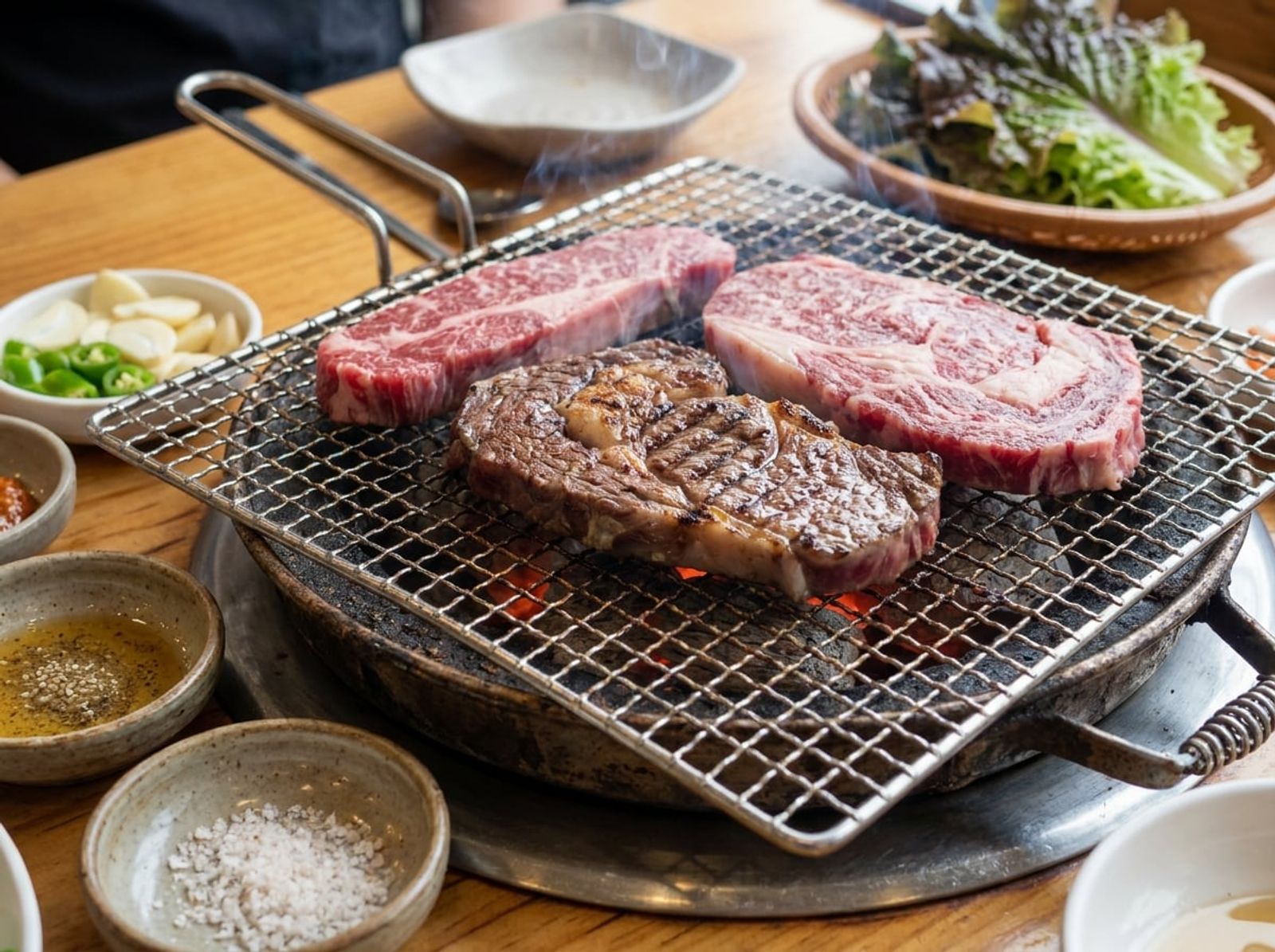
The most common way to eat hanwoo is grilling it yourself over charcoal or a tabletop grill. Cuts like sirloin, tenderloin and striploin are dipped lightly in salt or sesame-oil salt to taste the beef itself, while thin or fatty cuts such as rib finger or brisket (chadolbagi) are seared fast and eaten in lettuce wraps or with scallion salad. The better the beef, the less you should cook it, so eat it as soon as the surface browns. Beyond grilling there are beef tartare (yukhoe), short rib soup and rice soups, and in a Korean barbecue restaurant the meal commonly ends with doenjang stew or cold noodles. Checking the menu's unit (usually per 100 g or per serving) and grade labels makes ordering easier.
Buying It at the Market
The traditional market in Hoengseong-eup is known as a strip of beef restaurants, but it is really a general market selling produce from Hoengseong and across Gangwon. It took its current name in 2013; the permanent shops open year-round, and on dates ending in 1 and 6 a five-day market adds some 130 street stalls around it. On Saturdays that don't fall on market days, a weekend market is held. A 2020 report said hanwoo here could be bought 20 to 30 percent cheaper than at the cooperative's own shops, though prices change, so treat that as a rough guide. Besides beef, deodeok, a mountain root, is one of Hoengseong's main specialties, good to try or take home. If you plan to carry beef home, bring a cooler or ask for insulated packing.
In Autumn: The Hoengseong Hanwoo Festival
Autumn is when Hoengseong beef feels most like a celebration. The Hoengseong Hanwoo Festival began in 2004 and is held around October each year on the riverside grounds of the Seomgang River in Hoengseong-eup. The highlight is the grilling area, where you pick and buy quality-guaranteed Hoengseong beef on site and grill it right away; for the 2025 festival, reports described a grilling zone with about 2,000 seats. With live performances while you cook, it draws many families. During the festival, seats fill fast at weekend lunch and dinner, so go early or pick a weekday. Dates and programs change each year, so check the official announcement before you go. Outside festival time there are plenty of hanwoo restaurants around Hoengseong-eup all year, and the town is a handy stop on the way from Seoul to Gangneung or Pyeongchang.