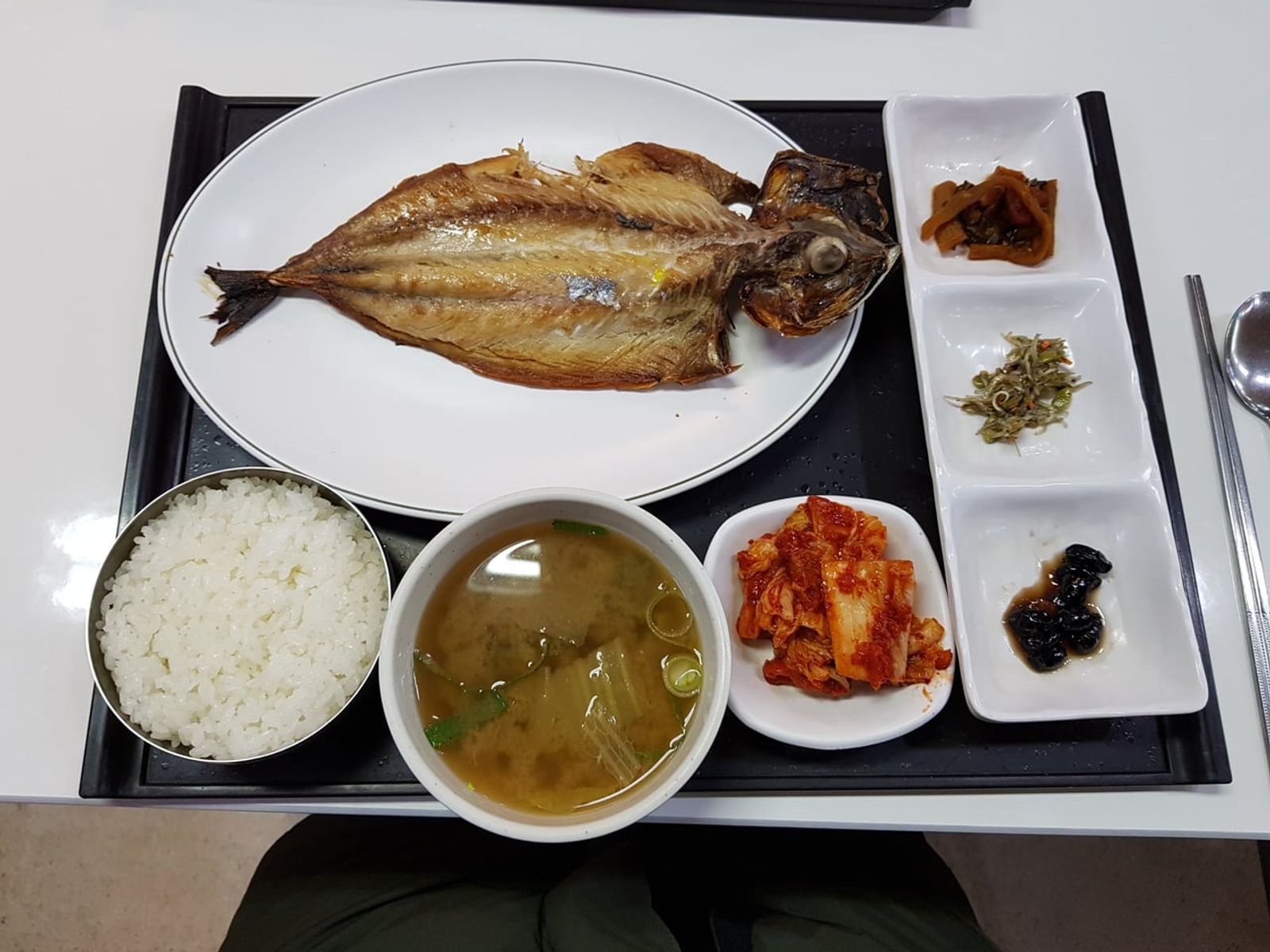
A grilled Andong salted mackerel set at the Andong rest area · Photo: 아라 / CC BY-SA 4.0 (Wikimedia Commons)
 KoreaNorth Gyeongsang · Andong
Andong Salted Mackerel: How a City Far From the Sea Became Famous for Fish
Andong sits deep in the mountains, far from any coast, yet for many Koreans mackerel means Andong. Here is how a two-day journey from the East Sea, a handful of salt and the skill of the salters created the flavor, how it became a vacuum-packed specialty, and how to grill it well.
A Mountain City and a Sea Fish
Andong in North Gyeongsang Province is an inland city ringed by mountains. Before refrigerated transport, fresh seafood was very hard to come by here. Even so, when Koreans hear the name Andong today, many think of salted mackerel right after Hahoe Folk Village. Gangodeungeo is mackerel split open, gutted and seasoned with salt. Nobody knows exactly when people started eating it, but it is believed to date back to the Joseon era, when traveling peddlers carried fish inland from Yeongdeok on the east coast. Octopus and dombaegi (shark meat) for Andong's ancestral rites also arrived salted, and mackerel followed the same path for the same reason.
Two Days on the Road and a Handful of Salt
Mackerel landed off Yeonghae and Yeongdeok was loaded onto porters' backs and ox carts and hauled about 100 km over mountain roads, a trip said to take two days. Korean Wikipedia describes the route as running from Yeongdeok through Cheongsong and a market in Imdong-myeon before reaching Andong. On such a long trip the guts spoil first, so the fish were split, gutted and salted along the way, with salt that is said to have come up the Nakdong River by boat. Sun and wind dried the fish a little as it traveled and the salt worked its way in, so by the time it reached the market it smelled less fishy and tasted richer. Locals say that this combination of time and salt is where gangodeungeo's distinctive flavor comes from.
The Salter's Touch: Heavy Salt and Light Salt
The person who decides how good the fish will be is the ganjaebi, the salter. The key skill is spreading salt evenly, never too much and never too little. According to Korean press reports, there were two methods until the 1960s. In autumn, when mackerel was plentiful, fish were layered with salt in large crocks for a heavy cure called dokganjaebi. Eolganjaebi was in-season mackerel salted lightly. In Andong, fresh mackerel with just the right amount of salt is still sometimes called eolganjaebi. As freezer storage spread in the 1970s, salted mackerel gradually became less salty. Today the process is usually described as several separate steps of cleaning, salting and aging.
From Market Fish to Vacuum-Packed Specialty
For a long time salted mackerel was less a product than an everyday side dish for Andong families. That changed in the late 1990s. According to Korean Wikipedia, amid local revival campaigns after the 1997 financial crisis, the first company making vacuum-packed Andong salted mackerel was founded in August 1999, and Queen Elizabeth II's visit to Andong that same year drew attention to the region's food. After that, factory production with hygienic packaging replaced the old methods, and the fish spread to supermarkets and TV shopping channels nationwide. Press reports say it has been exported to some 20 countries, including Japan and the United States. The fun part is that the mackerel still comes from the sea; what Andong contributes, then as now, is the salting.
How to Grill It and Where to Try It
Grilling is the classic way to eat gangodeungeo, though it is also braised and steamed. A tip often repeated in Korean media: soak the fish in rice-rinsing water for 10 to 20 minutes, then grill it skin side first over low heat. This is said to tame the fishiness and keep the flesh tender. It is already salted, so skip extra salt. Restaurants in downtown Andong commonly serve grilled salted mackerel as a set with rice, soup and side dishes, and highway rest-stop restaurants near Andong sell it too. Vacuum-packed fillets make an easy souvenir. After touring Hahoe Village or Woryeonggyo Bridge, a salted mackerel lunch lets you taste the whole story of a sea fish in a city without a sea.