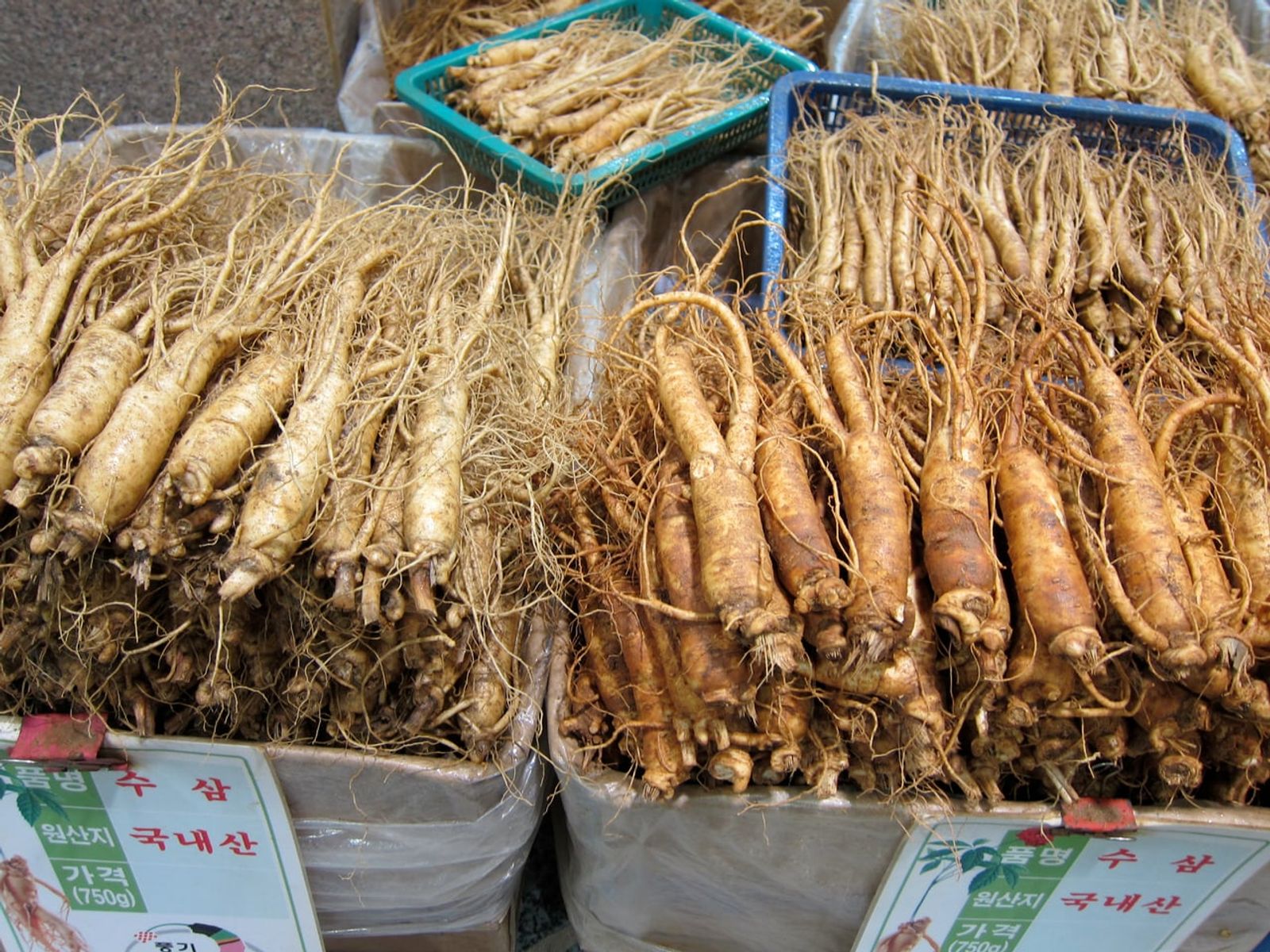
Fresh ginseng piled up at a Punggi market · Photo: Eugene Kim / CC BY 2.5 (Wikimedia Commons)
 KoreaNorth Gyeongsang · Yeongju
Punggi Ginseng: Where Korea's Cultivated Ginseng Story Begins
Punggi-eup in Yeongju is recorded as the first place in Korea where ginseng was cultivated. Here is the story of magistrate Ju Se-bung in 1541, why Punggi ginseng is described as firm, how to choose fresh ginseng, and the autumn ginseng festival and its snacks.
1541: A Magistrate Plants Wild Ginseng Seeds
Punggi-eup in Yeongju is a small town on the southern slopes of Sobaeksan Mountain, and it is recorded as the first place in Korea where ginseng was cultivated. According to local press and Yeongju officials, Ju Se-bung, appointed magistrate of Punggi in 1541 (the 36th year of King Jungjong), collected seeds from wild mountain ginseng and began growing ginseng in fields. Ju is also well known for founding Baegundong Seowon, Korea's first private Confucian academy, now called Sosu Seowon. Punggi has a site called Gaesamteo honoring the place he first planted ginseng, where a memorial rite is held every year during the ginseng festival.
Why Punggi Ginseng Is Called Firm
Descriptions of Punggi ginseng often say the root is firm. Yeongju points to its natural setting: the city lies around 36.5 degrees north, gets more than seven hours of sunshine a day on average, and has a large daily temperature swing of 11.9°C. Ginseng grown in these conditions is said to be dense and to keep well, making it suited to processing into products such as red ginseng. Local articles also often repeat a claim that Punggi ginseng contains 36 types of active saponins compared with 19 in American and 15 in Chinese ginseng. These comparisons come from local officials, though, so it is better to read them as regional pride than as settled science. What is certain is that nearly 500 years of cultivation have made Punggi one of Korea's best-known ginseng towns.
How to Choose Fresh Ginseng
Punggi sells a lot of susam, fresh ginseng straight from the field. Korea's Rural Development Administration offers these tips: a clear scar where the stem was cut at the head means it is fresh, and plenty of fine rootlets is a good sign. The body should feel firm and springy when pressed, and you should avoid roots with peeling or split skin. The RDA also notes that ginseng dug between September and November contains at least 10% more total saponins than roots harvested earlier, one more reason autumn is a good time to buy in Punggi. Fresh ginseng holds a lot of moisture and doesn't keep long, so if you buy some on the road, wrap it in newspaper, refrigerate it and use it soon. At home people steep it in honey, brew it as tea and more.
The Punggi Ginseng Festival in Autumn
In autumn, when ginseng is harvested, Punggi takes on a festival mood. The Punggi Ginseng Festival is held every October around Punggi-eup and marked its 20th edition in 2017. Opening events include the memorial rite at Gaesamteo and a parade re-enacting magistrate Ju Se-bung's procession, followed by ginseng digging, a contest for the best roots, a ginseng-peeling competition and ginseng auctions. The festival has an unusual quality guarantee. Since 2016, Punggi ginseng has been dug up in public, sealed with serial numbers, and opened in front of buyers on festival day before being sold, a way to avoid doubts about origin. According to reports, the 2026 festival ran from October 3 to 11 along Namwoncheon Stream and in Punggi Ginseng Park in Punggi-eup. Dates change every year, so check Yeongju's announcements.
Ginseng Treats to Try in Punggi
Even if you aren't buying roots, Punggi has plenty of easy ways to taste ginseng. During the festival, samples reportedly include deep-fried ginseng, ginseng doughnuts, insam-jeonggwa (ginseng candied in honey or sugar) and ginseng tea. Whole fried ginseng in particular, with its bittersweet aroma and crunchy batter, is an easy first taste for newcomers. Around the ginseng market near Punggi Station, shops sell fresh ginseng, red ginseng, dried white ginseng and ginseng products. Buseoksa Temple, Sosu Seowon and Sobaeksan Mountain are all nearby, so the market makes a good stop on a day trip. When choosing roots, check firmness and rootlets as described above, and if you tell the seller what you plan to use it for, they may help you pick the right age.