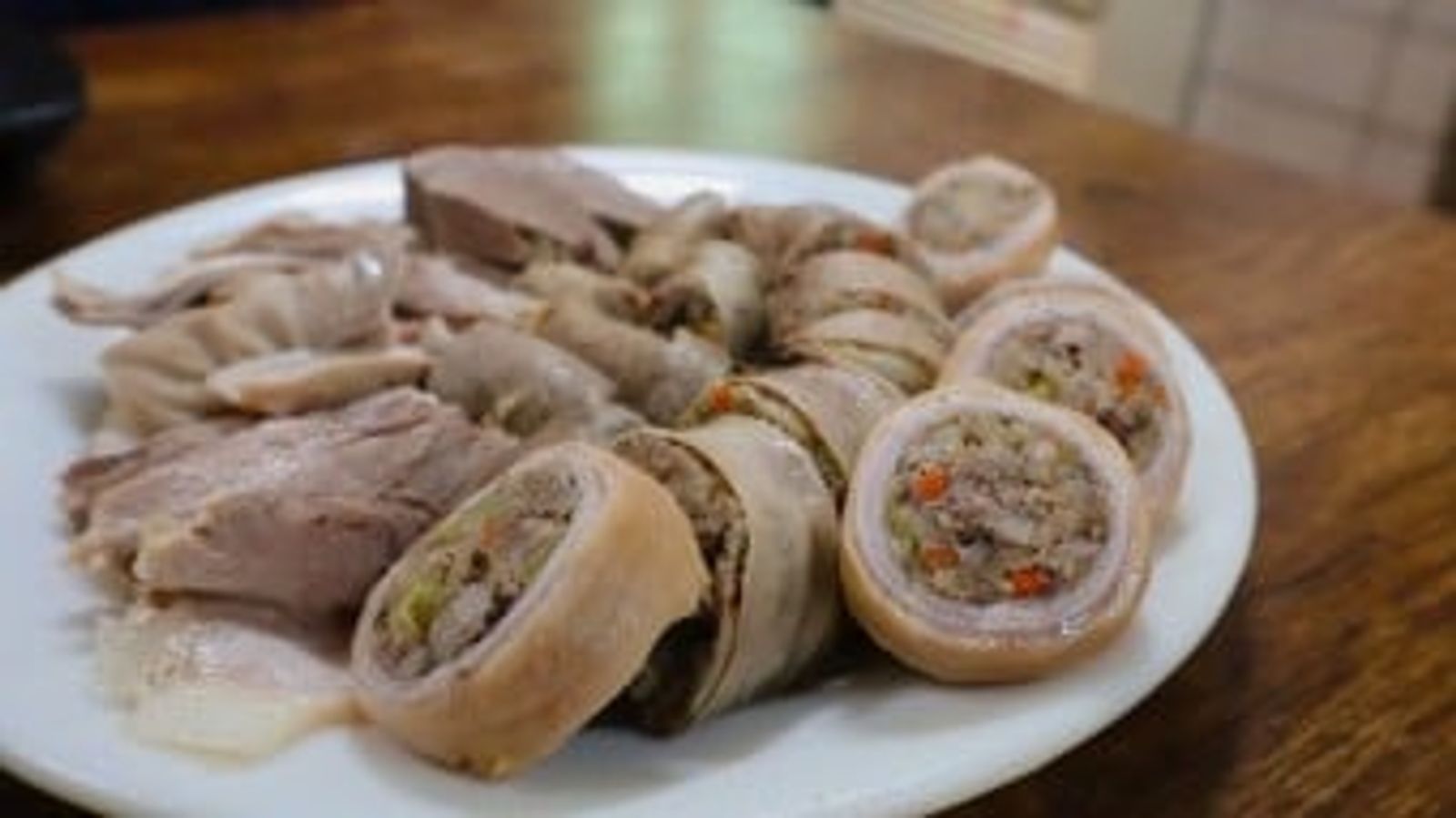
Baegam sundae packed with vegetables and meat · Photo: KMJ0521 / CC BY-SA 4.0 (Wikimedia Commons)
 KoreaGyeonggi · Yongin
Baegam Sundae: The Vegetable-Packed Blood Sausage of Yongin's Old Market Town
Baegam in Yongin's Cheoin-gu was a market town known for its big cattle market and five-day market, and that is where Baegam sundae grew up. Here is how this chunky, vegetable-filled sundae came about, where the sundae street is, and how to time your visit to market day.
Baegam, a Market Town on the Road to Hanyang
Baegam-myeon sits in the southeast of Yongin's Cheoin-gu, between Anseong and Icheon. It belonged to Juksan county in the Joseon era and became part of Yongin in the 1914 administrative reshuffle, and the 'Baegwan market' mentioned in old county records is thought to be today's Baegam market. The market here is a traditional five-day market dating back to the mid-Joseon period. Its cattle market was especially famous, said to be among the biggest in the country, and the market became known for pigs, cattle and rice. After liberation it still drew clothing, fish, makgeolli and fruit traders, but industrialization ended the cattle trade, and almost no trace of it remains today.
Sundae to Fill Hungry Market-Goers
Baegam sundae is said to have started as food made and sold at the market to fill the stomachs of traders and farmers. Word of the sundae and sundae soup spread among the merchants gathered at the cattle market, and the name travelled with them. No one records the exact year it began, but the sundae street still has restaurants that opened in the 1940s and 1960s. According to a travel magazine report, several of the shops share the same roots: a restaurant run by brothers of one family was carried on by their wives and daughters-in-law. At first they also sold steamed buns and various Korean dishes, but as sundae alone began drawing crowds they became sundae specialists. Baegam sundae is often named one of Korea's 'big three' sundae, alongside Byeongcheon sundae from Cheonan and Abai sundae from Sokcho.
Vegetables and Meat Instead of Glass Noodles
The sundae you see at snack bars is usually packed with glass noodles. Baegam sundae is different: pork small intestine is stuffed generously with offal meat and vegetables. Many shops use plenty of cabbage and chives, so a cut slice shows flecks of green and orange, and the taste is clean rather than greasy. Another hallmark is that the filling is not minced fine but cut into chunky pieces, so it has a real bite. Each shop still makes its own sundae, so the vegetable ratio and seasoning vary. Many first-timers find it strange compared with noodle sundae, then quickly find themselves reaching for more.
How to Order: Sundae Soup and a Mixed Platter
To get the full Baegam experience, order both sundae soup and a mixed sundae platter. One report even recommends ordering both if you are dining alone. The platter usually includes sundae, pressed head meat, osori-gamtu (pork stomach) and liver, and even the small size is generous, ideal with a glass of makgeolli. Many shops make a rich, heavy soup by simmering pork bones for hours and loading it with sundae and head meat. Season it with salted shrimp and eat it with kimchi and radish kimchi. Each shop on the sundae street makes its own sundae, so the soup and sausage taste a little different everywhere, and local shop owners say comparing them over several visits is half the fun.
Visiting the Sundae Street on Market Day
Baegam's sundae restaurants cluster in the town center around the market. The township and merchants' association have dressed it up as the 'Traditional Baegam Sundae Street', and after being picked for a Gyeonggi tourism alley program in 2023 it gained murals and sculptures. Plenty of places in Seoul hang 'Baegam Sundae' signs, but tasting each shop's own sundae on the home street is something else. Try to time your trip to market day: the five-day market runs on dates ending in 1 and 6 (the 1st, 6th, 11th, 16th, 21st and 26th), when stalls spill into the alleys. Go in the morning or early afternoon to see it at its liveliest. Around the 15th day of the seventh lunar month, the Baekjung Festival, revived by residents in 2011, is held around the market, so check the dates and catch it if you can.