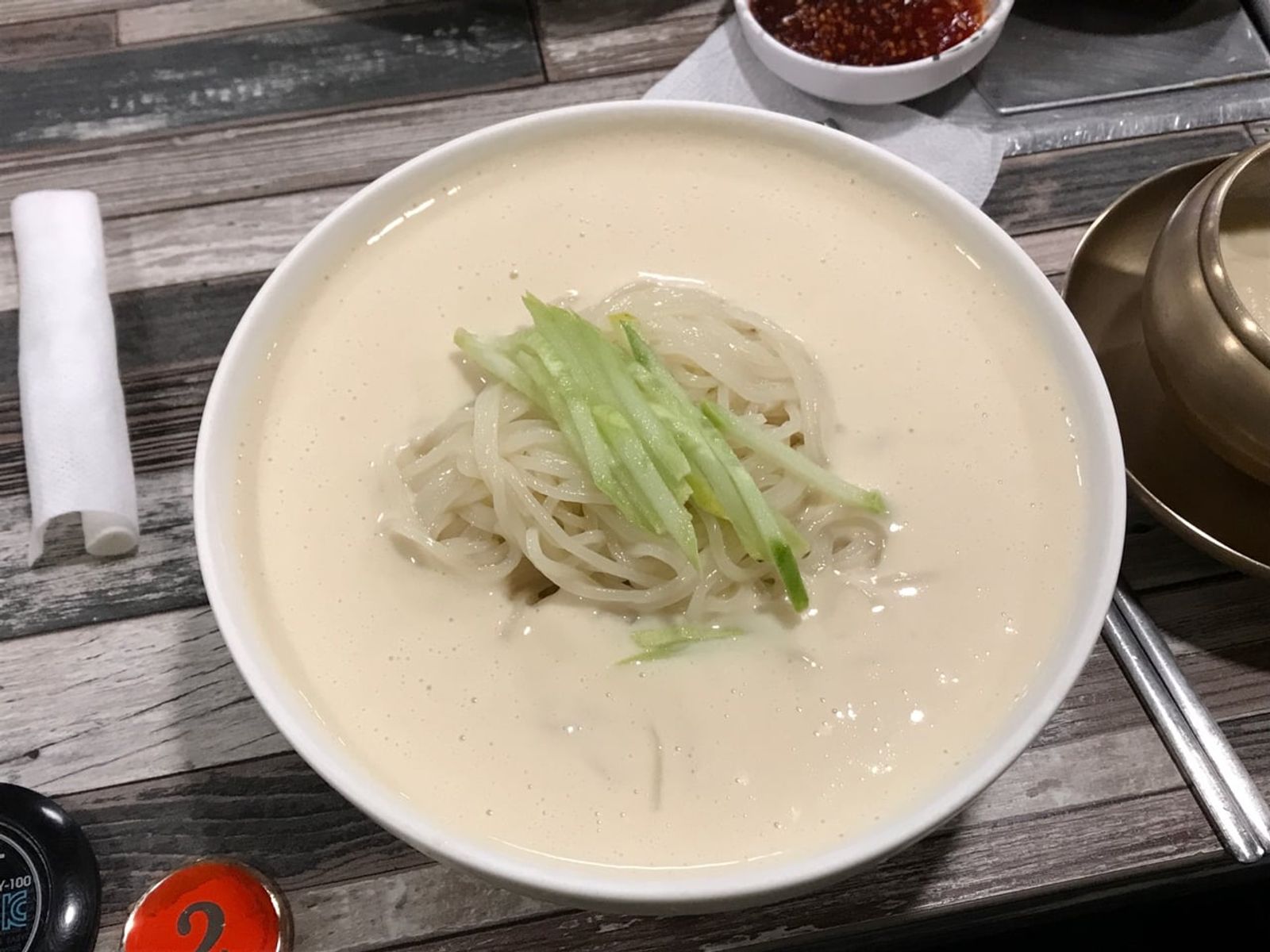
Kongguksu made with Paju Jangdan beans · Photo: Hyeonyoung Lee 21 / CC BY-SA 4.0 (Wikimedia Commons)
 KoreaGyeonggi · Paju
Paju Jangdan Beans: Korea's Heritage Soybean Revived Beyond the Civilian Control Line
Paju's Jangdan beans come from the land that produced Korea's first recommended soybean variety in 1913. Here is how farming cut off by the Korean War came back in villages inside the Civilian Control Line, how to taste the beans as kongguksu, tofu and doenjang, and what to expect at the November bean festival.
Where Jangdan Is, and Why Beans
The 'Jangdan' in Jangdan beans comes from Jangdan County, which existed until the Korean War. The area is now part of Paju, and the Jangdan villages where the beans grow are three settlements inside the Civilian Control Line: Tongilchon in Baegyeon-ri, Daeseong-dong in Josan-ri and Haemaru-chon in Dongpa-ri. According to Gyeonggi Province, Jangdan's rice, beans and ginseng were known as the 'three whites of Jangdan' and sent as tribute to the king, and its beans were regarded as the finest since the Joseon era. The soil here drains well, and wide swings between day and night temperatures let the beans ripen firm and nutty. Northern Gyeonggi, centered on Paju and Yeoncheon, still grows just over half (about 53%) of the province's soybeans.
1913: Jangdan Baekmok, Korea's First Recommended Soybean
One reason Jangdan beans are prized is their pedigree. Jangdan Baekmok, chosen in 1913 as Korea's first recommended soybean variety, was selected from the native beans of this very area. It is also listed on Slow Food's Ark of Taste, a catalogue of endangered food heritage. Jangdan Baekmok was followed in 1969 by Gwanggyo, and new varieties for soy pastes and tofu have kept coming since. Today the name Jangdan beans covers several varieties from this lineage. Good Jangdan beans are large, plump and evenly colored.
Cut Off by War, Restarted in Tongilchon
The Korean War broke the chain. The fields where the beans grew ended up inside the Civilian Control Line, off-limits to civilians, so farming stopped and the name was largely forgotten. Beans returned in 1973, when the Tongilchon (Unification Village) project created settlements inside the line around Jangdan. Residents moved in and began growing beans again on about 100 hectares, and as new varieties spread, the beans became a Paju specialty. In the 1990s Paju City began building the Jangdan bean brand to boost the local economy, with a festival at its heart. The village fields still require entry procedures, so most travelers meet Jangdan beans at the festival and in restaurants in town.
Kongguksu, Tofu and Doenjang: How to Taste Jangdan Beans
Jangdan beans are enjoyed mostly in dishes made from them rather than eaten whole. In summer the classic is kongguksu: noodles in a chilled soup of boiled, finely ground beans. You season the thick, creamy broth with a little salt yourself, and the better the beans, the clearer the nutty flavor. Tofu dishes are good all year. Tofu restaurants around Paju serve fresh soft tofu, firm tofu, tofu hot pot and bean-curd-dreg stew. Jangdan bean doenjang made from fermented meju blocks and cheonggukjang are also well known, and Gyeonggi Province says the beans give deep flavor to doenjang, gochujang and tofu. Some restaurants put out roasted beans as a side dish, a simple way to taste the bean itself.
The November Festival and Where to Eat
The best way to meet Jangdan beans in one place is the Paju Jangdan Bean Festival, held around November each year. It began in Tongilchon in 1997 and, as it grew, moved to the Imjingak area from 2001. You can buy new-season beans, try making tofu and browse bean-dish food stalls, and in 2020 it was named one of Gyeonggi's representative tourism festivals. Dates shift slightly each year, so check Paju City's notices. Outside festival time, look for tofu and kongguksu restaurants around Paju. Inside the Tongil-dongsan tourist zone in Tanhyeon-myeon, a Jangdan bean experience and promotion center opened in 2021, where you can buy Jangdan bean pastes and products and try bean dishes. It is close to Heyri Art Village, so the two make an easy pairing.