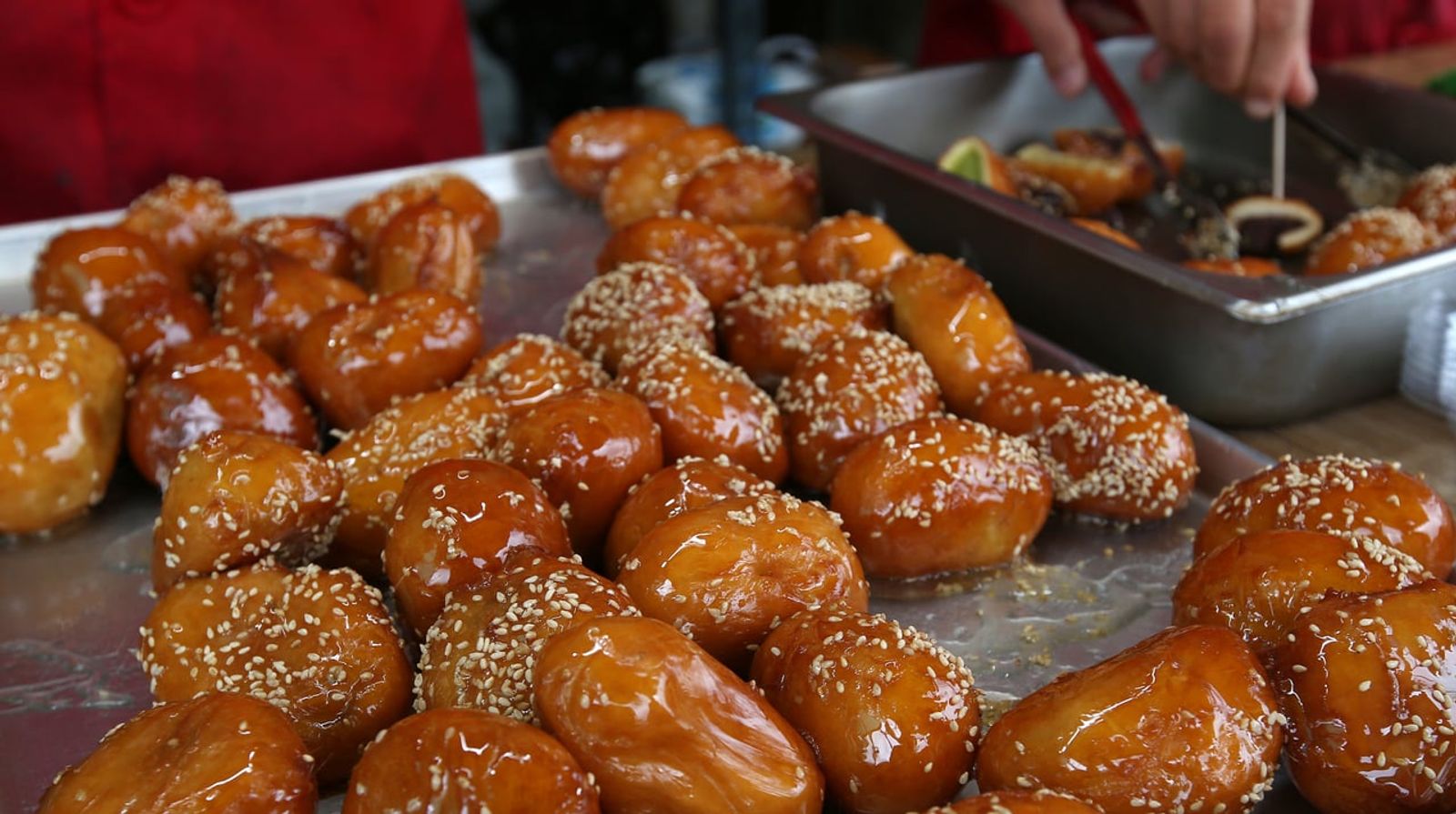
Kkulppang being glazed in Tongyeong · Photo: KOREA.NET / CC BY-SA 2.0 (Wikimedia Commons)
 KoreaSouth Gyeongsang · Tongyeong
Tongyeong Kkulppang: The Honey Bread With No Honey, Born in a Port Town After the War
Walk around Gangguan harbor in Tongyeong and you will see travelers carrying boxes of small, glossy buns. Here is where kkulppang, a fried red-bean bun coated in syrup, came from, how it is made and what to know before you buy.
Honey Bread Without Honey
Despite the name, kkulppang (literally "honey bread") is not brushed with honey. The basic version is a round bun filled with sweet red-bean paste, wrapped in a wheat dough, deep-fried, then coated generously in malt syrup and sprinkled with sesame seeds. The story goes that although it is coated in syrup rather than real honey, it got its name because it tastes as sweet as honey. Bite into one and the outside is sticky and shiny, while the inside is packed with dense red-bean paste. Think of something between a doughnut and a sweet rice cake. Today it counts as one of Tongyeong's signature foods, and many visitors take home whole boxes as souvenirs.
Born in a Hungry Port After the Korean War
Kkulppang is not an old court dish or a traditional rice cake. According to Korean press reports, it is a Tongyeong-style bread that local bakeries began making right after the Korean War, a treat for people craving something sweet at a time when food was scarce. The shop now regarded as the original has roots in that era too. A baker who had worked at a Tongyeong bakery reportedly started making buns around 1963 from rationed flour, selling them from a corner of his wife's fruit stall to help with household costs. At first it was just a stand without a sign. Some sources also describe kkulppang as a snack that fishermen liked because it kept well even in the warm southern climate.
Fried, Glazed, Then Sprinkled With Sesame
The method is simple. Sweetened red-bean paste is rolled into balls, wrapped in a thin wheat dough and deep-fried. The fried buns are then rolled in warm malt syrup to coat them and finished with sesame seeds. The syrup forms a glossy shell that keeps the outside from drying out quickly. Shops differ in the thickness of the dough, how oily it is and how thick the syrup is. Some say the secret is frying so that the oil does not soak into the dough, giving a cleaner taste. Besides the classic red bean, you will now find versions filled with sweet potato or beans, and many people choose a mixed box to try several flavors.
How TV and Parcel Delivery Made It Famous
For a long time kkulppang was simply a neighborhood snack loved by locals, especially students. National fame came fairly recently. A 2013 report says that in 1999 a TV program introduced it as one of Tongyeong's signature foods alongside Chungmu gimbap and oyster rice, and its popularity grew sharply as online shopping and parcel delivery spread. Once the name caught on, kkulppang shops multiplied around the Gangguan Cultural Plaza by the inner harbor, and walking around with a bag of buns became a travel trend. With so many imitators, some locals complained that not all of them tasted like the original, but it also means you can now compare and pick from many different styles.
Tips for Buying Kkulppang at Gangguan
Kkulppang shops cluster in the area linking Gangguan harbor and Jungang Market, so it is easy to stop by while visiting the Dongpirang mural village or the turtle ship replicas at Gangguan. Most shops sell boxes of several buns rather than single ones, and you can choose all red bean or a mix of flavors. The syrup coating gets on your fingers, so bring wet wipes if you plan to eat while walking. Each bun is heavier and sweeter than it looks, and pairs well with strong coffee or tea. If you are buying gifts, ask the shop how to store them and how long they keep, since recipes and shelf life vary from shop to shop. Flavors differ a little everywhere, so buying a few from two or three shops to compare is part of the fun.