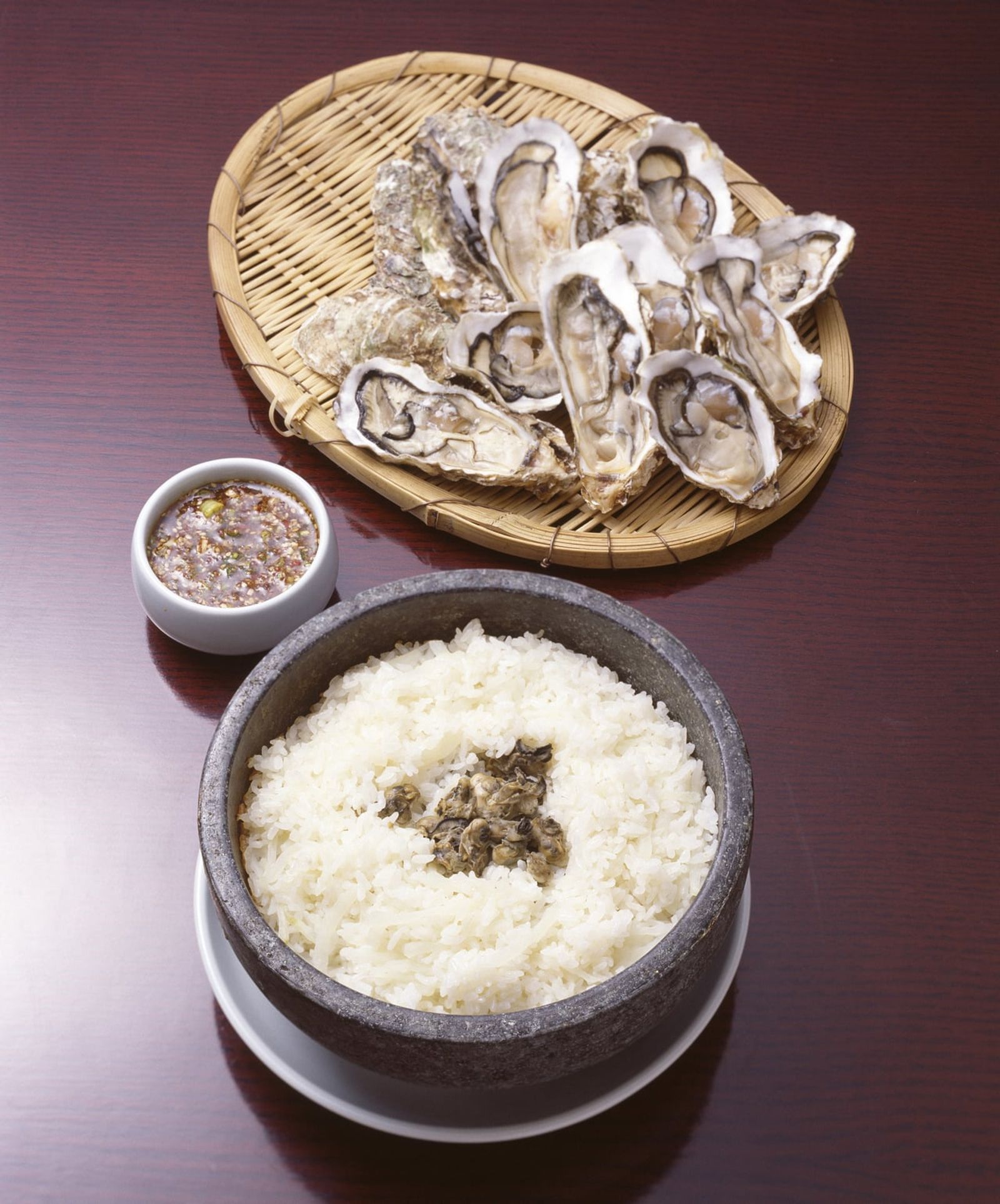
Oyster rice in a stone pot with fresh oysters · Photo: wizdata / CC0 (Wikimedia Commons)
 KoreaSouth Gyeongsang · Tongyeong
Tongyeong Oysters: Korea's Oyster Capital and Its Hanging-Line Farms
When kimchi-making season arrives each winter, much of Korea's new-season oyster crop comes from Tongyeong. Here is how oysters are grown on hanging lines in the calm bays of the south coast, who shucks them before dawn, and how to enjoy them in Tongyeong.
The Calm Bays Behind Korea's Oyster Capital
Korea is reported to be the world's second-largest oyster producer after China, and most of its oysters come from the south coast. A 2024 report says fresh oysters from the south coast, grown mainly around Tongyeong, Goseong, Geoje, Masan and Yeosu, make up 80 to 90 percent of Korea's fresh oyster output, and about 70 percent of the new-season oysters that appear during kimchi-making season come from Tongyeong. These oysters are shipped nationwide through the hanging-culture oyster fisheries cooperative based in Tongyeong. The reason lies in the shape of the sea. With many islands and a jagged coastline, the south coast has plenty of sheltered inner bays where waves and currents are gentle. In Tongyeong, oyster farms dot the waters, including those off Dosan, and the first auction of each season is held at the cooperative's market in Yongnam.
Hanging-Line Farming, Explained
Tongyeong oysters are grown by the hanging method. Long lines carrying oysters are suspended from floats and frames so the oysters grow in open water without touching the seabed. According to press reports, hanging-line oyster farming began around 1960, after which the center of Korean oyster production shifted from the west coast to the south. Here is how it works. During the June-to-August spawning season, oyster shells strung on ropes are lowered into the sea, and drifting oyster larvae settle on them. This is called seeding. The seeded lines are then hung at the farms, and the oysters are harvested in their second winter. Those rows of white floats you see across the bays are oyster fields.
Shucking Sheds and the Hands That Work Before Dawn
Oysters hauled from the sea go to a bakshinjang, a shucking shed. In oyster season many local residents head to the sheds early in the morning and spend the day opening oysters with a single oyster knife. Reports describe workers cutting the muscle that holds the oyster to its shell, a spot they call the "eye," to pop the meat out. Pay is often calculated by the weight of shucked oysters rather than by the hour. The shucked oysters are washed several times before going to auction. A 2004 report counted some 270 shucking sheds in Tongyeong alone. The white mounds of oyster shells along the winter shoreline are traces of this work.
When to Eat Them: From the Autumn First Auction to Spring
Each autumn the Tongyeong fresh oyster season opens with the first auction of the year. According to reports, shipments usually run from October to as late as the end of April, and the shucking sheds operate mainly in that period. Oysters are said to plump up as the water gets colder, so many people consider midwinter the best time, which is also why oysters are a popular kimchi ingredient. Summer is spawning season, and fresh oyster shipments stop. If you visit Tongyeong in summer, you are better off with processed oyster products or other seafood. Harvests vary with sea conditions such as water temperature, and there have been years when mass oyster die-offs cut production sharply. For a winter trip, it is worth checking that year's oyster news before you go.
How to Eat Oysters in Tongyeong
The simplest way is raw. A light dip in chili-vinegar sauce or a soy-based sauce lets the taste of the sea come through. Among cooked dishes, gulbap, rice cooked with oysters, is the classic; it was introduced in that 1999 TV program as a Tongyeong signature dish alongside kkulppang and Chungmu gimbap. It is usually mixed with a seasoned soy sauce. Oyster pancakes, oyster soup and grilled oysters are also common on winter tables. A local side dish is mulgul-jeot, lightly fermented salted oysters with radish. Tongyeong's version is said to use scraped radish, while neighboring Geoje uses julienned radish. If raw oysters worry you, simply choose a cooked dish. Around Jungang Market you can also see shucked oysters on sale in season.