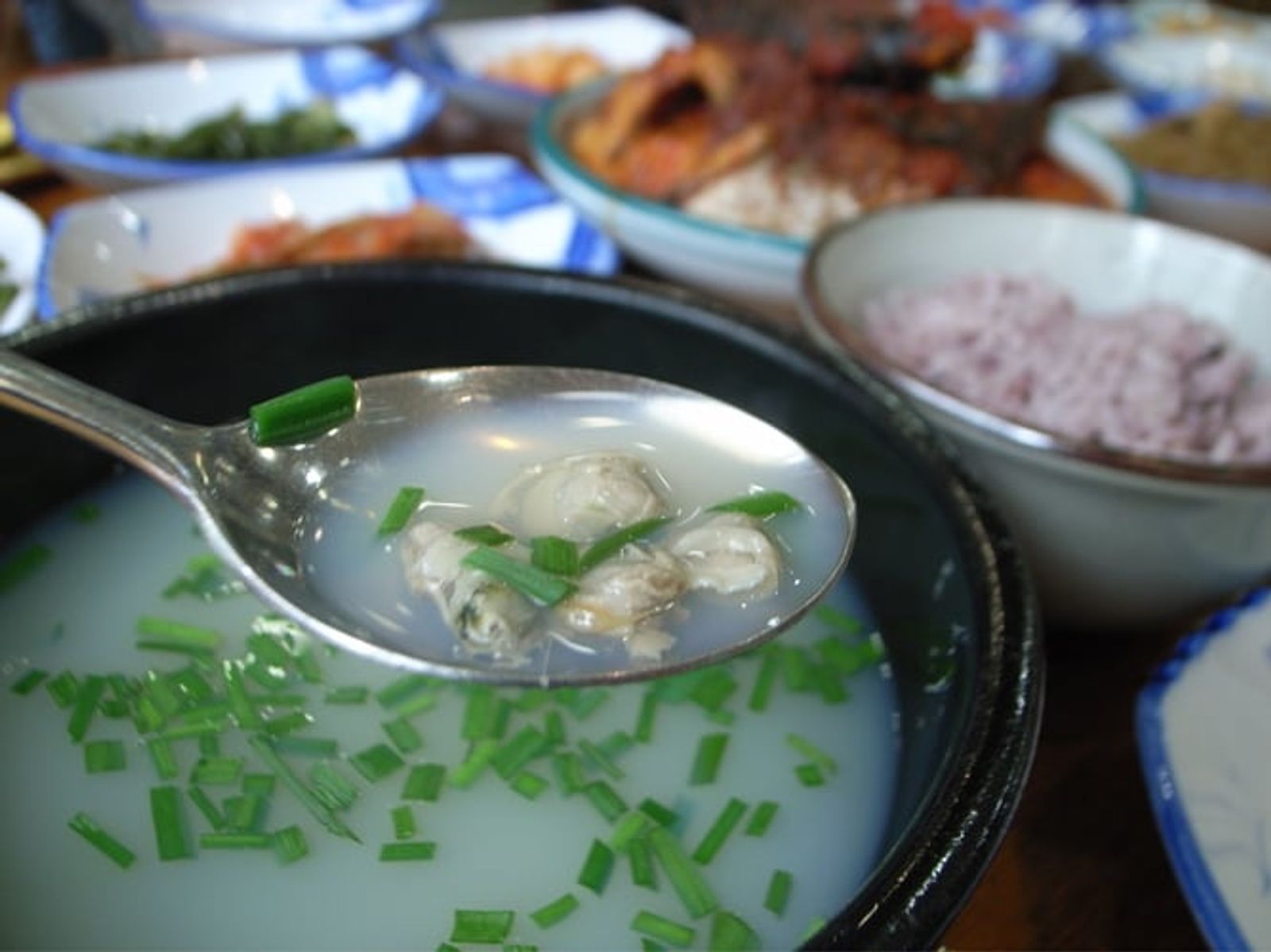
Clam soup topped with chives · Photo: shizu k (shezzz), Flickr / CC BY-SA 2.0 (Wikimedia Commons)
 KoreaSouth Gyeongsang · Hadong
Hadong Jaecheop-guk: Tiny Clams Raked From the Seomjin River, and a Fishing Method the World Recognized
Milky clam broth topped with a heap of garlic chives, jaecheop-guk is the signature breakfast of Hadong in South Gyeongsang. Here is why Seomjin River clams are famous, how they are raked from the riverbed, the old dawn street vendors of Busan, and how to enjoy them in Hadong.
A Little Clam Raised by the Seomjin River
Jaecheop are triangular freshwater clams about the size of a fingernail, in the same family as Japan's shijimi. They thrive in the sandy beds of river mouths where fresh water meets the sea. The lower Seomjin River, flowing between Hadong in South Gyeongsang and Gwangyang in South Jeolla, is Korea's largest clam ground; a 2018 report says more than 70 percent of Korea's jaecheop come from it. Seomjin River clams grow in a river with no estuary barrage and are hard to farm in bulk, so they are considered a precious ingredient. People have eaten them for a long time. Hadong County points out that the 1908 Korean Fisheries Gazetteer (Hanguk Susanji) listed jaecheop among 106 useful marine products, evidence that they were a common food even then.
Raking the Riverbed by Hand
The symbol of Seomjin River clamming is the georaengi, an iron rake fitted with a finely perforated net and fixed to the end of a long bamboo pole. Fishers wade into the river and drag it through the sandy riverbed. Sand and young clams fall through the holes and only mature clams stay in the net, a method that naturally protects the stock. In deeper water, nets are also dragged by boat. This "Hadong and Gwangyang Seomjin River hand-raking clam fishery" was designated National Important Fisheries Heritage No. 7 in 2018, and in 2023 became Korea's first fisheries entry on the FAO's list of Globally Important Agricultural Heritage Systems. Reports also note that dam construction upstream has raised salinity downriver and reduced clam numbers, and that the number of clam fishers has fallen from over 3,000 to around 500.
From Busan's Dawn Street Cries to Hadong's Name
Clam soup was originally a breakfast food in the river-mouth cities of the Gyeongsang region. Today people link jaecheop with the Seomjin River and Hadong, but according to a 2005 column, some 30 years before that the place most famous for it was Busan at the mouth of the Nakdong River. Many recall the early-morning cry of "Jaecheop-guk saiso!" ("Buy clam soup!") echoing through the alleys, and households coming out with pots to buy soup for breakfast. As pollution fouled the Nakdong River estuary, the reputation is said to have passed to Hadong on the Seomjin, a river without an estuary barrage. Clams are known to struggle in even slightly polluted water. So the name "Hadong jaecheop" also carries a sense that a clean river is still alive here.
A Bowl of Clam Soup and Its Companions
To make the soup, the clams are boiled hard in a large cauldron to draw out the broth, then strained through a basket to remove the shells, and the picked meat goes back into the broth. The result is milky in color yet clean and refreshing in taste. Finishing it with a generous handful of chopped garlic chives (jeonggu-ji in local dialect) is the Hadong touch, with a pinch of chili powder or salt to taste. Add rice and it becomes a filling breakfast. Clam restaurants serve more than soup. Jaecheop hoe-muchim, blanched clam meat tossed with vegetables in a sweet, sour and spicy chili sauce, is wrapped in seaweed or mixed into rice, and jaecheop-jeon, a pancake of clam meat with chives and green onion, goes well with drinks. A set meal with soup, salad and pancake lets you try them all at once.
When and Where to Eat It
Sources differ on the season. Some name May and June as the peak, while one report says clams appear in spring but are plumpest in September and October. Because the soup is cooked and frozen, you can have it year-round regardless of season. Several restaurants serving clam soup cluster along the Seomjin River around Hadong-eup, and they are easy to visit on the way to Hwagae Market or Ssanggyesa Temple. Many people seek out the soup as a hangover cure, so some places open early in the morning. There have also been reports of cheap imported clams being passed off as Hadong clams, so if origin matters to you, check the country-of-origin label.