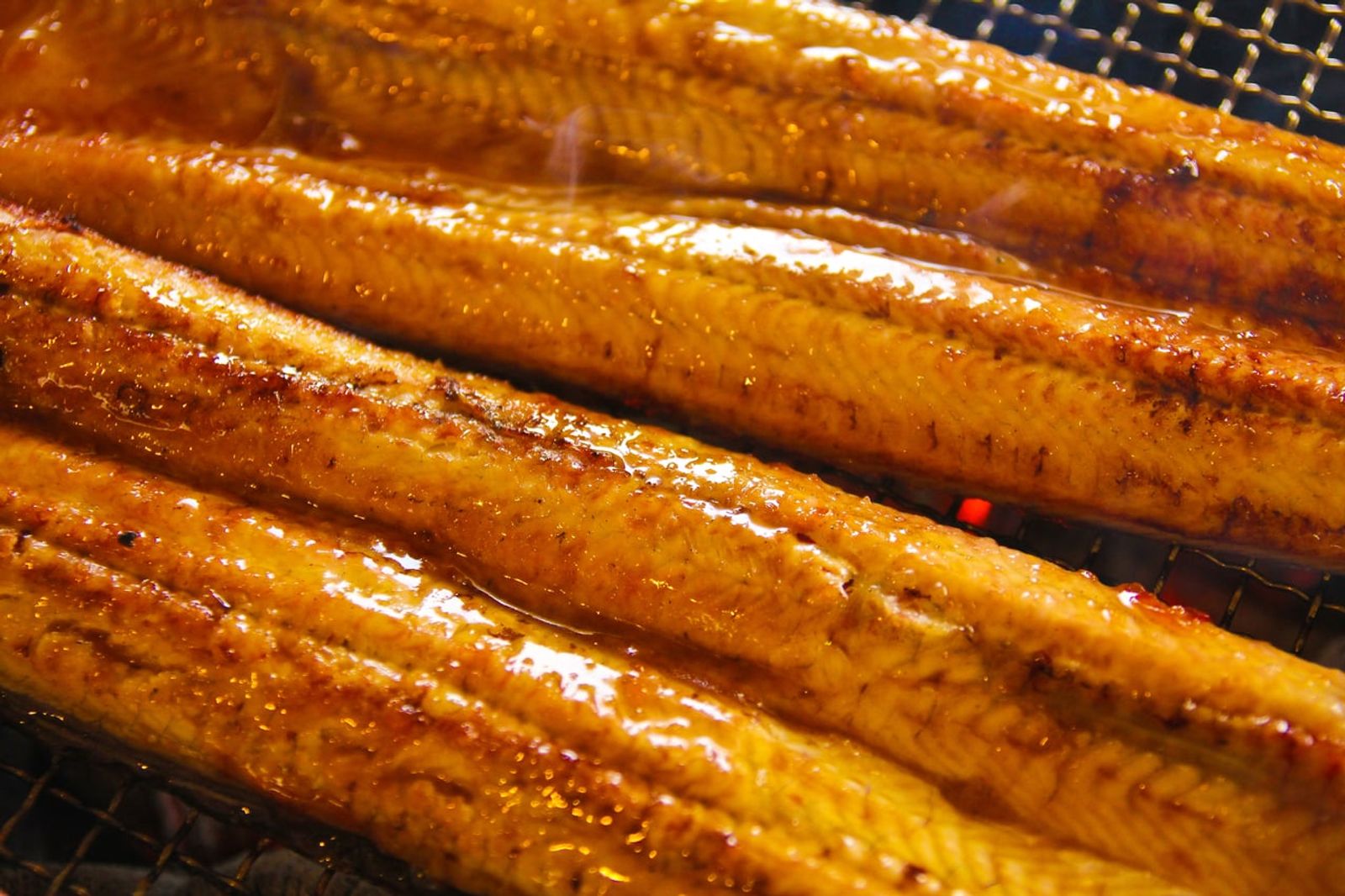
Eel grilling over charcoal · Photo: mino park / CC0 (Wikimedia Commons)
 KoreaNorth Jeolla · Gochang
Gochang Pungcheon Eel: The Eel Named After a River Mouth That Isn't on Any Map
In Korea, grilled eel brings one name to mind: Pungcheon eel from Gochang. Yet there is no place called Pungcheon on the map. Here are the stories behind the name, where today's eel comes from, how to eat it near Seonunsa Temple and why it comes with bokbunja wine.
Where Pungcheon Eel Comes From
Pungcheon eel means freshwater eel caught around Wolsan-ri in Simwon-myeon, Gochang, where the Jujincheon (also called the Incheon River), flowing down from Mt. Seonunsan, meets the Yellow Sea. The fun part is that there is no Pungcheon on the map. Locals have long called the lower Jujincheon the Pungcheon River, and the name stuck to the eel. Eels grow up in rivers, swim out to sea to spawn, and their young, the glass eels, swim back upriver. River mouths where seawater mixes with fresh water have therefore always been good eel grounds, and this estuary in Gochang was one of them. Before land reclamation, seawater is said to have reached much further inland than it does today.
Why 'Wind' Is in the Name: Several Stories
Sources explain the name Pungcheon (風川, 'wind river') in different ways. One story is about the tides. Although the Jujincheon is a river, seawater surges in twice a day, and eels were said to come up with the wind at those times, hence 'wind' plus 'river'. The other says the word simply means a brackish spot where seawater and fresh water mix; one newspaper describes Pungcheon as the stretch where the Incheongang (Jujincheon) meets the sea. Either way, the point is the same: this is eel from where river meets sea. So Pungcheon is not a special breed of eel. In Gochang the name refers to the eels once caught around this estuary, and today it is used almost as a byword for Gochang eel.
Where Today's Eel Actually Comes From
To be honest, wild eel caught in the estuary is now very rare and expensive. A 2014 report found that almost all eel restaurants around Seonunsa served farmed eel. Korean eel farming works by catching glass eels as they swim up river mouths and raising them in farms for a year or more. Gochang is the centre of that industry. According to a 2024 report, Gochang has 85 eel farms, the most in Korea, supplying roughly 30% of the national market. The county has even run a 'half farmed, half wild' project, releasing farmed eels onto tidal flats to grow without feed. If you want wild eel, ask before you order and check the price.
How to Eat It at the Gate of Seonunsa
People usually go for Pungcheon eel around Seonunsan Provincial Park and the approach to Seonunsa Temple, where eel restaurants line the road. Visiting the temple in camellia, red spider lily or autumn-leaf season and then eating eel on the way down has become the classic Gochang day out. There are two main styles. Salt-grilled eel shows off the fish's natural richness, while eel brushed with gochujang sauce is sweet and spicy. On a first visit, ordering half and half to compare is a good idea. Reports on the eel restaurants around Mt. Seonunsan most often single out eel brushed with gochujang and grilled over charcoal.
Why It Comes With Bokbunja Wine
Eat eel in Gochang and it almost always comes with bokbunja wine. Bokbunja is a Korean black raspberry that ripens dark red in June and July. Gochang began growing it in the 1960s, was designated a special bokbunja industry zone in 2004, and a 2013 report put its share of Korea's growing area at about 31%. Both are Gochang specialties, and both are seen in Korea as foods that build strength, which is what tied them together. Some guides name green tea, bokbunja wine and Pungcheon eel together as the three specialties of Mt. Seonunsan. In June the Gochang Bokbunja and Watermelon Festival is held around Seonunsan Provincial Park, and in 2025 it even carried the subtitle 'with Pungcheon eel'. Go then and you can try fresh berries alongside your eel. The wine is sweet and goes down easily, but it is alcohol, so skip it if you are driving.