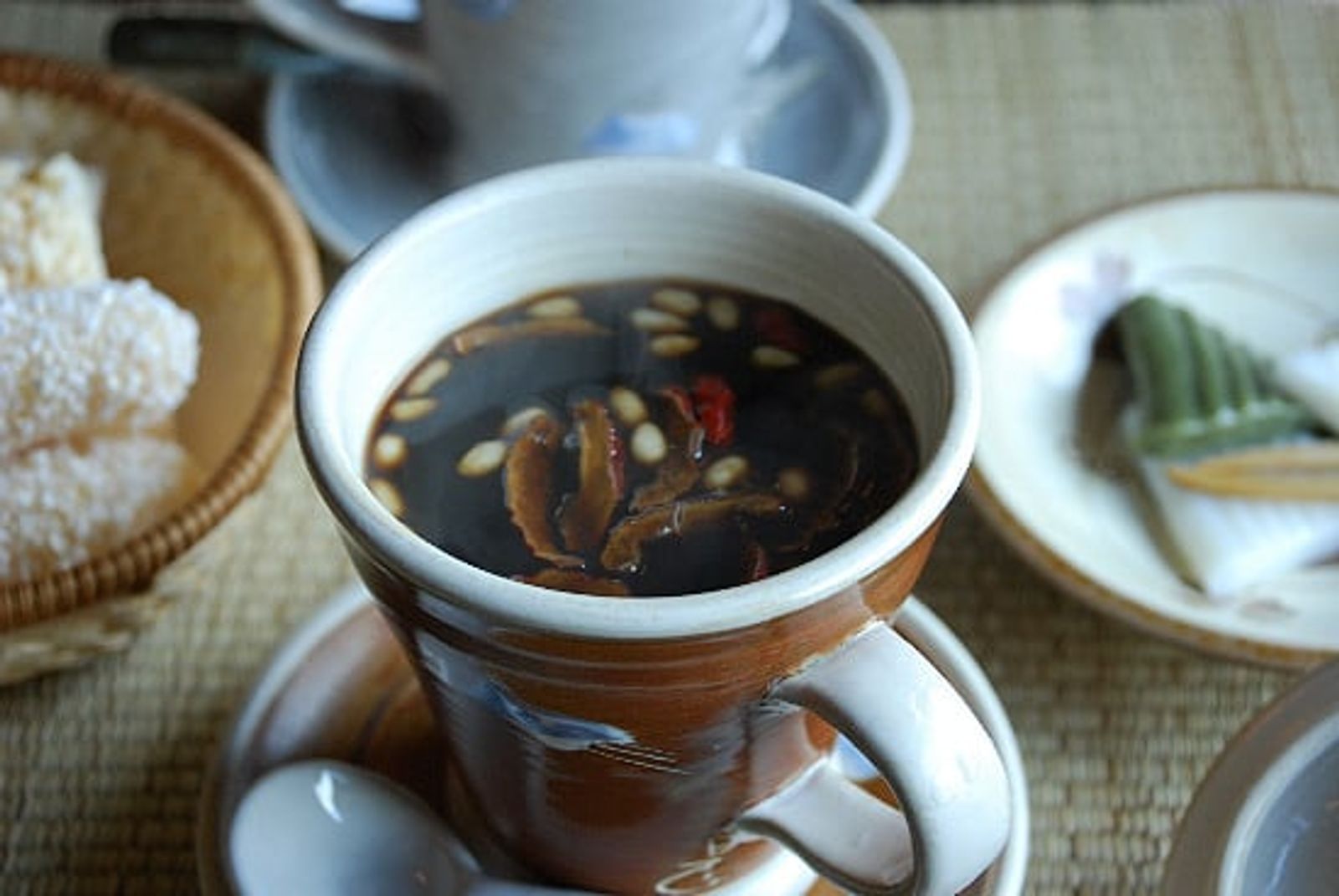
Ssanghwa tea topped with nuts · Photo: 허수자 / CC BY 2.0 KR (Wikimedia Commons)
 KoreaNorth Jeolla · Jeongeup
Jeongeup's Ssanghwa Tea Street: A Bowl-Like Herbal Tea From the Home of Rehmannia
Jeongeup's old town has what is called Korea's only ssanghwa tea street. Here is why it is in Jeongeup, how a tea brewed from some 20 herbs and nine-times-steamed rehmannia is served, the snacks that come with it and how to enjoy it.
Korea's Only Ssanghwa Tea Street
Ssanghwa tea (ssanghwacha) is a traditional Korean herbal tea made by simmering many medicinal herbs into a dark, strong brew. It is thought of as a pick-me-up for a tired body, and old-style tearooms used to float an egg yolk on top. In Jeongeup's old town there is a 'Ssanghwa Tea Street' lined with traditional teahouses serving it. Eighteen teahouses stand along roughly 450 metres between the former police station and the tax office, and the city as a whole has more than 40 ssanghwa teahouses (44 or 47 depending on the source). The story goes that one teahouse became famous in the 1980s and similar places gradually gathered around it. In 2018 the teahouse owners formed the Ssanghwa Tea Street Council.
Why Jeongeup? The Home of Rehmannia
Jeongeup became the home of ssanghwa tea because of its key ingredient. Rehmannia root (jihwang), the core herb in ssanghwa tea, is grown mainly in Jeongeup, especially around Ongdong-myeon. Jeongeup rehmannia is known for its firm texture, strong medicinal properties and good keeping quality. In the Joseon era it was sent to the king as tribute, and in 2015 it was registered as a geographical indication. In the early 1990s Jeongeup produced about 70% of Korea's rehmannia. Partly due to imports from China, that share has since fallen to around 20%. The city is planning to expand cultivation to revive the industry, and the tea street is the friendliest way to taste what all that rehmannia is about.
What Goes In: Some 20 Herbs, Steamed Nine Times
Jeongeup ssanghwa tea starts with a decoction of about 20 herbs, including prepared rehmannia, angelica root and peony root. The heart of the flavour is prepared rehmannia, and Jeongeup teahouses say they use root that has been steamed and dried nine times (gujeung gupo). The process turns the root black and brings out its sweetness and deep aroma. The brewing is long too: some say the herbs are simmered for more than 30 hours, producing a tea as thick and dark as broth. It comes heaped with toppings such as chestnuts, jujubes, ginkgo nuts, pumpkin seeds and pine nuts, so it feels more like a bowl than a cup. Expect bitter and sweet together, and fish out the toppings with a spoon.
The Snacks That Come With It
Another pleasure of the tea street is what comes with the tea. Ssanghwa tea is often served in a heavy soapstone bowl that holds the heat, alongside simple snacks such as grilled garaetteok (rice cake sticks) with grain syrup and nurungji (toasted rice crisps). One visitor described peanuts and grated yam arriving one after another like a small course, so what you get varies by teahouse. In effect, ordering one tea gets you a little spread, so treat it as a light snack and a rest stop. Dip the grilled rice cake in syrup, sip the hot tea slowly, and you warm up fast. Perhaps that is why the street has long been busiest in the cold months.
When and How to Go
The street used to be busiest in autumn and winter, but since it spread on blogs and Instagram, visitors come all year round and many are young. One report says more than 60% of visitors come from outside the city, so it has become a regular stop for travellers in Jeongeup. Jeongeup is also home to Naejangsan, one of Korea's most famous autumn-foliage mountains. Hiking Naejangsan in leaf season and then warming up with ssanghwa tea in town makes a fine day. The tea has a strong herbal aroma and bitterness, so take it slowly the first time. Each teahouse has its own herb blend and snacks, so comparing two is fun. Because it contains medicinal herbs, check first if you have health concerns.