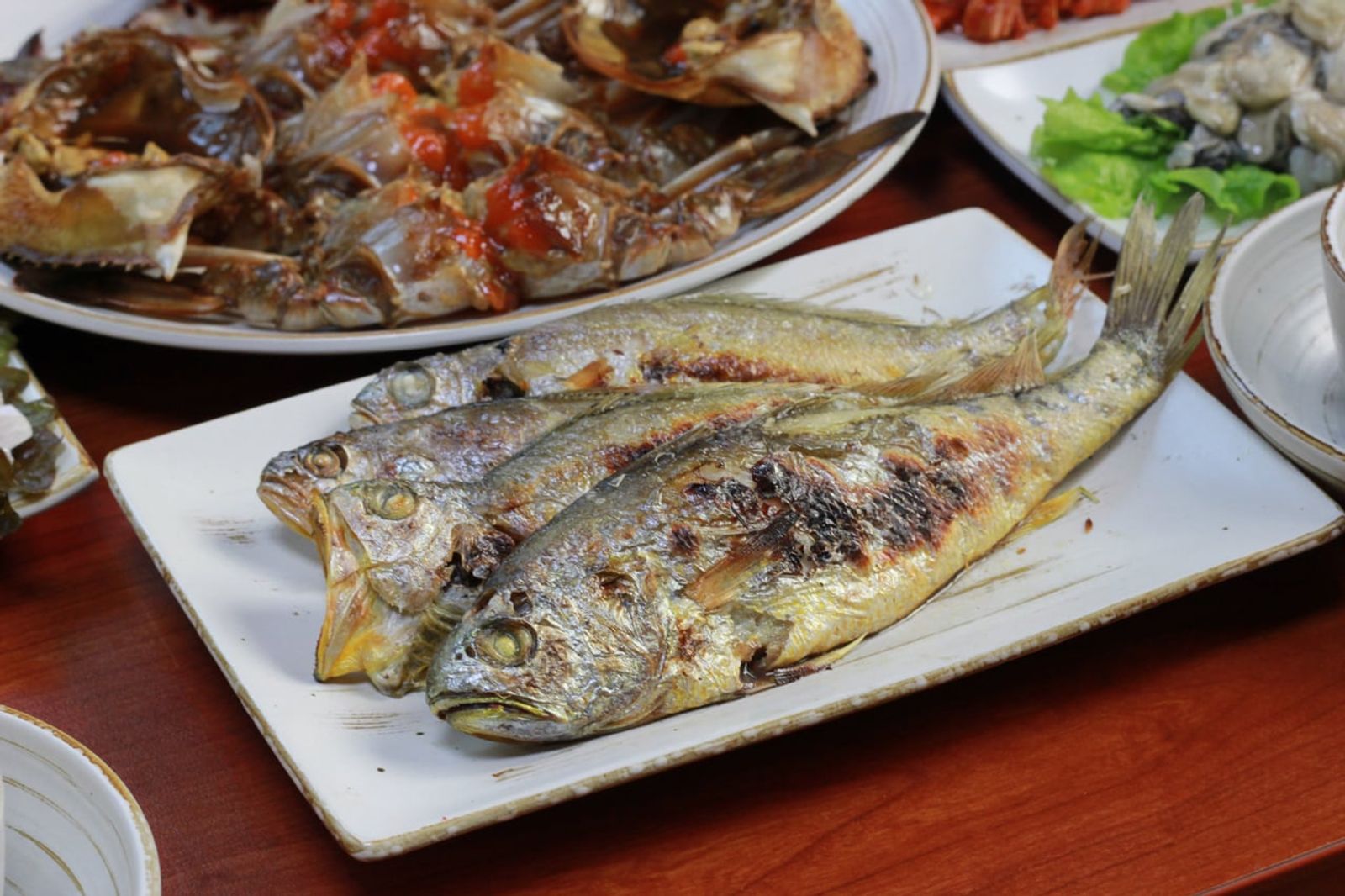
Grilled gulbi · Photo: SOSEONHONG / CC0 (Wikimedia Commons)
 KoreaSouth Jeolla · Yeonggwang
Yeonggwang Gulbi: How Beopseongpo's Salted Croaker Got Its Name and How It Is Made Today
Beopseongpo in Yeonggwang is a port famous for one thing: gulbi, salted and dried yellow croaker. Here is the story behind its name, the fish-by-fish salting method, how to eat bori-gulbi and how to tell the real thing from look-alikes.
What Gulbi Is and Why Beopseongpo
Gulbi is yellow croaker, ideally the small yellow croaker known in Korean as chamjogi, salted and then dried. In Korea it is so prized that people say a bowl of white rice and a piece of gulbi need nothing else, and it is a classic holiday gift. The name most tied to it is Beopseongpo, a port in Beopseong-myeon, Yeonggwang County, South Jeolla Province. The sea off Beopseongpo, called Chilsan Sea, was long a famous croaker ground. Each spring, schools of croaker heading north to spawn passed through, and the 15th-century geography of the Annals of King Sejong already records these waters as Pasipyeong; in croaker season a pasi, a fish market held on boats at sea, gathered here. Until the late Joseon period Beopseongpo also had a jochang, a state granary that shipped tax grain and local goods to Seoul, which made it the leading port of the Honam region.
"I Will Not Bow": The Legend of Yi Ja-gyeom
The name gulbi comes with a well-known legend. Yi Ja-gyeom, a powerful in-law of the Goryeo royal family, plotted a revolt, failed and was exiled to Beopseongpo in present-day Yeonggwang. Taken with the taste of croaker dried in the sea wind, he sent some to the king, and so that the gift would not look like flattery he labeled it with two characters, gulbi (屈非), meaning roughly "I will not bow." Many tourist guides place the story in the reign of King Yejong, but Yi lost power and was exiled under King Injong, after his revolt of 1126, so the dates differ from source to source. There is also a plainer theory: croaker strung up on straw curls as it dries, and people called it gubi, "the bent one," which later became gulbi. Either way, the story shows how long dried croaker has been this town's signature product.
Seopgan: Salting One Fish at a Time
What sets Yeonggwang gulbi apart is a traditional salting method called seopgan. Each croaker is rubbed by hand with Yeonggwang sea salt from which the bitter brine has been drained, left to cure, then rinsed in light brine, strung up and dried. Locals are proud enough of the method that gulbi salted by soaking in brine is dismissed here as mul-gulbi, "water gulbi." Yeonggwang, like nearby Sinan, is a major producer of sun-dried sea salt, so the salt comes from right next door. The cured fish are then dried in Beopseongpo's wind and sunshine. Twenty fish tied together with straw make one dureum, and gulbi is still widely sold by the dureum. Fish caught around Gogu, the spring solar term that falls near April 20, were traditionally rated the best, full of roe and plump, and were called gogusal gulbi or osari gulbi.
Yeonggwang Gulbi Today and How to Spot the Real Thing
The sea has changed a great deal. Croaker migration routes have shifted, so the fish are no longer caught in Chilsan Sea as they once were; instead chamjogi caught in other waters, such as around Chujado Island, is brought in. Most of the salting and drying, however, still happens in Beopseongpo, and in 2009 the area was designated a special industrial zone for Yeonggwang gulbi. A famous name attracts fakes. Some products use look-alike fish such as large yellow croaker (buse), white croaker or other croaker species, or imported fish. The popular tip of checking for a diamond-shaped mark on the head is unreliable because some look-alikes have it too. If you are buying gulbi as a gift, the safest check is an authenticity tag with production details.
How to Eat It and Beopseongpo's Gulbi Street
The basic way is simply to grill it golden on a rack or in a pan and eat it with white rice. Restaurants commonly serve it as gulbi jeongsik or gulbi baekban, grilled gulbi with an array of side dishes, and you can also try gochujang gulbi, fish aged in red pepper paste, and spicy croaker stew. In summer people especially look for bori-gulbi, "barley gulbi." The name is usually explained by the old practice of storing gulbi in jars of barley to keep it before refrigerators. The hard-dried fish is steamed and torn into pieces, and a popular way to eat it is to put rice into cold green tea with ice and lay the fish on top. To eat it at the source, head to Beopseongpo Gulbi Street in Beopseong-myeon, where drying racks, shops and gulbi set-meal restaurants line the streets, and some places offer a try at stringing gulbi yourself.