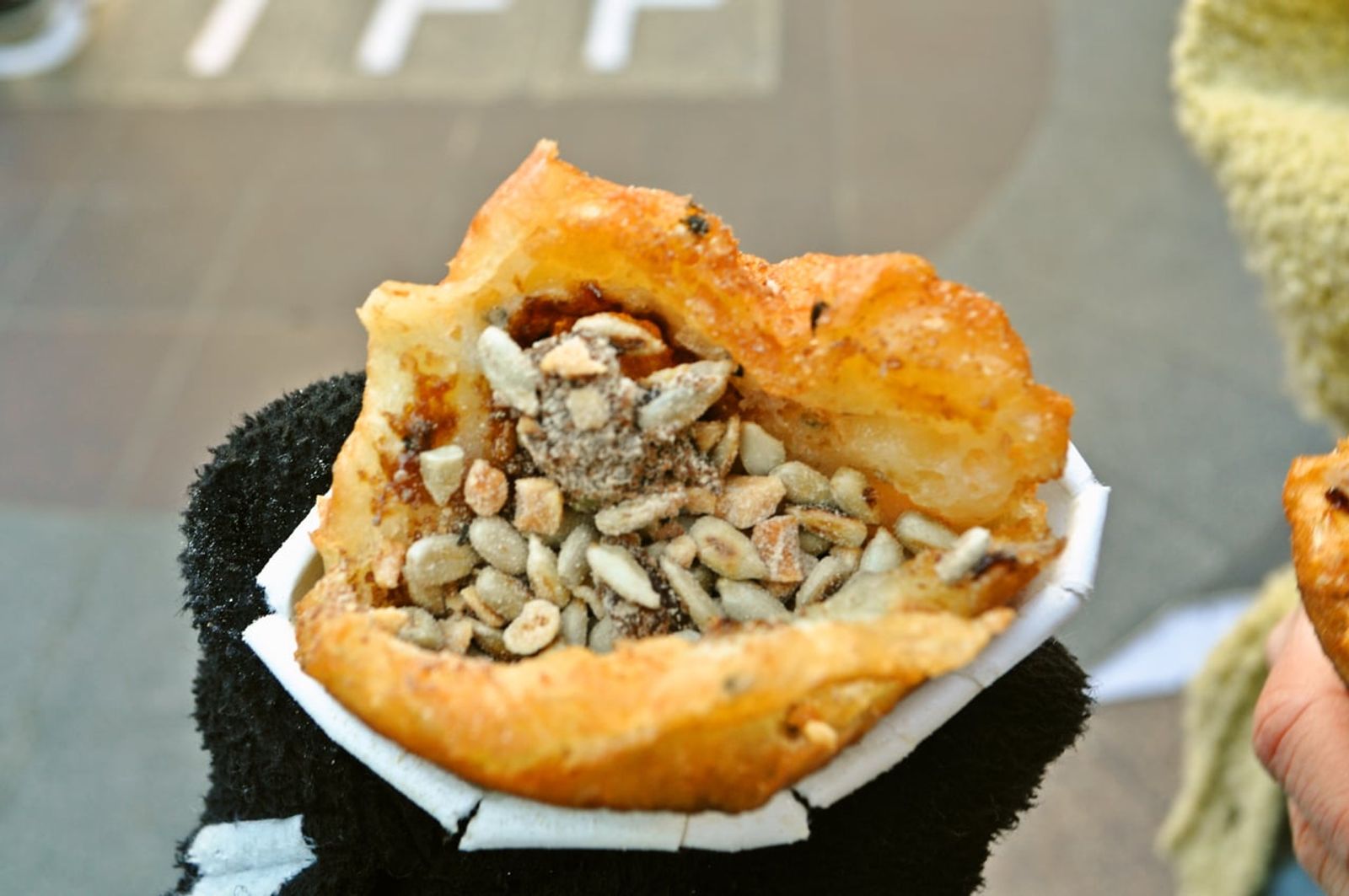
Busan ssiat hotteok packed with seeds · Photo: Tmannya / CC BY-SA 3.0 (Wikimedia Commons)
 KoreaBusan
Busan's Ssiat Hotteok: How a Chinese Pancake Became Busan's Seed-Stuffed Street Snack
At BIFF Square in Nampo-dong, stalls fry hotteok in plenty of oil, slit them open and pack them with sunflower and pumpkin seeds. From how hotteok reached Korea to how the seeded version took off in Busan, plus how to eat one without burning your mouth.
How Hotteok Came to Korea
The 'ho' in hotteok is an old character used for people from northern China. According to the Encyclopedia of Korean Culture, no one knows exactly when hotteok arrived, but it most likely came with Qing Chinese merchants who settled in Korea after the 1882 trade regulations signed in the wake of the Imo Incident. Cheap and slow to spoil, it became a favourite of Chinese rickshaw pullers in Seoul's Jongno district during the Japanese colonial period. It started out close to a Chinese baked flatbread, but Koreans sweetened it with honey, grain syrup or sugar, and that turned it into the sweet hotteok we know today, the winter street snack oozing brown-sugar syrup.
Wartime Busan and the Seeds
The story of ssiat hotteok, 'seed hotteok,' is tied to Busan during the Korean War. According to the encyclopedia, refugees who poured into the city made hotteok with all sorts of grain seeds mixed in, and as American wheat flour aid arrived around the armistice, flour-dough hotteok spread far more widely. Busan served as the temporary capital during the war and was packed with people from all over the country, which created a need for cheap, filling street food. Oil-fried flour snacks fit those times well. The seeded version did not look like today's from the start, but that memory of stretching a snack with grains and seeds to make it more filling is fairly seen as the root of the modern ssiat hotteok.
Born on the Streets of Nampo-dong
Sources disagree on when today's ssiat hotteok appeared. The Encyclopedia of Korean Culture says it first began on the streets of Nampo-dong in the 1980s, while other accounts say street vendors came up with seed and green-tea hotteok around 2005. One may describe when it started and the other when it caught on, so 'the sources differ' is the honest summary. Either way, the stage is Nampo-dong. The cinema district that hosted the first Busan International Film Festival in 1996 became known as BIFF Square, a street where film theatres and food stalls stand side by side. Once ssiat hotteok became that street's signature snack, it spread to tourist spots like Haeundae, and it is now counted among Busan's signature local treats.
How It Differs From Ordinary Hotteok
Ordinary hotteok is filled with brown sugar and cinnamon and pressed flat on a griddle. Ssiat hotteok differs from the first step. According to the encyclopedia, it is not baked in an oven but pressed onto a griddle slick with plenty of oil and fried, then slit down the middle and stuffed with nuts and seeds such as peanuts, sunflower seeds and pumpkin seeds. The crushed seeds are not just a topping. They soak up the melted sugar syrup and keep it from running out. One bite gives you a crisp shell, chewy dough, sweet syrup and nutty crunch all at once. It used to be pan-fried in a thin film of oil, but frying it in generous oil is now the norm.
Eating Tips and Where to Find It
Ssiat hotteok is usually handed over in a paper cup or folded paper. The sugar syrup inside a fresh one is extremely hot, so rather than biting straight into the middle, nibble from the edge. Syrup drips easily onto hands and clothes, so keep the cup underneath as you eat. The stalls best known as the originals cluster along BIFF Square in Nampo-dong, Jung-gu, busiest from afternoon into the evening. The street links on foot with Gukje Market and Jagalchi Market, so it is an easy snack stop while you explore. You will also find it at Haeundae and other tourist spots and markets. The encyclopedia singles out eating one in winter while looking out over Busan's sea as a local pleasure.