Mudeungsan Barley Rice
 KoreaGwangju
Mudeungsan Barley Rice: How a Hikers' Meal Became One of Gwangju's Five Flavours
At the foot of Mudeungsan, the mountain that frames Gwangju, barley rice restaurants serve bowls of boribap with some twenty seasonal sides. Here is how this hikers' meal began, what comes on the tray, and Gwangju's way of mixing the rice and then wrapping it in leaves.
A Meal for Hikers Below Mudeungsan
Mudeungsan is visible from almost anywhere in Gwangju and is something of a symbol of the city. According to the Encyclopedia of Gwangju Culture, Mudeungsan boribap began when places around Jeungsimsa Temple on the mountain started selling barley rice to hikers, and it spread from there. Sources differ on the date, some saying 'about 30 years ago' and others the 1980s. The Cheonji Ilbo describes the background like this: after the Korean War, the Mudeungsan trails were restored in the late 1960s and people gradually returned to the mountain, and as the economy picked up in the 1980s more restaurants opened at the trailheads. One owner saw hikers on the mountain eating barley lunchboxes, realised they missed the barley rice of their hungry childhoods, and put it on the menu; other restaurants followed.
From the Temple Valley to Jisan: The Street Moves
The first barley rice houses stood above Jeungsimsa and along the valley. Mudeungsan's natural setting is precious enough that it became a national park in 2013, and as the area around Jeungsimsa was tidied up, the restaurants reportedly moved out of the valley into a commercial strip further down. As a result, barley rice restaurants now gather in two main areas: around the entrance to the Jeungsimsa valley and around Jisan Park in Jisan-dong, Dong-gu, with a barley rice street also described near the Mudeungsan Tourist Hotel. They are easy to reach before or after a hike, and on weekends plenty of diners still turn up in hiking gear. Even if you are not hiking, they are an easy bus or taxi ride from downtown, and many people come for a meal and a stroll at the foot of the mountain.
A Tray of Twenty Side Dishes
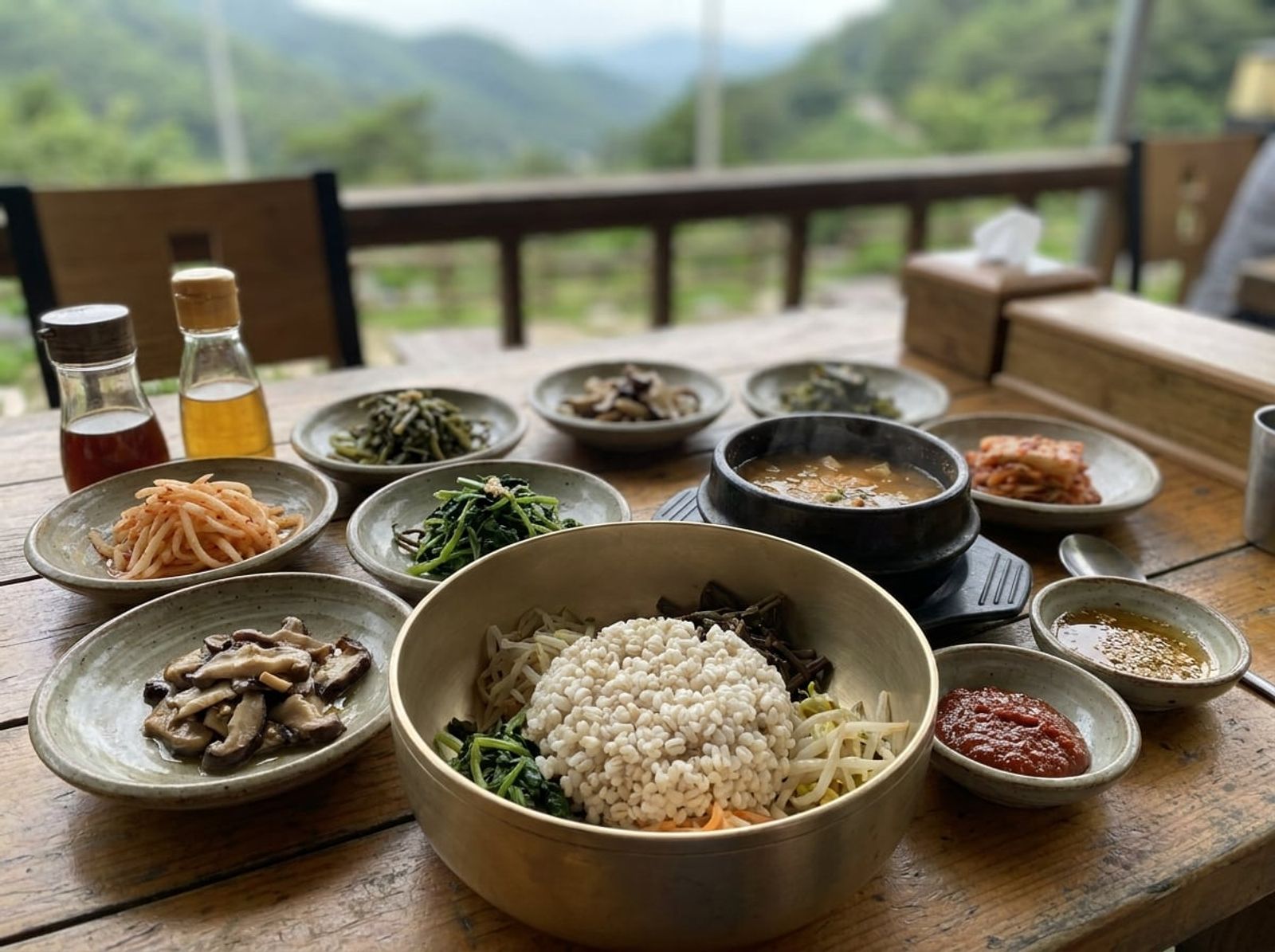
The charm of Mudeungsan boribap is its generous spread. According to the Encyclopedia of Gwangju Culture, it varies with the season but usually includes seasonal namul such as bracken, taro stems, bean sprouts and spinach; napa cabbage kimchi and young radish kimchi; salted anchovy and freshwater shrimp jeotgal; wrapping greens like radish leaves, cabbage leaves and lettuce; and doenjang stew, with doenjang, gochujang, ssamjang and sesame oil alongside. The Cheonji Ilbo lists seasonal sides such as bean sprouts, eggplant, bracken, julienned radish salad, stir-fried mushrooms and hijiki, with doenjang soup, and everything wrapped in lettuce or young radish leaves. All told it often comes to around twenty dishes. Most are mild vegetable sides, so the meal is known for being easy on the stomach, a humble showcase of why Gwangju is called the home of southern Korean cooking.
Mix It, Then Wrap It: The Gwangju Way
Eating it takes two steps. First, put the barley rice in a big bowl and mix in namul, sides, gochujang and sesame oil to taste. Then wrap spoonfuls of the mixed rice in young radish leaves or lettuce with a dab of doenjang or ssamjang. The Encyclopedia of Gwangju Culture singles out this mix-then-wrap method as the hallmark of Mudeungsan boribap and, together with Gwangju's sangchu-twigim (fritters wrapped in lettuce), calls it part of the city's distinctive wrap-food culture. The same source notes that potassium-rich greens help flush out the sodium from the salty, spicy mixed rice while adding plenty of fibre. A spoonful of doenjang stew now and then adds an earthy depth. Too much gochujang drowns out the namul, so start with a little and add more as you taste.
Why It Represents Gwangju, and Visiting Tips
In 2003 Mudeungsan boribap was named one of the 'Five Flavours of Gwangju,' which press reports list as kimchi, barley rice, tteokgalbi, hanjeongsik (multi-course Korean meals) and duck soup. In May 2019 it was again chosen as one of seven signature Gwangju dishes and marked for promotion as a future strategic food in the popular category. Some also see the dish as rooted in the nostalgia of a generation that lived through the lean spring months and came looking for barley rice on the mountain. A few tips: weekend lunchtimes, especially when hikers come down the mountain, get busy, so arrive a little early. If you are hiking, a natural plan is to walk the trail from the Jeungsimsa side and eat afterwards. You can also build a Gwangju food trip around it with the city's other signatures, Songjeong tteokgalbi, duck soup and yukjeon.