Taean Baksok Nakji-tang
 KoreaSouth Chungcheong · Taean
Taean Baksok Nakji-tang: Live Octopus Poached in Gourd Broth
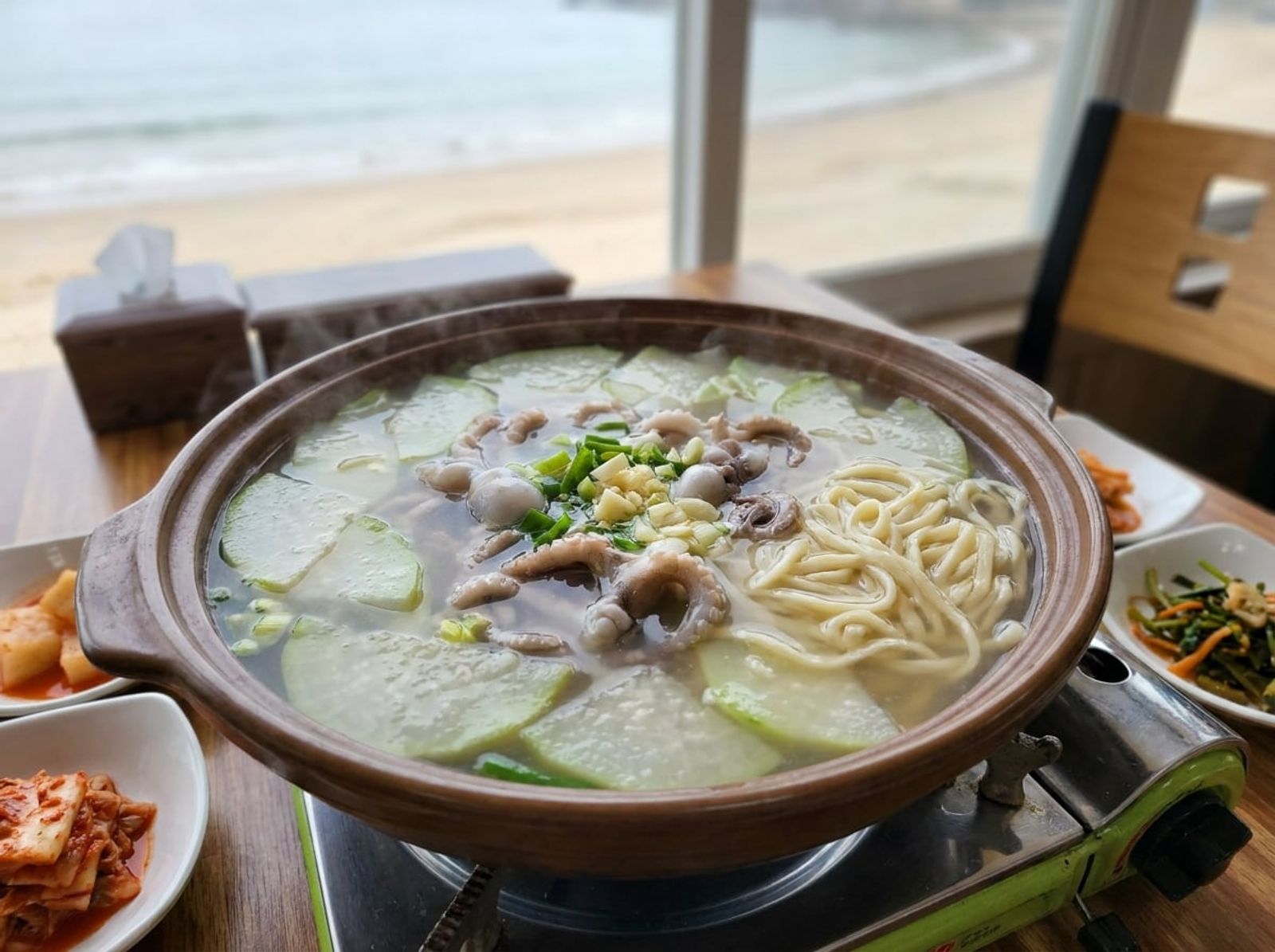
Baksok milguk nakji-tang, one of Taean's signature dishes, is a clear broth made with sliced gourd flesh in which live long-arm octopus is briefly poached, finished with noodles or hand-torn dough. Here is what the name means, how it differs from Jeolla-style yeonpo-tang, the right order to eat it and where to find it.
Gourd, Flour and Octopus: Decoding the Name
The name simply lists the ingredients. Baksok is the white flesh of a round gourd, and nakji is long-arm octopus caught on the mudflats. The gourd is cut into neat slices like radish and boiled into a broth, live octopus is poached in it, and the meal ends with knife-cut noodles or hand-torn dough. The dish goes by several names: baksok nakji, milguk nakji, baksok milguk nakji-tang. In 2004 the Seoul Shinmun explained milguk nakji as baksok nakji made with the small octopus caught in June and July. A restaurant owner in Wonbuk-myeon quoted in the weekly Jugan Kyunghyang in 2003 insisted that "baksok nakji" is the more accurate name. If you see a similar name on a menu, you can assume it is the same family of dish.
Roof-Grown Gourds and Garorimman Octopus
There is no precise record of when people began eating baksok nakji. A 2026 Pressian article describes it as a local dish of the fishing villages of Seosan and Taean, which started with boiling mudflat octopus together with gourd flesh harvested from thatched roofs. It is best taken not as documented history but as the story of a seaside meal made from what was at hand. The octopus comes from the mudflats off Taean. The weekly Jugan Kyunghyang (2003) reported that fresh small octopus from the mudflats of Garorim Bay is used, and the Seoul Shinmun (2004) noted that on the Taean Peninsula most octopus is caught off Iwon-myeon and at Jeongsan port. Jugan Kyunghyang added that gourd is said to be easy on the stomach. For people in Taean, the dish is both tasty and comforting.
How It Differs From Jeolla's Yeonpo-tang
If octopus in a clear broth sounds familiar, you may be thinking of yeonpo-tang from Jeolla. In 2004 the Seoul Shinmun set the two side by side: "If the Jeolla-style octopus soup is yeonpo-tang, the Taean side has baksok nakji." The biggest difference is the base of the broth. According to the same article, baksok nakji is made by cooking live octopus in a stock of gourd and radish, with some restaurants adding kelp. Its hallmark is the fresh, grassy scent of gourd alongside the clean taste of octopus. The reporter judged that it tastes similar to yeonpo-tang but smells better; that is one person's view, so try both and compare. Finishing the pot with noodles or dough to make a full meal is another pleasure of the Taean style.
The Right Order to Eat It
Part of the fun is eating it in order. When the pot of gourd and vegetables comes to the boil, the live octopus goes in to cook. In 2004 the Seoul Shinmun noted that Taean's mudflat octopus stays tender even when boiled, and described rolling about three cooked tentacles around your chopsticks and dipping them in a soy-based sauce. It also quoted a restaurant owner who said spicy vinegared gochujang is too strong and masks the octopus, though if you like it, go ahead. Once the octopus is eaten, knife-cut noodles or dough flakes go into the broth, now rich with gourd and octopus, for one more boil. Jugan Kyunghyang (2003) called the result "amazing." Since it is a shared pot, you usually order the amount of octopus to match the size of your group.
When and Where to Eat It
Baksok nakji-tang is best known around Wonbuk-myeon and Iwon-myeon in northern Taean, on the edge of Garorim Bay. Jugan Kyunghyang (2003) reported that the restaurant known as the dish's originator is in the Wonbuk-myeon town center, at the gateway to the Iwon Peninsula. Rather than one particular restaurant, search for the Wonbuk-myeon and Iwon-myeon area and you will find plenty of options. It pairs well with a drive up to Mandae port at the northern tip of the Iwon Peninsula. The Seoul Shinmun (2004) said the version made with small June and July octopus is called milguk nakji, but today many restaurants serve the dish year-round. Octopus prices swing with the market, so ask before you order. Even travelers wary of raw seafood can enjoy the taste of live octopus comfortably when it is poached like this.