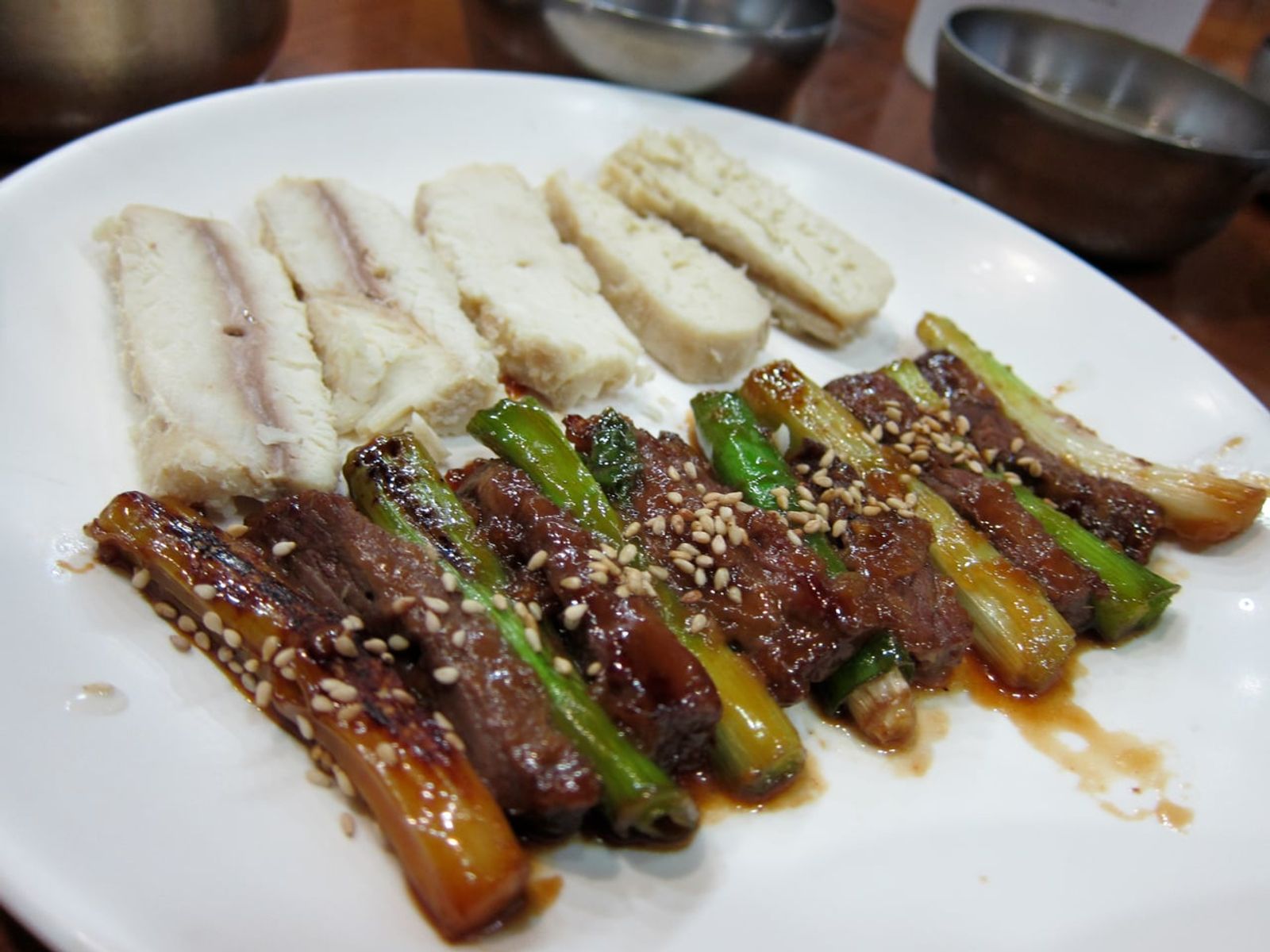
Dombaegi served with sanjeok skewers · Photo: Eugene Kim / CC BY 2.0 (Wikimedia Commons)
 KoreaNorth Gyeongsang · Yeongcheon
Yeongcheon Dombaegi: The Salted Shark Meat of Gyeongbuk's Ancestral Tables
Inland Yeongcheon in North Gyeongsang Province has a market alley full of shops selling dombaegi, shark meat cut into blocks and cured in salt. Here is why it became a must on ancestral rite tables, where the name may come from, how it is prepared, and how to grill or steam it.
What Is Dombaegi?
Dombaegi is a preserved Gyeongsang food made by cutting shark meat into large blocks, salting it with coarse salt and letting it cure. In the Daegu and North Gyeongsang area it has long been an essential offering on ancestral rite tables and a dish served to honored guests. People from other regions may find it unfamiliar, but many who grew up in Gyeongbuk remember the square skewers of dombaegi on holiday and memorial tables. Yeongcheon in particular is known as the home of dombaegi. Unlike Pohang or Gyeongju, it is an inland city away from the sea, yet the press describes its dombaegi as among the best. Yeongcheon merchants say the secret lies in the curing and the salting.
Why Shark Reached Inland Ritual Tables
Before refrigerated transport, the only way for inland people to eat sea fish was to dry it or salt it. Sharks are large and their flesh is firm, which made them well suited to being cut into blocks and salted for long keeping. A newspaper food column explains that fish was dried or salted so it would not spoil on the way from the coast to inland villages, and that this process actually cured the flesh and added flavor and aroma. Far from the coast, a big ocean fish was a precious food, which also made it a fitting offering for ancestors. Just as salt turned neighboring Andong's mackerel into an inland specialty, dombaegi is a Gyeongbuk inland food shaped by salt and time.
Where the Name Comes From
Nobody knows exactly where the name dombaegi comes from, and several theories circulate. The most common says it comes from dombang-dombang, a Gyeongsang dialect expression for cutting something into chunks, which fits the neat square blocks. Another links it to dombalsangeo, a Korean name for the dogfish shark. Sources differ, so neither can be called definitive. Knowing the shark species makes a market visit more fun. According to research papers and press reports, dombaegi is mainly made from hammerhead shark and shortfin mako. Merchants say the dark reddish hammerhead is a little pricier and tastier.
The Dombaegi Alley at Yeongcheon Public Market
To see dombaegi in Yeongcheon, head to Yeongcheon Public Market, one of the larger markets in North Gyeongsang. Besides the permanent market, a five-day market is held on dates ending in 2 and 7. Dombaegi shops cluster in one section known as the dombaegi alley, which gets packed before major holidays as people stock up for ancestral rites. A 2015 press report described the preparation like this: frozen shark is cut into chunks, the skin is thinly shaved off with a long knife, and the meat is squared into rectangles about 1 cm thick. It is rubbed with coarse salt and cured for about a day, then rinsed, dried and threaded onto skewers to become dombaegi sanjeok for the ritual table. Each shop has its own curing method. The market is also known for its gomtang (beef bone soup) alley.
How to Enjoy Dombaegi
Cured dombaegi is grilled or steamed. Pan-fried or grilled until golden, it turns savory outside and chewy inside, and the press says it is eaten with chojang, a sweet and tangy chili dipping sauce. It is already salted and can be quite salty, so start with a small piece if you are new to it. Opinions on the taste are divided. Some find the cured aroma unfamiliar, while many others love its clean flavor and chewy texture. Market stalls sell both skewers for the ritual table and plain blocks for grilling at home, so a traveler can simply buy a little for grilling to try. If eating shark gives you pause, ask the vendor about the species and where it comes from.