Cheongsong Apples
 KoreaNorth Gyeongsang · Cheongsong
Cheongsong Apples: "Honey Apples" From a Mountain County and a Century of Orchards
Cheongsong, famous for Juwangsan National Park, is also apple country, known for fruit nicknamed "honey apples." Here is the history of apple growing that began in the 1920s, how wide day-night temperature swings make the flesh firm and sweet, the low-growing trees that changed Korean orchards, and how to choose and enjoy them.
Apple Country Below Juwangsan
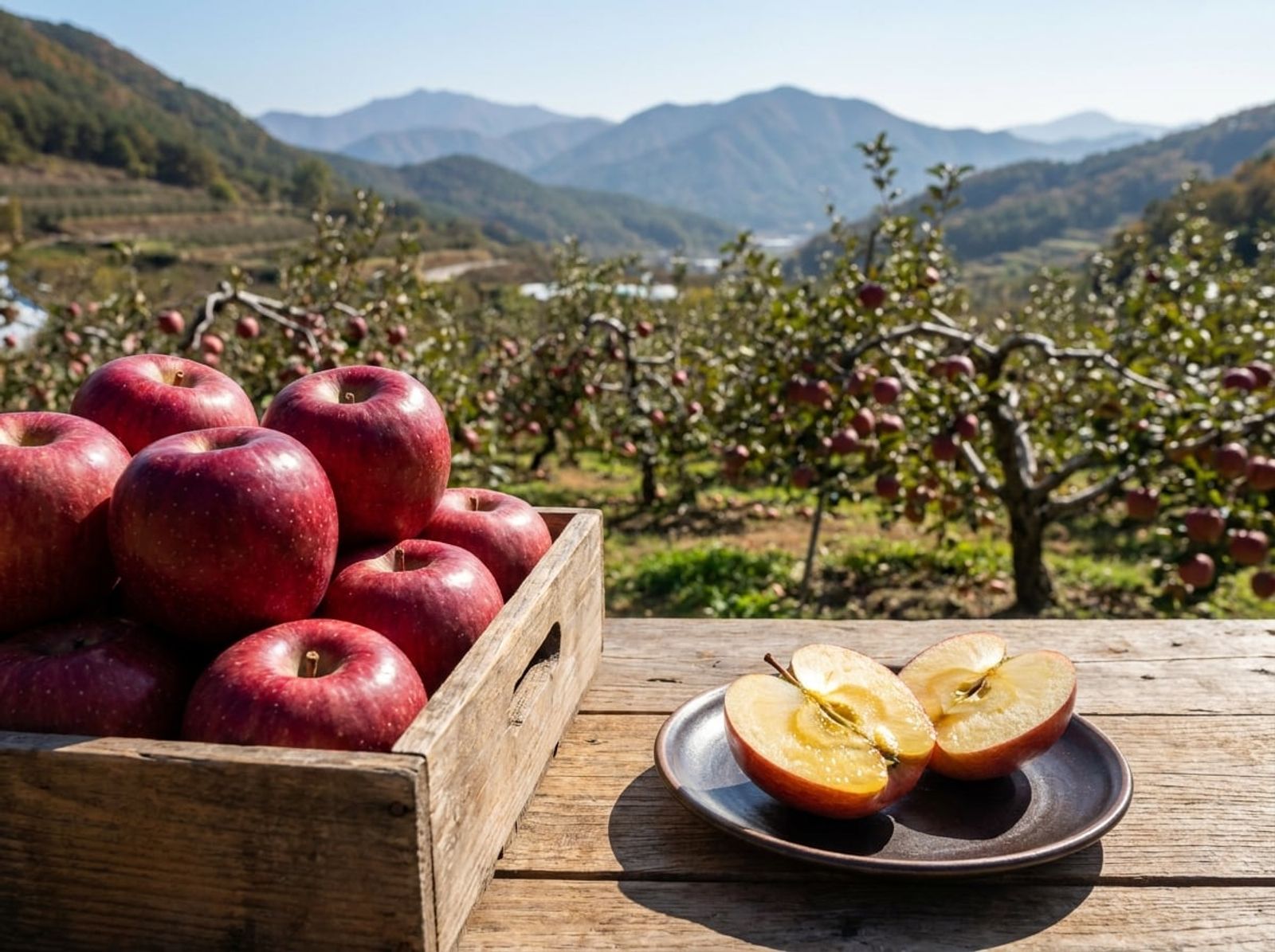
Cheongsong in North Gyeongsang Province is a mountain county home to Juwangsan National Park, known for its rock cliffs and waterfalls. When people talk about Cheongsong and food, apples come up first. According to local media, it is one of Korea's largest apple-growing areas, producing more than 10% of the national crop, and apples account for about 60% of the county's farm income. Visit in autumn and orchards of ripening red apples line the roads for miles. Reports say that in 2018, 3,756 farms on 3,339 hectares produced about 62,600 tons, or 13.2% of the national crop. The Cheongsong Apple brand is well enough known that it won the top prize in a national consumer brand award for 11 straight years through 2023.
Apple Farming Since the 1920s
There are two accounts of when apples were first planted in Cheongsong. According to local media, one says seedlings arrived in Deokgye-ri, Hyeonseo-myeon, in 1924; the other says about 600 seedlings were brought in in 1927. Either way, Cheongsong's apple history goes back nearly a century. The big turning point came in 1995. Members of a fruit-growing cooperative in Hyeondong-myeon visited the apple industry of South Tyrol in northern Italy and adopted its high-density planting of short apple trees as a model. After seedlings were confiscated at the airport, they were eventually brought in for research use, and Cheongsong is said to have introduced Korea's first low-growing apple orchard that same year.
Temperature Swings Make Firm, Sweet Apples
Cheongsong apples grow in uplands above 240 meters. Local media explain that the gap between day and night temperatures here averages more than 13°C over the year, and that this wide swing helps the fruit store nutrients in its flesh, making it firmer and sweeter. In effect, the trees make sugar in the daytime sun and burn less of it during the cool nights. As a result, Cheongsong apples are described as firm-fleshed, good keepers and so sweet they are nicknamed "honey apples." When you cut some apples, the flesh around the core looks translucent. This part, commonly called honey, is sugar that has gathered between the cells, a condition known as watercore. You usually find it in well-ripened late-autumn apples.
The Short Trees That Changed Korean Orchards
The high-density planting that started in Cheongsong spread across North Gyeongsang's apple industry. In 1995 provincial fruit officials also toured the apple industry in Washington State, and the province went on to promote a "new Gyeongbuk apple" policy modeled on South Tyrol-style high-density orchards using dwarfing M.9 rootstock. Cheongsong has supplied these rootstock seedlings to farmers steadily since 1999. Short trees can be reached without a ladder, which saves labor, and sunlight reaches the fruit evenly, improving color and flavor. That is how the familiar sight in Korean orchards today, rows of low apple trees trained neatly along wires, came about. Recently Cheongsong has also been putting effort into the yellow Shinano Gold variety, promoted as its "golden apple." The county also moved early to protect the name, registering the Cheongsong Apple trademark in 1994 and a geographical indication in 2007.
Choosing and Enjoying Cheongsong Apples
A good apple feels heavy for its size, has a fresh, not shriveled, stem, and sounds clear when tapped. If you want honey-filled apples, late-season varieties harvested in late autumn are your best bet, but the honey part tends to turn brown in long storage, so don't keep them too long after buying. If you eat the skin, wash the fruit well under running water. Cheongsong has held an apple festival timed to the harvest; it reached its 15th edition in 2019, and the previous year's festival reportedly drew 200,000 visitors. Dates and programs change every year, so check the county's announcements. Apple juice and dried apple chips are sold everywhere locally, and since the Juwangsan autumn foliage season overlaps with the apple harvest, autumn is a great time to combine hiking with an orchard visit.