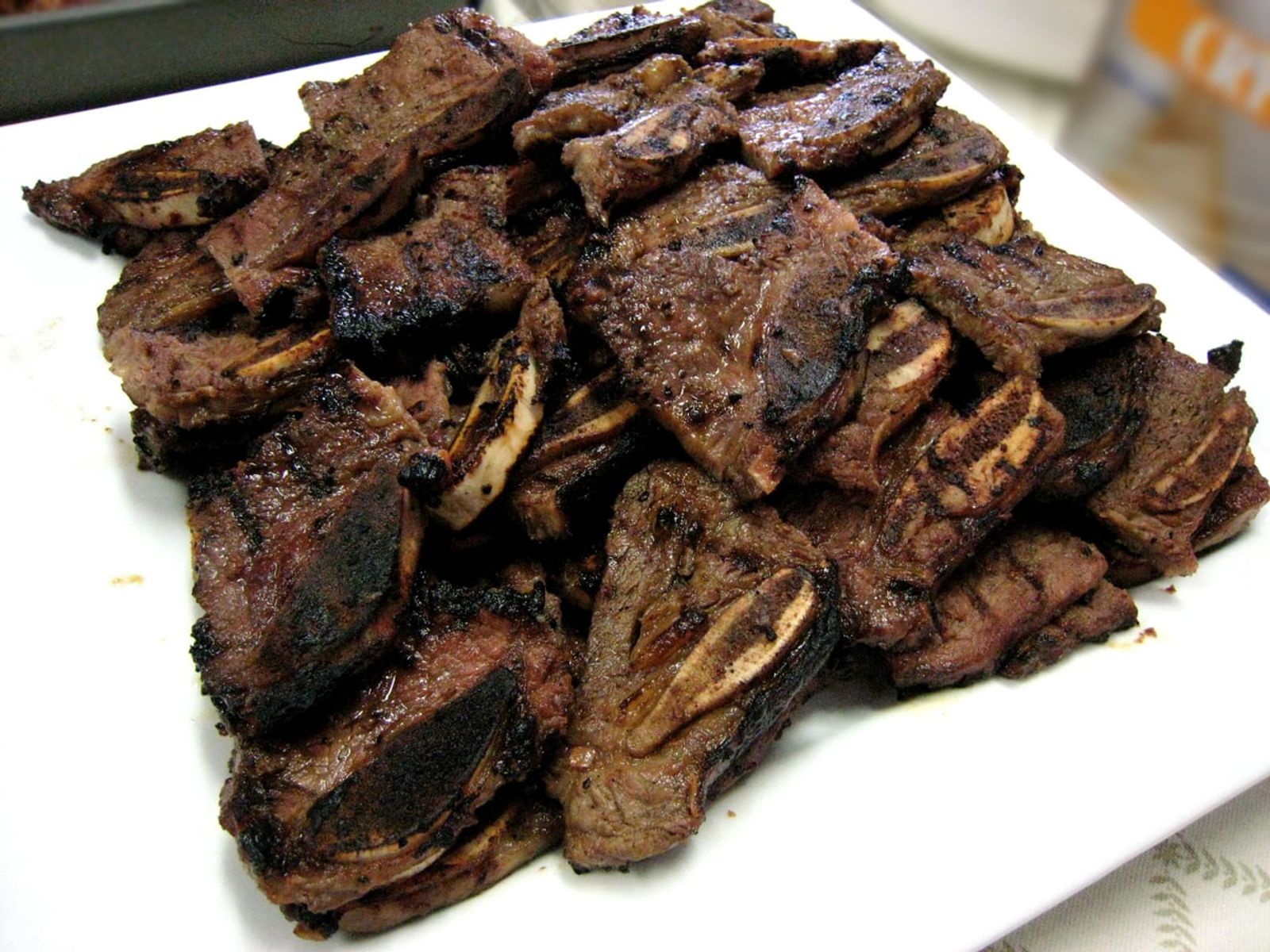
Pocheon Idong Galbi · Photo: star5112 / CC BY-SA 2.0 (Wikimedia Commons)
 KoreaGyeonggi · Pocheon
Pocheon Idong Galbi: The Mountain Rib Village Built by Soldiers, Visitors and Hikers
In Idong-myeon, a township in Pocheon in northern Gyeonggi Province, rib restaurants line the road one after another. Here is how cheap, generous beef ribs served to soldiers and their visiting families became a nationwide name, plus the toothpick-pinned cut, the soy-based marinade and the cold radish-water noodles that finish the meal.
A Name Taken From a Township
The 'Idong' in Idong galbi is not a word for anything moving around. It is the name of Idong-myeon, a township in the north of Pocheon, Gyeonggi Province. It is a mountain area close to Gungmangbong Peak and Baekun Valley, not far from Sanjeong Lake and Myeongseongsan Mountain. It is also a border region with many military bases nearby. That combination shaped the dish. On weekends the area filled up all at once with families visiting sons doing military service, soldiers on leave and day-trippers heading for the valleys and peaks. Reports say dozens of rib restaurants still cluster around Jangam-ri in Idong-myeon, forming a kind of galbi village. So Idong galbi is better understood as a food created by a whole neighborhood rather than the signature dish of any one restaurant.
When Did It Start? Sources Disagree
Exactly when Idong galbi began depends on whom you ask. One Korean food outlet traces it to the late 1950s, when restaurants around Idong-myeon served cheap, generous portions of meat to soldiers and visiting families. A 2020 newspaper article instead points to a restaurant opened in Jangam-ri in the late 1960s by an older woman who sold ribs and rice soup, saying she gave cash-strapped soldiers a generous ten ribs. A column in the Jeonbuk Ilbo, on the other hand, says it started in the early 1980s, when four small butcher-restaurants in Idong-myeon became known for their flavor. The accounts do agree on two things: soldiers and their visitors were the regulars, and the name spread nationwide in the 1980s by word of mouth among hikers.
Ribs Pinned With Toothpicks
The first thing you notice when Idong galbi arrives is a toothpick stuck through each rib. Articles explain that the meat is scored, opened out flat and then pinned with a toothpick. Another hallmark is the use of short-cut ribs, known as jjokgalbi, several of which make up one serving. The size of a serving varies by era and source. It used to be known as ten ribs per portion, and some recall that a serving cost about the same as pork belly in Seoul. A 2020 article describes a serving as five or six ribs. Either way, the point was cheap and plentiful. The idea of letting soldiers and families on a tight budget eat their fill is said to survive today in the dish's distinctive shape.
How It Differs From Suwon Galbi
Gyeonggi Province has two towns famous for beef ribs: Suwon in the south and Idong in the north. Korean media usually point to the seasoning as the difference. Suwon galbi is known for being seasoned with salt, while Idong galbi uses a sweet marinade built on soy sauce and corn syrup, which leaves the meat juicier. Some articles also highlight marinades loaded with fruit and the aroma of oak charcoal. That does not mean it is all marinated. Many places serve two kinds: saeng-galbi, plain ribs grilled over oak charcoal with no marinade, and yangnyeom-galbi, marinated by each restaurant's own recipe. Every restaurant also has its own way of tenderizing the meat, so the flavor shifts a little from one door to the next even within the same village.
A Meal That Ends With Cold Radish Noodles
An Idong galbi table usually comes with baek-kimchi (white kimchi) and dongchimi (radish water kimchi). The clear, tangy kimchi between bites of sweet, rich ribs is said to keep your palate fresh. Stew and rice are often served too, but many diners consider dongchimi noodles or dongchimi naengmyeon the proper way to finish a real Idong galbi meal. The restaurants are concentrated around Jangam-ri in Idong-myeon, Pocheon, and one account says there were once some 250 rib restaurants across Ildong-myeon and Idong-myeon. Weekends get crowded with tourists and visiting families, so it helps to arrive a little before or after the lunch rush. Stop by after visiting Sanjeong Lake, Baekun Valley or Myeongseongsan, known for its autumn silver grass, and you will be retracing the very route of the hikers who made this galbi famous.