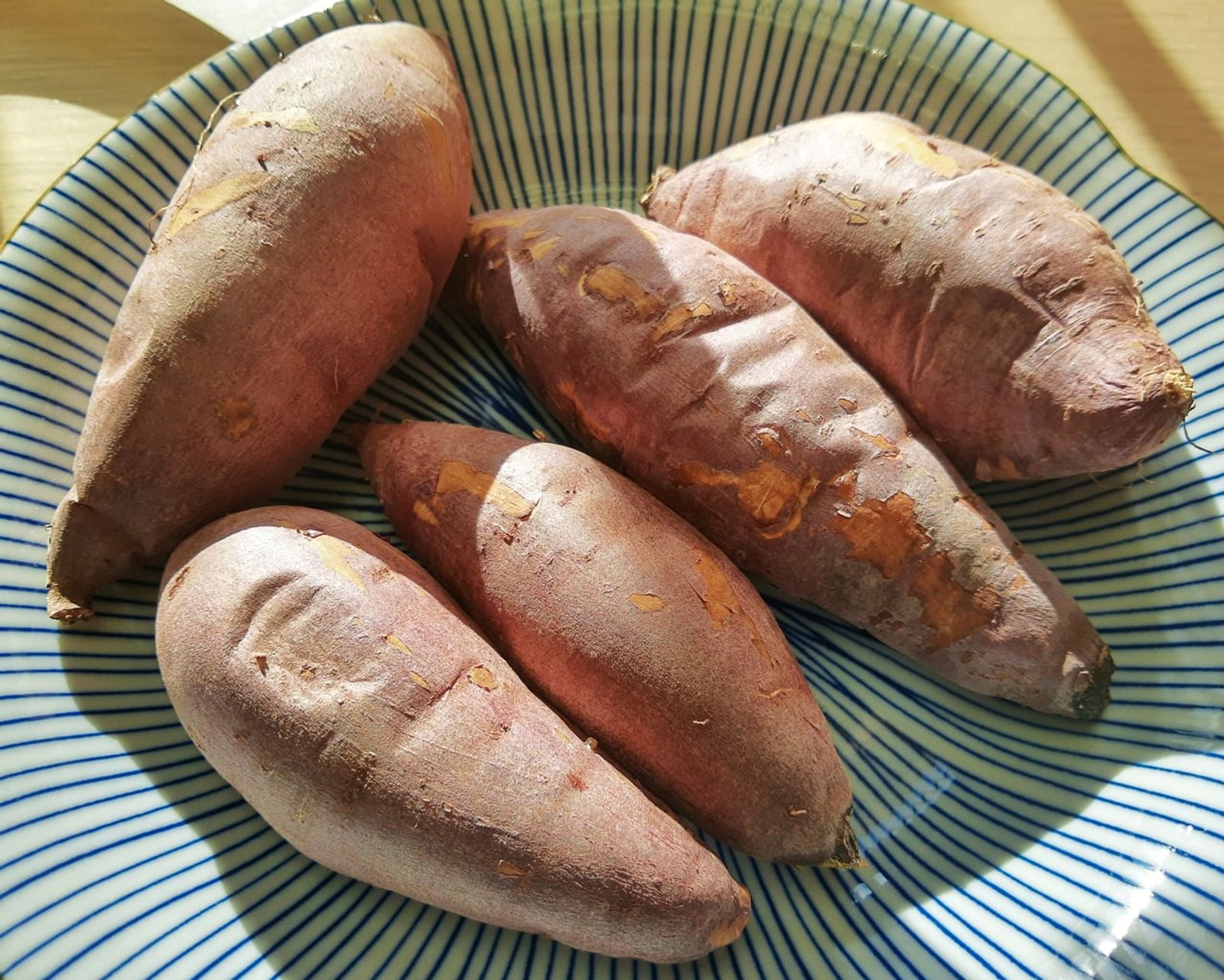
Yeoju Sweet Potatoes · Photo: Scudsvlad / CC BY-SA 4.0 (Wikimedia Commons)
 KoreaGyeonggi · Yeoju
Yeoju Sweet Potatoes: Gyeonggi's Signature Crop From Sandy Fields by the Namhan River
Yeoju is known as the biggest sweet potato grower in Gyeonggi Province. Here is how sweet potatoes reached Joseon by way of Tsushima, the sandy soil of Yeoju's fields, why hand-sized potatoes are so popular, and the autumn festival where well over a thousand people share roasted sweet potatoes at once.
A Crop That Came by Way of Tsushima
Sweet potatoes are not native to Korea. According to Korean Wikipedia, Joseon people knew of the crop from Chinese texts under the name gamjeo, and the best-known story of its arrival begins in 1763, under King Yeongjo. Jo Eom, an envoy returning from Japan, brought sweet potatoes from Tsushima and had them planted in Dongnae, today's Busan, but nobody knew how to keep them through winter and they all froze. The following year Dongnae's magistrate, Gang Pil-ri, obtained seed potatoes again, planted them and published Gamjeobo, a guide to growing them. Some records say the crop had already arrived earlier, under King Gwanghaegun, so sources differ. The word goguma is thought by some to come from Japanese, specifically the Tsushima dialect; people there reportedly still call sweet potatoes kōkōimo. Full-scale cultivation in Korea began in the late 18th century.
Yeoju, the Heart of Gyeonggi's Sweet Potatoes
Korean Wikipedia lists Ganghwa, Yeoju, Nonsan and Haenam among Korea's main sweet potato regions. Within Gyeonggi Province, Yeoju has long dominated. According to a research report from the Gyeonggi Agricultural Research and Extension Services, Yeoju accounted for 2,076 of the province's 3,849 hectares of sweet potatoes in 2004, about 60 percent. Yeoju is a town split by the Namhan River. The same report describes the typical field soil of the Yeoju-Icheon area as sandy loam. Free-draining soil generally suits sweet potatoes, which grow their tubers underground, and the Yeoju Agricultural Technology Center has run farmer workshops on the principle that soil care is everything for a root crop. Local media today describe Yeoju sweet potatoes as grown in fields with big temperature swings between day and night, sweet and soft-textured.
Why Hand-Sized Potatoes Sell Best
When choosing Yeoju sweet potatoes at a market, look at shape and size. The Gyeonggi research report describes the type consumers prefer as a short spindle shape weighing about 50 to 250 grams, and says this kind became a branded specialty of the Yeoju-Icheon area. Not too big, it is easy to roast or steam in one go and cooks evenly to the center. The same report also mentions a challenge. Planting the same limited land year after year led to more soil diseases such as Fusarium wilt, and around 2000 about 92 percent of the varieties grown in Yeoju and Icheon were disease-prone varieties introduced from Japan. Researchers have since tested disease-resistant Korean-bred varieties to find potatoes suited to Yeoju's soil. Behind today's Yeoju sweet potato lies that long period of switching varieties.
The Ogok Naru Festival and Roasted Sweet Potatoes
The liveliest way to enjoy Yeoju sweet potatoes is the autumn Yeoju Ogok Naru Festival. It is based on the story of shipping Yeoju's rice, sweet potatoes and other produce to the capital Hanyang by boat from the old Jopo ferry landing, and it recreates the ferry dock and market street and stages a tribute procession. In 2018 it was chosen as one of Gyeonggi's representative tourism festivals for the sixth year in a row. The headline event is the 'Roasted Sweet Potato Guinness'. Yeoju-grown sweet potatoes are roasted all at once in a giant roasting drum and shared among participants; in 2018 it was run at a scale that let 1,800 people roast and eat sweet potatoes at the same time. The 2026 festival was announced for October 23-25 around the Silleuksa Temple tourist area, with free admission. Dates and programs can change each year, so check before you go.
How to Enjoy Yeoju Sweet Potatoes
In Korea, sweet potatoes are both a snack and part of the winter scenery. The most common forms are gun-goguma, roasted in their skins, and jjin-goguma, steamed, and a street vendor's roasting drum is still one of the classic sights of a Korean winter. You can also choose by texture, from fluffy, chestnut-like bam-goguma to moist, extra-sweet hobak-goguma. If you visit Yeoju, pair your trip with Silleuksa Temple and the banks of the Namhan River. During the autumn harvest many people buy whole boxes at farm stands or the festival grounds. Local media report that Yeoju also runs a shared-brand system in which only top-grade sweet potatoes are separately sorted and checked before being sold under the city's label. At home, the usual practice is to store them somewhere cool and airy rather than in the fridge; roast a few and you get the sweetness of Yeoju's fields as it is.