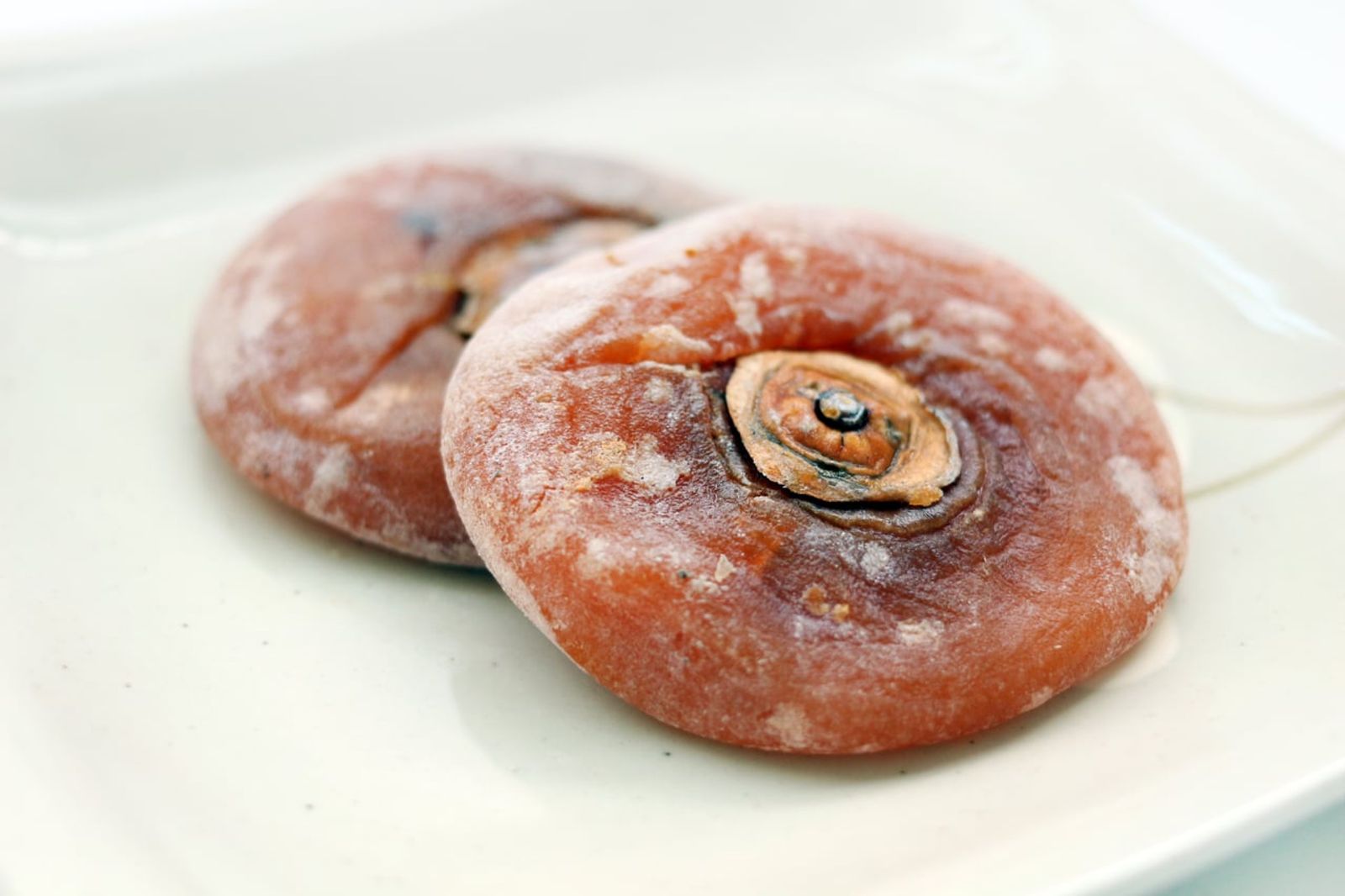
Wanju Gotgam · Photo: Hyeon-Jeong Suk / CC BY 2.0 (Wikimedia Commons)
 KoreaNorth Jeolla · Wanju
Wanju Gotgam: Seedless Gojongsi and Dark Red Duresi Dried Persimmons
The mountain villages of northern Wanju County, which wraps around Jeonju, are famous for gotgam, Korean dried persimmons. Here is the story of the nearly seedless native Gojongsi, the dark red Duresi, traditional natural drying, the 2024 geographical indication and the winter gotgam festival.
The Northern Hills of the County Around Jeonju
Wanju County wraps all the way around the city of Jeonju. Six townships in its northern Gosan area sit among the slopes of Daedunsan Mountain and neighboring hills, and have long been known for making gotgam. According to a 2024 report, about 500 farm households produce Wanju gotgam. Gotgam is made by peeling astringent persimmons and drying them. Picked and peeled in late autumn and hung up, the fruit loses moisture in the cold, dry winter wind, the astringency fades and the sweetness deepens. The seedless Gojongsi gotgam in particular is said to be made in the deep, cold valleys of Dongsang-myeon. In winter, strings of orange persimmons hang under the eaves and in drying sheds throughout these mountain villages.
Gojongsi: A Native Persimmon With Almost No Seeds
When people talk about Wanju gotgam, the first name that comes up is Gojongsi. It is a native persimmon that grows deep in the mountains and is described as nearly seedless, very sweet and soft-fleshed. Local media pass down a story about its name: it became a tribute fruit offered to the king from the mid-Joseon period on, and by the reign of King Gojong it had come to be called Gojongsi. We could not find a separate historical record confirming this, so it is best taken as local lore. The Gojongsi variety is also used in other gotgam regions such as Sancheong in South Gyeongsang. In Wanju, the seedless Gojongsi gotgam made in the valleys of Dongsang-myeon is the star.
Duresi and the White Bloom: The Taste of Natural Drying
The other face of Wanju gotgam is Duresi. Duresi gotgam made around Gosan turns dark red over time, so it is also called black gotgam, and it is known for the thick white powder that blooms on its surface. That powder is sugar from inside the fruit that seeps out and crystallizes, called sisang, or persimmon frost. Duresi is loved for being chewy and sweet. For both varieties, the key is how they are dried. According to press reports, Wanju has stuck to traditional natural drying, which was rated highly in the geographical-indication review. One article noted that turning persimmons into gotgam raises their sugar about fourfold and their vitamin C about 1.5 times.
2024: A Geographical Indication
Wanju gotgam has long been a favorite holiday gift. According to a 2014 article, a gotgam market opened at Gosan Market in the run-up to Seollal, the Lunar New Year, and an August 2014 article described Wanju gotgam as a popular Chuseok gift as well. That reputation became official in 2024. According to the Jeonbuk Ilbo, producers formed the Wanju Gotgam Association in 2022 to prepare, and in June 2024 the Korea Forest Service's review committee gave final approval for a geographical indication. Two products are registered: Duresi, the black gotgam, and Gojongsi, the seedless gotgam. The review recognized the region's geography and its preservation of traditional natural drying, and it is the first geographical indication for any Wanju farm or forest product.
When, Where and How to Enjoy It
Persimmons are peeled and hung in late autumn and finish drying in winter, so gotgam is in season from winter through the Lunar New Year. The Wanju Gotgam Festival is held in January to match. In 2025, the 10th festival ran from January 10 to 12 around the Wanju County Office, the first since the geographical indication. It is co-organized with the Unju farmers' cooperative, and you can taste and buy gotgam straight from producers. Dates and venues can change each year, so check ahead. Gotgam is great on its own, but it is also soaked in sujeonggwa, a traditional ginger and cinnamon punch. Wanju is close to Jeonju Hanok Village, so it is easy to take a day during a Jeonju trip to visit the mountain villages around Gosan or Daedunsan Mountain.