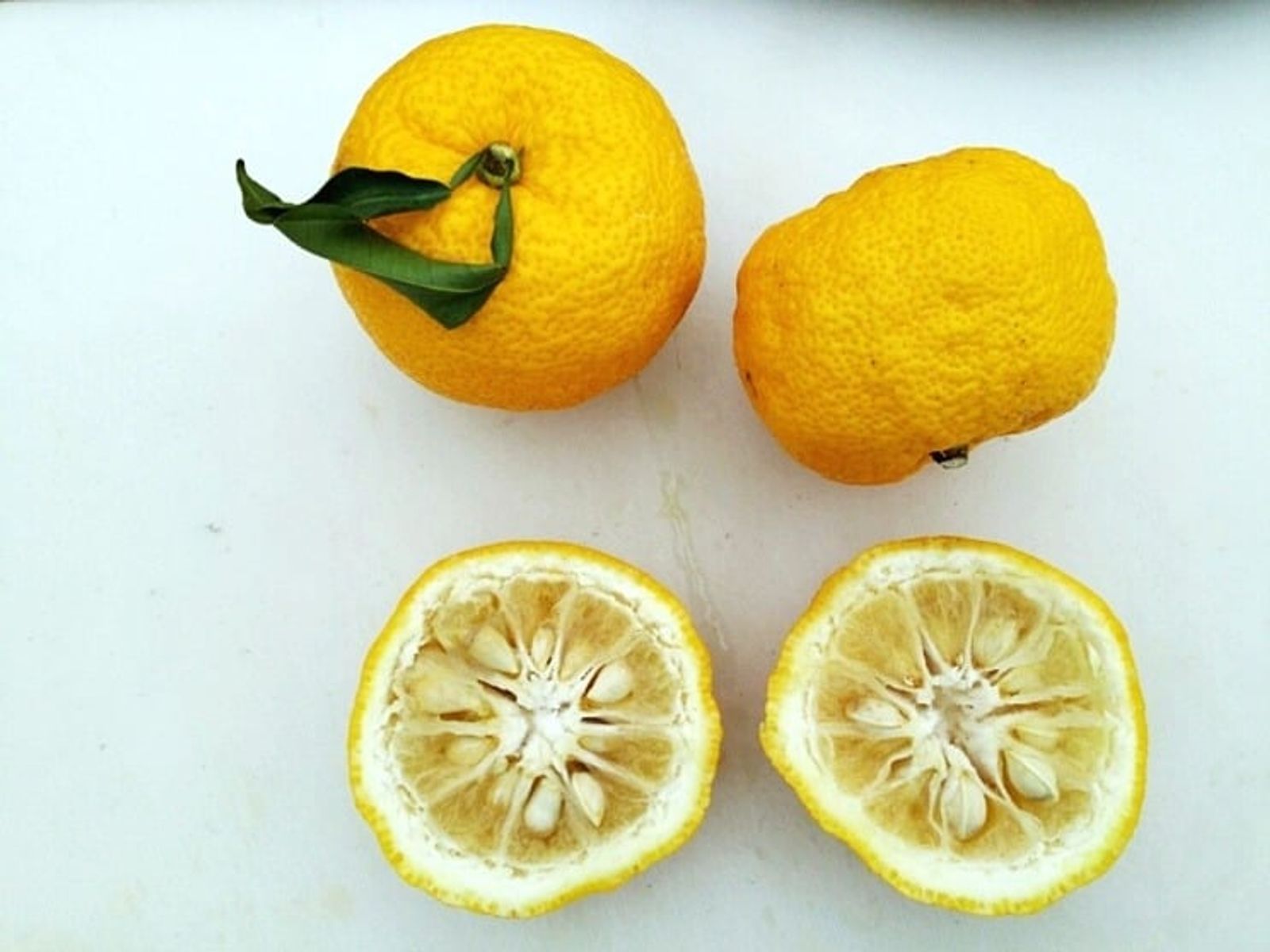
Yuja fruits with their bumpy peel, whole and halved · Photo: 경빈마마 / CC BY 4.0 (Wikimedia Commons)
 KoreaSouth Jeolla · Goheung
Goheung Yuja: The "University Tree" Fruit of Korea's Top Citron Coast
Ask Koreans where the yuja in their winter citron tea comes from, and Goheung in South Jeolla tops the list. Here is how this sea-breeze-grown citrus made Goheung the country's biggest producer, the story of the "university tree," and how to enjoy yuja syrup and tea.
Where Your Cup of Citron Tea Comes From
Yuja (citron, related to Japanese yuzu) is a yellow fruit with bumpier skin and a far stronger fragrance than a mandarin. The flesh is sour and full of seeds, so instead of peeling and eating it, Koreans mostly slice it skin and all and preserve it in honey or sugar as yuja-cheong. The yujacha (citron tea) many Koreans drink in winter is simply that preserve stirred into hot water. Among Korea's yuja-growing areas, Goheung in South Jeolla Province comes first. A 2024 report says Goheung grows more than 60 percent of the nation's yuja, and one count put its share above 66 percent in 2019. A 1990s article gave a figure of around 30 percent, so the share has changed a lot over time, but almost no one disputes that yuja means Goheung. Goheung yuja is also registered as a geographical indication.
A Legend of Jang Bogo and the Sea Wind
Goheung's yuja comes with a legend. Jang Bogo, the Silla-era "King of the Sea," is said to have brought yuja back from Tang China. Caught in a storm, he sheltered off the Goheung coast, and seeds from a broken fruit planted there became the first Goheung yuja. Articles disagree even on which king's reign this happened in, and it is not confirmed by historical records, so enjoy it as a local tale. Why yuja suits Goheung is easier to explain. Yuja grows well along the warm southern coast where rain is plentiful, and growers say sea breezes make for better fruit. Goheung, at the tip of a peninsula with the sea close on three sides, ticks all these boxes. Orchards spread especially widely around Pungyang-myeon and Duwon-myeon, where in autumn the yellow fruit colors whole hillsides.
The "University Tree"
There was a time when Goheung people called the yuja tree the "university tree." A 2005 Seoul Shinmun article explains that yuja was such a lucrative crop that just three or four trees could pay to send a child to university. In earlier times the fruit was precious enough to be placed on the table for clan ancestral rites after the autumn harvest. It was not always smooth sailing. After 1997, bumper crops coincided with falling demand, prices collapsed, and some farmers even pulled up their trees. At its peak in 2000, Goheung had about 2,500 households growing yuja on 605 hectares. After a Goheung farm cooperative first exported yuja preserve to Japan in 1997, overseas markets opened up, and reports say prices stabilized again in the 2000s.
How to Enjoy Yuja Preserve and Tea
The basic way is yuja tea. Spoon two or three spoonfuls of yuja-cheong, the citron shreds preserved in honey or sugar, into hot water and stir. In Korea people chew and eat the peel too. In summer it goes into cold water or sparkling water as an ade, and a little is added to salad dressings or meat sauces for a bright citrus note. In Goheung there are older uses as well: floating a few yuja in a mesh bag in the bath, or steeping the fruit in soju to make yuja liquor. Japan has a wide range of yuzu products, which helped open the route for Korean yuja preserve to be exported there. Today you can easily find Goheung yuja made into vinegar, drinks and powder too.
When to Go and Where to Find It
Yuja ripens yellow and is harvested in late autumn. Visit Goheung then and you will see fields along the roads hung with yellow fruit. In 2024 the Goheung Yuja Festival was held around Handong-ri in Pungyang-myeon, regarded as Korea's largest yuja-growing area, and reports say that in 2025 it was held as a South Jeolla representative festival for the second year running. Dates and venues can change each year, so check Goheung County's information first. Yuja preserve and other yuja products are sold at markets and specialty shops in Goheung town and at highway rest areas. Fresh yuja appears only in harvest season and doesn't keep long, so a jar of preserve is the easiest souvenir to carry. Pair it with a visit to the Naro Space Center or a coastal drive for a very Goheung kind of day.