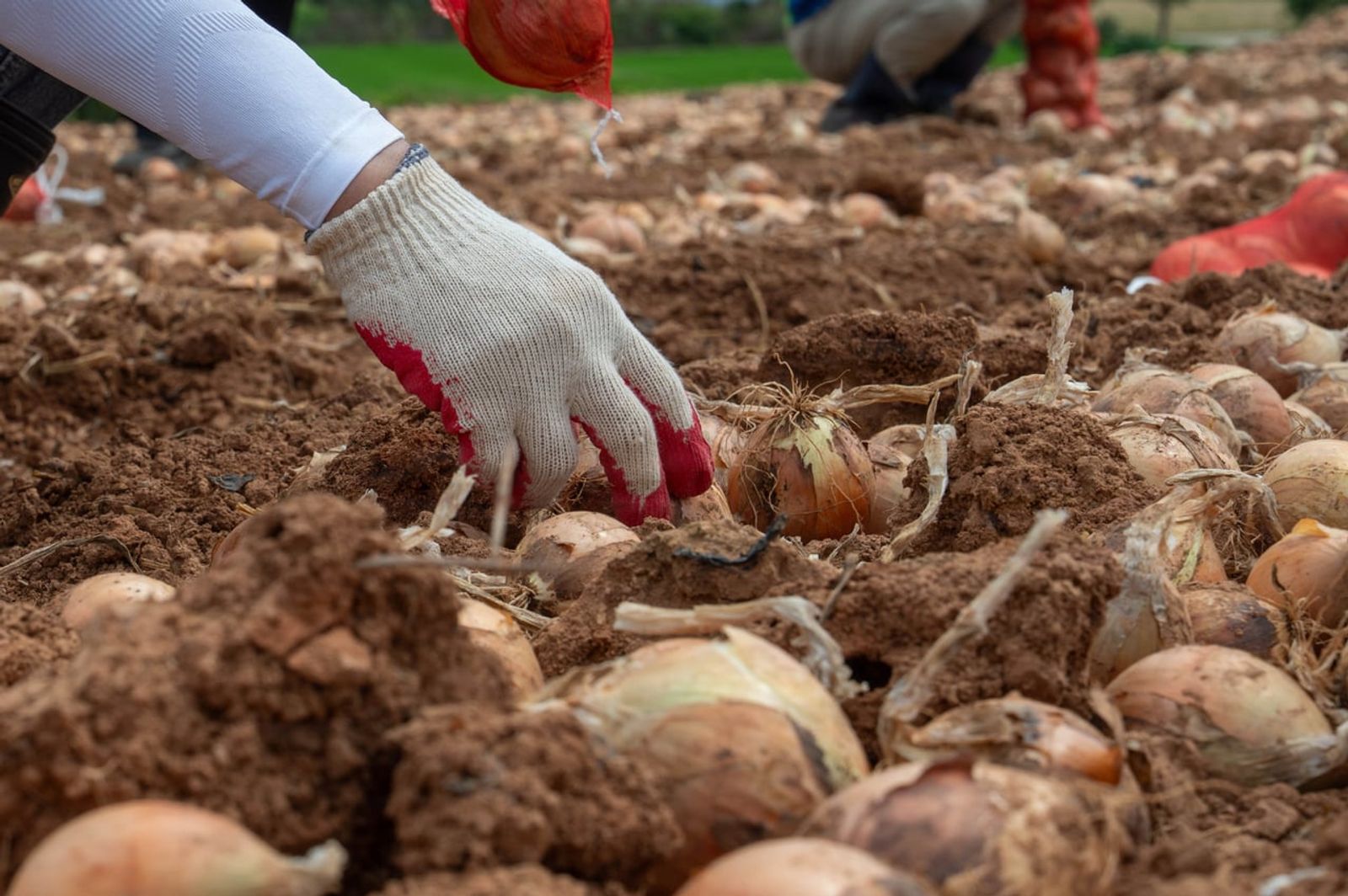
Harvesting onions in a field in Muan · Photo: U.S. Air Force photo by Staff Sgt. Cedrique Oldaker / Public domain (Wikimedia Commons)
 KoreaSouth Jeolla · Muan
Muan Onions: Sweet Onions From Red-Clay Fields, Best Tasted as Onion Kimchi With Straw-Fire Pork
When Koreans talk about onions, Muan in South Jeolla always comes up. Here is how onion farming that began in one village in the 1930s grew into the country's biggest growing area, how the sea and red clay shape the flavor, and how locals eat onions best: as onion kimchi alongside straw-fire grilled pork.
Korea's Signature Onion Country
Onions are a staple of the Korean table. They sweeten stir-fries, stews and jajangmyeon, and at barbecue restaurants raw onion slices are dipped in sauce and eaten with the meat. The best-known place for onions is Muan County in South Jeolla Province. Figures for Muan's share of the national crop vary by source. Newsis in 2020 described Muan as the biggest producer, growing about 20 percent of Korea's onions, while a 2026 Rural Development Administration webzine said over 15 percent, adding that one in every six sacks of onions sold nationwide comes from Muan. Either way, it is one of the largest single-county onion areas in the country. A 2019 report said about 80 percent of Muan's onions are grown in its coastal areas.
It Started in One Village in the 1930s
Onion growing in Muan is said to have begun in the 1930s in Sama-ri, Cheonggye-myeon. According to Newsis in 2020, seeds and growing techniques were brought in from Japan at the time, and onion farming is believed to have later spread to neighboring counties such as Hampyeong, Jangseong, Naju and Yeonggwang. In other words, Muan was the starting point of today's onion belt across southwestern South Jeolla. Climate is the first reason Muan suits onions. Being by the sea, its winters are relatively mild, and the weather turns cool just when the bulbs are swelling, which helps them grow well. Onions that overwinter in the fields are harvested around early summer, when Muan's fields fill with rows of onion sacks stacked on the red soil.
Flavor From Red Clay and Sea Wind
No talk of Muan skips its red clay soil, hwangto. The 2026 RDA webzine notes that much of Muan County is red clay, which drains well, and that its proximity to the sea brings cool sea breezes and plenty of sunshine, all reasons it is considered ideal for onions. Locals have built a brand around "Muan red-clay onions." Many claims about how the clay itself affects flavor are promotional, so take that part as local pride. Muan onions are described as firm-fleshed with a gentle sweetness and good keeping quality. Raw, they are crisp; cooked, their sweetness turns deep and mellow. According to a 2020 article, early varieties, the first to come out at harvest, don't store as long but are less pungent and sweeter, which makes them especially good raw.
Muan-Style Onion Kimchi and Pickles
In Muan, onions can be the star of the side dishes. The best example is onion kimchi. The method Newsis described in 2020 is to stir glutinous rice flour into cold water and cook it into a thin porridge, add fish sauce, toss the onions in it and let them ferment at room temperature. To tame the onions' sharp bite and the heartburn it can cause, one long-running local restaurant featured in the same article ages it for about ten days in winter and two or three days in summer. Once ripe, it turns both sweet and tangy, and it goes especially well with meat. Whole small onions pickled in soy sauce, yangpa jangajji, also often appear on Muan tables. Soy sauce and vinegar are boiled and poured over the onions several times, and the sweet-sour flavor cuts through rich food. The pickles are said to use small purple onions, often called "yak-yangpa."
With Straw-Fire Pork: Where to Try It
Muan's onion kimchi shines brightest next to jippulgui. This local specialty is made by lighting dry rice straw and searing pork in the fierce flames in moments, so the straw's smoky aroma seeps into the meat. The Mongtan-myeon area in particular is said to be known for it. As the headline of a 2020 article put it, straw-fire pork without onion kimchi "gets greasy and tiresome fast"; for Muan people the two belong together. If you want to take onions home, look for them at markets in Muan town or local farm co-op stores after the early-summer harvest. Buying by the sack is good value, and hung in a cool, airy place they keep for a long time. Muan has its own international airport and is close to Mokpo, so it makes an easy stop on a southwest coast trip.