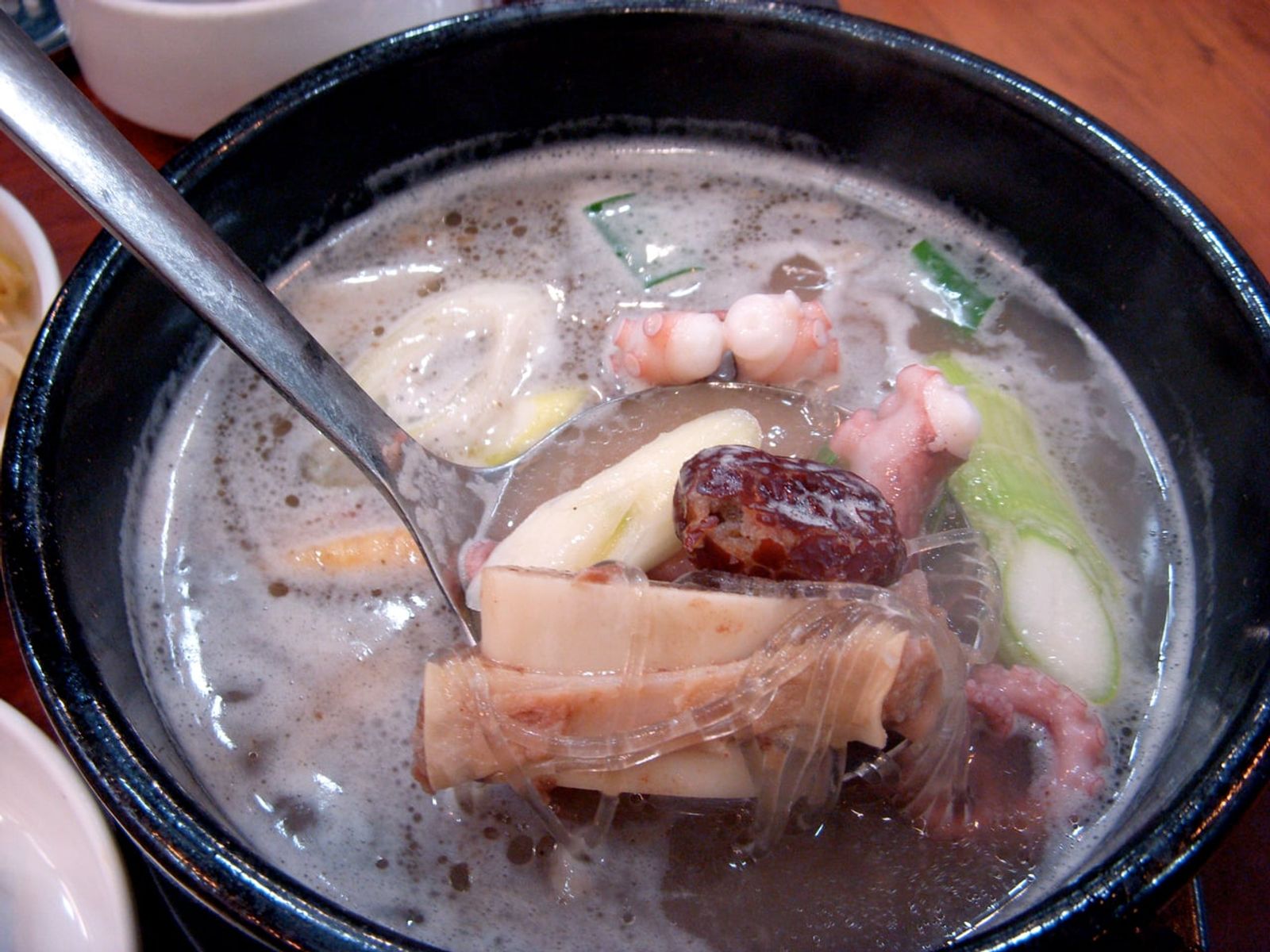
Galnaktang with beef ribs and octopus · Photo: L. W. Yang / CC BY 2.0 (Wikimedia Commons)
 KoreaSouth Jeolla · Yeongam
Yeongam's Galnaktang: Beef Ribs and Mudflat Octopus in One Pot, and How to Eat It in Dokcheon
In Dokcheon, Haksan-myeon, Yeongam County, a whole street is lined with octopus restaurants, and its signature dish is galnaktang: beef rib soup with live long-arm octopus added. Here is Dokcheon's history as a mudflat octopus hub, how galnaktang differs from yeonpotang, the best season and ordering tips.
Where Beef Ribs Meet Octopus
Galnaktang is, as the name says, a soup of galbi (beef ribs) and nakji (long-arm octopus). Hanwoo beef ribs are simmered for a long time to make a clear, rich broth, and live octopus is added at the very end and cooked just briefly. With beef from the land and octopus from the tidal flats in one bowl, it is known in the southwest as a restorative dish. The place most associated with galnaktang is Dokcheon-ri in Haksan-myeon, Yeongam County, South Jeolla. In 2002 the Seoul Shinmun named galnaktang, made with Jeolla beef ribs and mudflat octopus, as the best of Yeongam's many specialties. You can find it in Gwangju and Seoul today too, but for many Koreans galnaktang still means Dokcheon first.
Dokcheon, Once a Hub for Mudflat Octopus
Dokcheon was once a gathering point for octopus. As word spread that octopus from the mudflats around Dokcheon and neighboring Miam-myeon was the best, octopus restaurants naturally clustered into a street. Dokcheon also holds a five-day market, which is said to be why its old octopus eateries have carried on to this day. The seascape, however, has changed enormously. According to a 2021 report, the Yeongsan River estuary dam and the Geumho seawall cut off the tidal channels, and the wide mudflats around Dokcheon and Sani-myeon in Haenam were turned into farmland. The sea that once yielded octopus shrank, but the octopus cooking tradition survived, and the street now draws tour buses full of visitors on weekends. In 2015 the Ministry of Culture, Sports and Tourism designated it a notable octopus food street, and around 15 specialist restaurants are said to operate there today.
How Did Galnaktang Begin?
When and by whom galnaktang was first made is not confirmed by any official record. On the Dokcheon street, one old restaurant operating since the 1970s is often introduced as the originator of galnaktang and octopus yeonpotang, but that comes from the restaurant itself and the media featuring it, so it is hard to treat as established fact. In terms of cooking, galnaktang is essentially a variation: southern-style galbitang with live octopus added. A 2021 report describes it as live octopus briefly blanched in long-simmered rib soup. Given that in southwestern Yeongam the fields where cattle are raised lie right next to the mudflats where octopus live, it may have been natural for the two to end up in one pot. That too is only a guess, so the safest summary of its origin is simply that there is no exact record.
Yeonpotang vs. Galnaktang
Alongside galnaktang, the soup people order most on Dokcheon's octopus street is yeonpotang. It is a clear octopus soup made with almost no seasoning, and its name is said to come from the way the octopus's arms spread out like a lotus flower (yeon) as it cooks. It is usually simmered with vegetables such as water dropwort (minari) and green onion for a light, refreshing taste. The difference lies in the broth. Yeonpotang gets its clean, light flavor from just octopus and vegetables, while galnaktang is built on a long-simmered beef rib broth, so it is much heartier and deeper. If you want to taste the octopus itself, go for yeonpotang; if you want a filling meal, galnaktang is the better pick. Many restaurants also serve spicy octopus salad, octopus bibimbap or nakji horong (octopus wrapped on a stick and grilled), so if you go as a group, center the meal on one soup and add a side or two.
Best Season and Ordering Tips
Octopus spawn in June and July and fatten up in autumn as the cold winds arrive, which is why autumn octopus is prized as restorative food. A 2021 report explains that octopus feed most actively in October, when the water cools to around 20°C. That is why autumn is often named as the best time to visit Dokcheon's octopus street. Many places let you order galnaktang by the single portion, and many people eat the ribs and octopus first, then add rice to the broth. Octopus turns tough if it cooks too long, so eat it as soon as it reaches the table. With live octopus dishes, the suckers can cling to your throat even when finely chopped, so chew thoroughly. Octopus prices swing widely with the season and the catch, so check the market price before ordering. The street pairs well with a trip to Wolchulsan in Yeongam or to Mokpo.