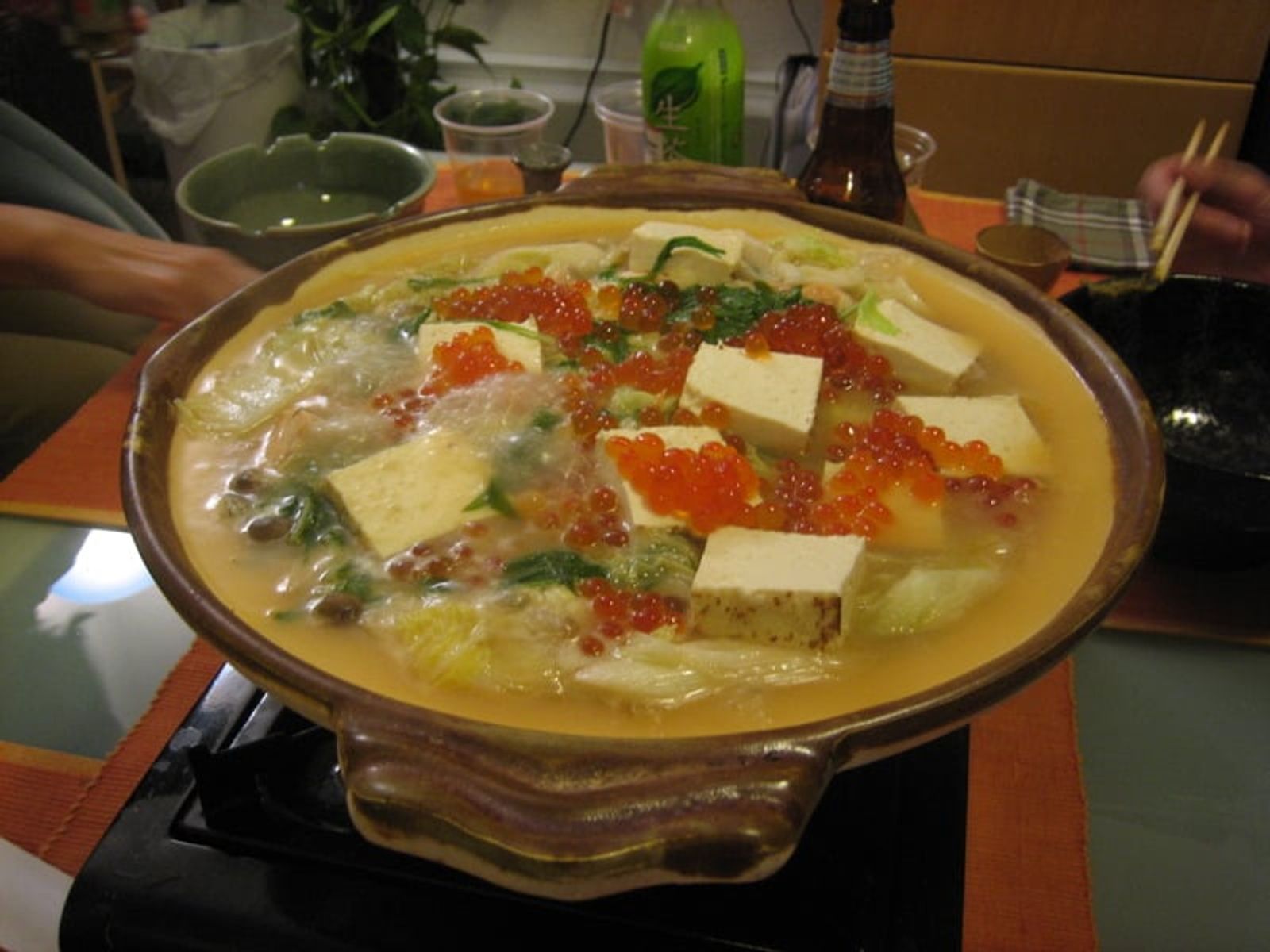
Ishikari nabe with salmon, salmon roe and tofu · Photo: naotakem / CC BY 2.0 (Wikimedia Commons)
 JapanSapporo
Ishikari Nabe: Hokkaido's Miso Salmon Hot Pot, Named After a Salmon River
A miso soup that fishermen in Ishikari, just north of Sapporo, made with salmon became one of Hokkaido's signature hot pots. Here is what goes in it, why sansho pepper goes on last, how it differs from sanpei-jiru, and when and where to eat it.
Where the Name Comes From: the Ishikari River
Ishikari nabe (石狩鍋) is a Hokkaido hot pot built around salmon and seasoned with miso. It takes its name from the Ishikari River, which salmon swim up every autumn to spawn. The river reaches the sea in Ishikari City, which borders Sapporo to the north, and the area is known to have thrived on salmon fishing since the Edo period. Hokkaido's official tourism site describes Ishikari nabe as a local dish that began in Ishikari City. It is also a common winter item at local-cuisine restaurants and izakaya across Sapporo, so alongside jingisukan it is one of the easiest Hokkaido hot pots for visitors to find.
From a Fishermen's Meal to a Restaurant Dish
Ishikari nabe is said to have started as makanai, the everyday meal of Ishikari fishermen in the Meiji era: chunks of salmon, bony offcuts (ara) and vegetables simmered in miso soup. The dish is believed to have been refined for paying guests by a long-established restaurant near the mouth of the Ishikari River that opened in 1880. Two touches are usually credited to that kitchen: Western vegetables such as onion and cabbage, which fishermen of the time would hardly have used, and sansho pepper, which adds depth to the broth and masks the fishiness of salmon. Most of this comes down as oral history, so sources differ slightly on exactly when the dish took shape.
What Goes In: Miso, Kombu, Salmon and Sansho
The basic recipe is miso dissolved in kombu stock, with salmon meat and bony offcuts simmered alongside tofu, onion, cabbage, daikon, carrot, shiitake and long green onion. Some homes and restaurants add sake lees to the broth or use a little butter or milk as a hidden note, and some crown it with salmon roe (ikura), so no two pots look quite the same. What almost never changes is the sansho pepper sprinkled on at the end; a pinch of sansho berries or powder lifts the richness of the miso. Ishikari nabe is often confused with sanpei-jiru, another salmon soup, but sanpei-jiru is seasoned mainly by the salt that comes out of cured fish, while Ishikari nabe uses fresh, unsalted salmon and is seasoned with miso.
Recognized as a Hokkaido Classic
In 2007 Ishikari nabe was named, alongside jingisukan and chanchan-yaki, as one of Hokkaido's representative dishes in the Ministry of Agriculture, Forestry and Fisheries' list of 100 local dishes of Japan's farming and fishing villages. The ministry's local-cuisine website also features it as a classic winter dish. In Ishikari City, local restaurants formed a group to promote the dish, and the Ishikari Nabe Day it created (September 15) was officially registered with the Japan Anniversary Association in 2008. The date falls in Ishikari's salmon season and plays on reading 9 and 15 as "the time to eat." It was also certified in fiscal 2023 (March 2024, according to Ishikari City) under the "Future" category of the Agency for Cultural Affairs' "100-Year Food" program, which recognizes food cultures passed down through generations, and received a special jury award.
When and Where to Eat It
The season runs from autumn, when salmon swim upriver, through Hokkaido's bitterly cold winter. If you want to follow the origin story, look for the long-running restaurants around the mouth of the Ishikari River; if time is short, many local-cuisine restaurants and izakaya around Sapporo Station and Susukino serve it in pots for one or two. Once the pot comes to a boil, fish out the salmon before it falls apart, and add sansho a little at a time to see how it changes the flavor. The salmon and vegetables sweeten the miso broth, so even a few spoonfuls of soup will warm you through. Some places top it with salmon roe or butter, so checking the menu photos is a good way to choose.