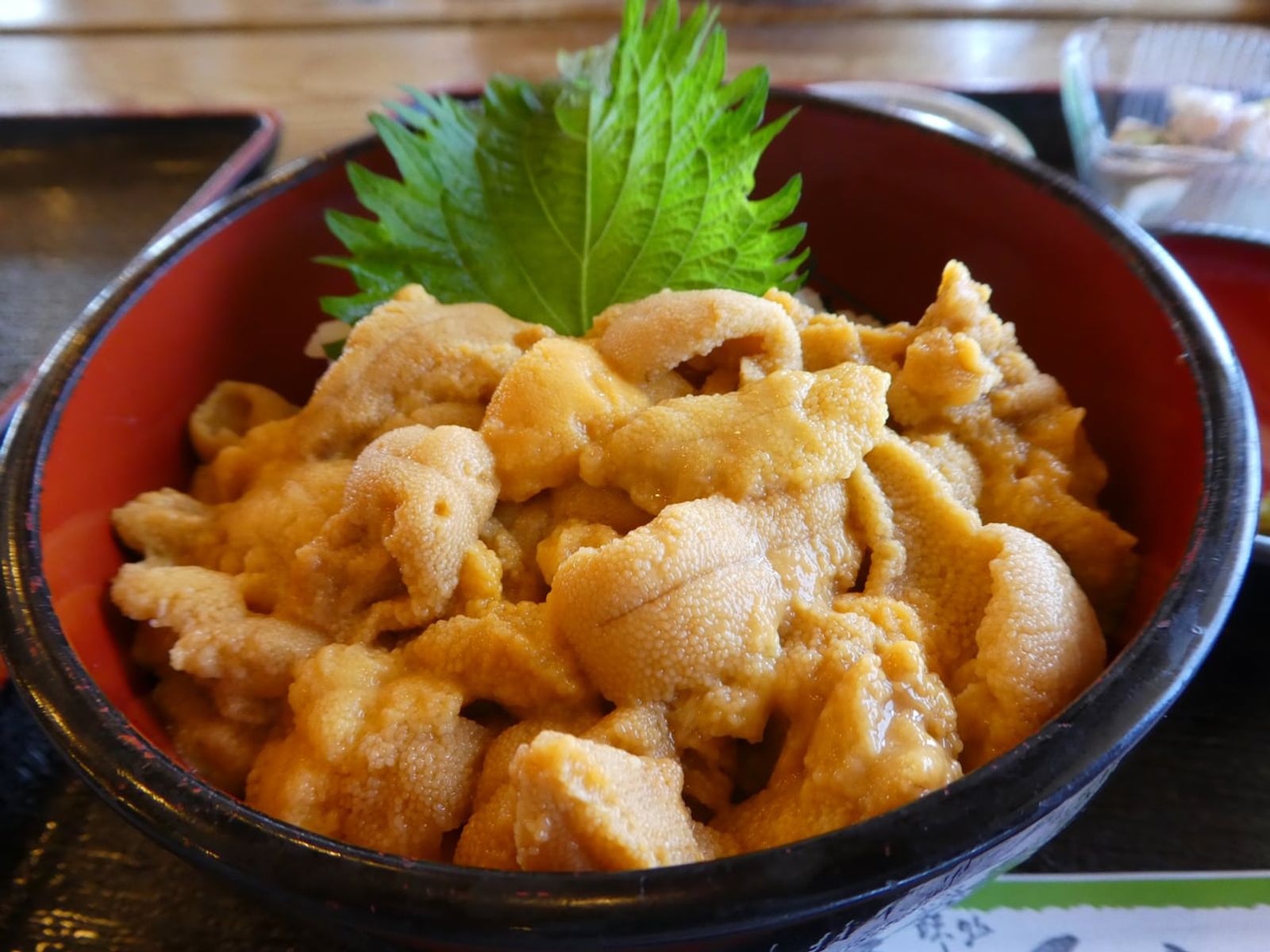
Uni don served in Shakotan · Photo: 切干大根 / CC BY-SA 4.0 (Wikimedia Commons)
 JapanOtaru
Otaru and Shakotan Sea Urchin Bowls: Red Bafun, White Murasaki and a Summer-Only Season
Every summer Otaru and the Shakotan Peninsula to its west fill with people coming for sea urchin bowls. Here is the difference between the two kinds of urchin, when the season runs, where to eat in Otaru and Shakotan, and what to know before you order.
Summer Means Sea Urchin
The Shakotan Peninsula, which stretches west from Otaru, is famous for the deep blue water locals call "Shakotan Blue." Its other claim to fame is sea urchin (uni). Hokkaido's official tourism site says Shakotan's wild urchin is in season from June to August, and that the uni don, a bowl of rice topped with urchin and available only in that window, is the area's signature dish. Otaru's own coast also has an urchin season that generally runs from around mid-May into summer, so you can try the day's catch at the market by the station or around the canal. That is why many summer visitors plan a route from Sapporo through Otaru to Shakotan in search of urchin. Urchin is a wild product whose catch changes every year, so even within one summer the flavor and price can differ a lot depending on when you go.
Two Kinds of Urchin: Red Bafun and White Murasaki
Two main kinds of urchin are caught here. One is the ezo bafun urchin, called aka (red) and known locally as gaze. Its roe is deep orange, rich and sweet, and it costs more. The other is the kita murasaki urchin, called shiro (white) and known locally as nona. It is pale yellow with a lighter sweetness and is generally cheaper and easier to find. Hokkaido's tourism site explains that Shakotan urchin grows in kelp-rich water, which gives it a delicate yet deep flavor. Bowl shops often sell a red bowl with only bafun, a white bowl with only murasaki, and a red-and-white bowl with half of each. If it is your first time, the red-and-white bowl lets you compare the two side by side.
When to Go: Opening Day and Peak Season
Urchin fishing has fixed seasons and hours to protect the stock. According to Hokkaido's tourism site, Shakotan urchin is in season from June to August, and local fishing cooperatives set the exact opening each year. For the Otaru coast, the local newspaper has reported the season opening in mid-May year after year, and it generally runs through the summer. Conditions vary a lot from year to year, though. In 2025, high sea temperatures cut the catch of bafun urchin along the Otaru coast to 223 kg, about a tenth of the figure two years earlier, and prices soared, according to local reports. If bafun urchin is a must for you, check that year's opening date and fishing conditions before you set out.
Where to Eat: From Otaru Station to the Peninsula's Fishing Ports
In Otaru, the closest option is the market area right next to Otaru Station, where seafood stalls and restaurants let you buy fresh urchin or eat it on rice. There are also shops serving urchin around Sushi Street, a little over ten minutes' walk from the station, and around the canal and Sakaimachi Street. In Shukutsu, a fishing district a short drive from the center, there are restaurants run by fishing families. On the Shakotan Peninsula, uni don restaurants are scattered around the fishing ports. Public transport is limited, so many people go by rental car or tour bus, and on peak summer weekends lines can form outside, so arriving early helps. For scenery, choose Shakotan; if you are working around train times, Otaru is the realistic choice.
Good to Know Before You Order
Uni don prices are often listed only as jika (時価), meaning market price. That means the price changes with the day's catch and the type of urchin, so always ask before you order. Bowls piled with bafun can get quite expensive early in the season. Some market stalls sell urchin by the 100 grams, so you can also buy a small amount to taste instead of a full bowl. Some places sell urchin bowls outside the season, but then the urchin may come from elsewhere or be preserved, so ask if you want to know whether it is fresh local urchin. On days when bad weather keeps the boats in, fresh urchin may not be available at all. Rather than pouring on soy sauce, try a little wasabi first so you can taste the urchin's natural sweetness.