Otaru Panju
 JapanOtaru
Otaru Panju: A Bun-Like Baked Manju, the Port Workers' Snack of Otaru
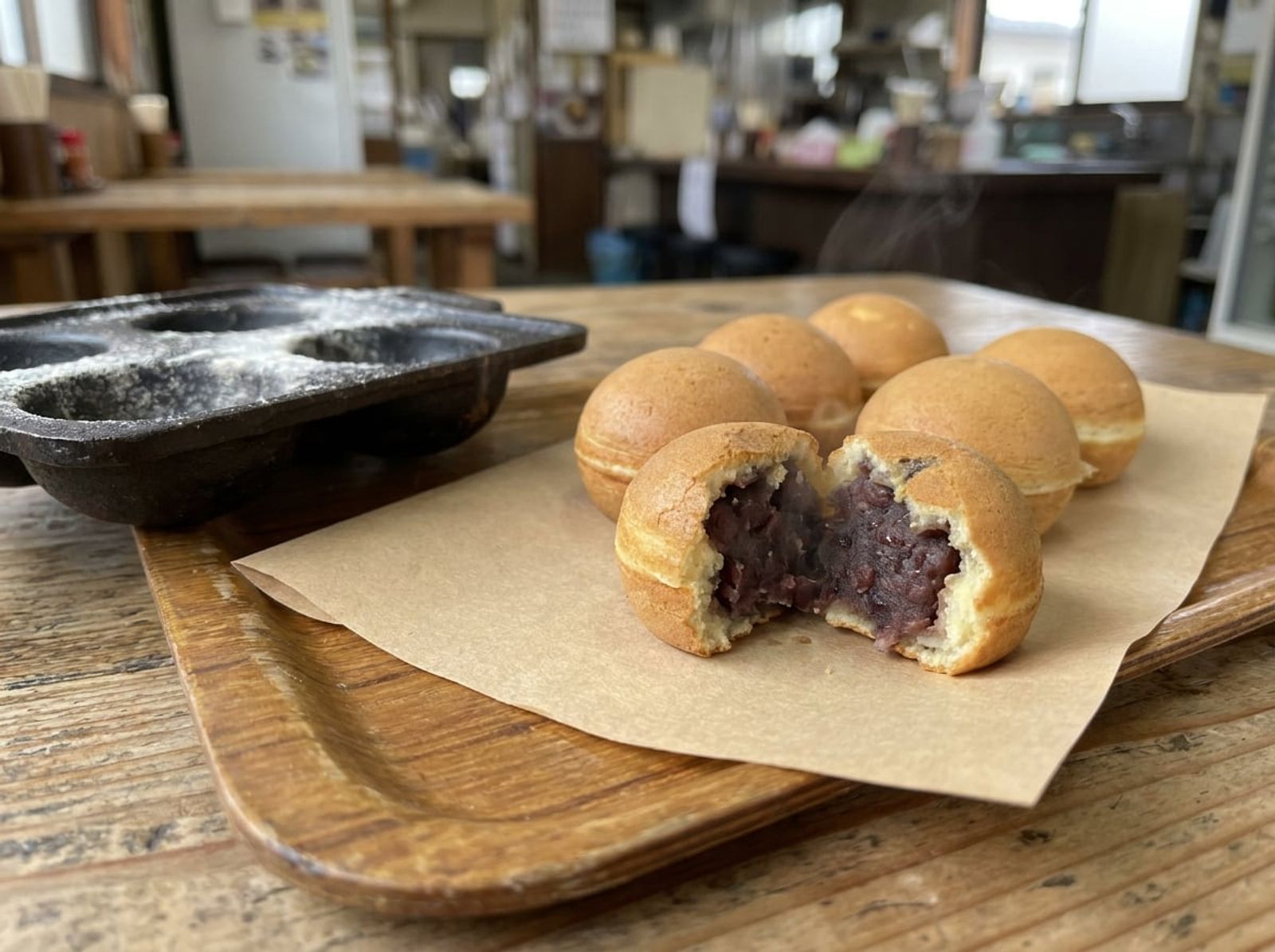
Panju is a small sweet baked in a hemispherical mold with batter and red bean paste. In Otaru it has long been loved as a snack by people who worked at the port and on the railway. Here is where the name comes from, what makes Otaru's version distinctive and how to buy and eat it.
What Is Panju?
Panju (ぱんじゅう) is a regional sweet that branched off from imagawayaki, the bean-filled baked cake also called obanyaki. Batter is poured into an iron plate with hemispherical hollows a little larger than those of a takoyaki pan, red bean paste goes in and it is baked, but unlike takoyaki it is not turned with a skewer. The finished cakes come out as small domes or bell shapes. They fit in the palm of your hand, so you can buy one at a time and eat it as you walk, and a fresh one is warm and toasty. Panju is a local specialty not only in Otaru but also in Ise in Mie, Ashikaga in Tochigi and Namerikawa in Toyama, with shape and texture varying by place.
The Name: A Manju Like Bread
Two explanations of the name are told. One is that manju buns are normally steamed, but these were baked like bread, so they were called panju; the other is that the name simply joins pan (bread) and manju. Either way, it means a bean-paste sweet baked like bread. Its roots are debated too. A 2026 Kyodo News article, citing a researcher of Hokkaido sweets, presents two theories: that a shop founded in 1901 in Jimbocho, Tokyo, which later moved to Ise in Mie Prefecture, spread it by opening branches, and that a Taisho-era baker in Ginza, Tokyo, carried it to the regions. The researcher adds that even its original shape remains something of a mystery.
A Snack for Otaru's Port Workers
According to the Kyodo article, panju was a local favorite in Otaru that kept the city's dockworkers and railway laborers going. A thin, hemispherical shell a size larger than takoyaki is packed with bean paste, a warm and filling snack for working people in the days when Otaru bustled with its port and trade. The same article reports, however, that the taste is gradually disappearing from Otaru. The number of panju shops has fallen, but some still bake them, mainly in the shopping streets around Otaru Station, and panju has been among the products at Otaru product fairs organized with the city and its tourism association. Seeking out the remaining shops is itself a way to meet an older side of the city.
Shape and Texture Vary by Shop
Even within Otaru, each shop's panju has its own character. Some spread the batter thin and bake it until the outside is crisp, while others stick to the traditional dome shape and keep a chewy, mochi-like texture. The molds differ too: some shops turn out round domes, while others use a plate similar to a takoyaki pan and produce bell shapes. The filling is basically red bean paste, and some shops let you choose chunky tsubu-an or other fillings. It is a small sweet, but the thickness of the shell, the degree of browning and the sweetness of the filling all vary, so some people go from shop to shop comparing them. A fresh panju is crisp outside with piping-hot bean paste inside, so take the first bite carefully.
How to Buy and Eat It
Panju is usually sold from a counter at the shop front, one at a time or in small sets. The shops are in the shopping streets within walking distance of Otaru Station, so they are an easy stop on the way to the canal or Sakaimachi Street. Prices are modest, so it is easy to buy a few kinds and try them all. Panju is best fresh from the mold. The crisp shell softens over time, so if you are buying some to take home, ask the shop how to store and reheat them. Some small shops keep short hours or close on certain days, and some shut early once they sell out, so if you have your heart set on it, check ahead and go early. Walking through Otaru's cold sea breeze with a warm panju in hand is a very Otaru moment.