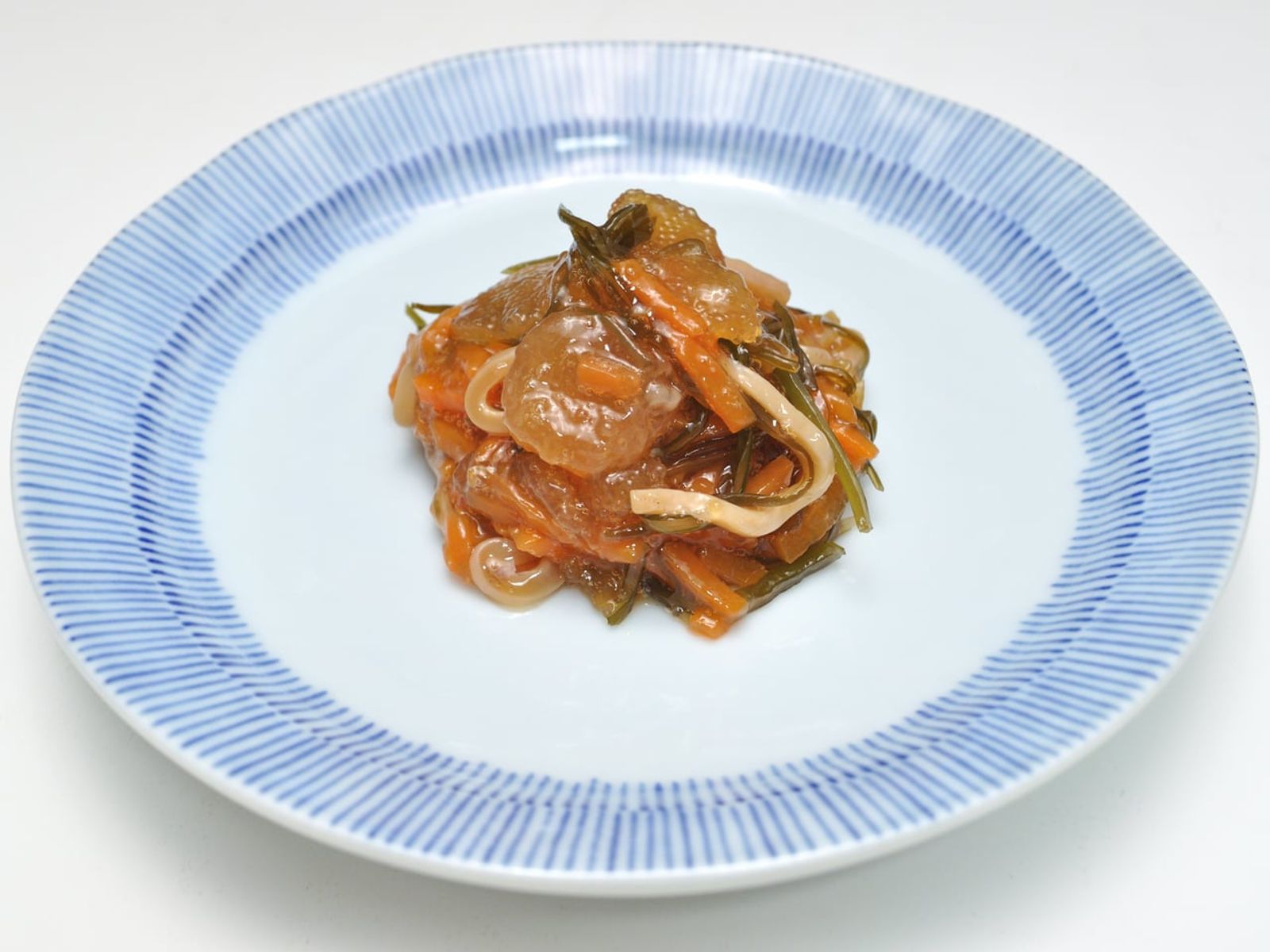
Matsumae-zuke made with kombu and squid · Photo: Ocdp / CC0 (Wikimedia Commons)
 JapanHakodate
Hakodate Kombu: Tribute Kelp Once Sent to the Shogun, Sticky Gagome and Matsumae-zuke
Hakodate is about more than squid and its morning market. The city's eastern coast produces Shiraguchihama makombu, counted among Japan's finest kombu, and the same sea gives gagome kombu and the ingredients for Matsumae-zuke. Here is the story of Hakodate kombu and how to taste it.
Hakodate, a Kombu City
Hakodate brings squid and the morning market to mind, but the city is also one of Japan's leading kombu producers. The heart of it is Minamikayabe, at the city's eastern edge, facing Uchiura (Funka) Bay. Once a separate town, Minamikayabe was merged into Hakodate in 2004. Hokkaido government material describes the area as a major kombu region producing about 15 percent of Japan's supply. Since 2017 the city and five local fishing cooperatives have promoted Hakodate's makombu together under the single name "Hakodate Makombu." In summer you can see kombu drying in coastal villages, and kombu is very much the other face of Hakodate's sea.
Shiraguchihama Makombu, the Tribute Kelp
The makombu harvested off Minamikayabe is called Shiraguchihama makombu (白口浜真昆布), a name that comes from the white look of the cut edge when the dried kelp is sliced. Makombu is treated as the top grade of kombu in Japanese cooking, and kombu from this area is described as thick, yielding plenty of clear, refined stock, and loved by many chefs. Its other name is kenjo kombu, "tribute kombu," because in the Edo period the Matsumae domain, which ruled the area, sent it to the imperial court and the shogun's family. The Hokkaido government itself notes that Shiraguchihama makombu is also called tribute kombu, and the name is still often used for gift kombu today.
Farmed, Wild and a Sea to Protect
Makombu is a large brown seaweed that grows on underwater rocks and can reach three meters in length. It is farmed on suspended ropes, mainly in the Oshima and Iburi areas of Hokkaido, and farmed makombu, which took off around the 1960s and 1970s, now outproduces wild kelp. The harvest generally runs from June to August. Wild makombu is becoming scarce. A 2021 local news report said wild catches were declining, so to protect young kelp the wild harvest that year was allowed in only one Minamikayabe district, for a single day and about an hour. The city and the fishing cooperatives are also working together to stabilize kombu farming and restore wild stocks.
Gagome Kombu, Once a Nuisance
Hakodate's sea has one more famous kelp: gagome kombu, named for the bumpy, basket-weave-like pattern (kagome) on its surface. In Japanese waters it grows from southern Hokkaido to the northern coast of Aomori, in deeper water than makombu. It was once seen as a nuisance that got in the way of the makombu harvest, but once people learned that it turns very sticky when finely chopped and is rich in compounds such as fucoidan, it became valuable enough to farm. In Hakodate, industry, government and academia teamed up to create gagome-meshi, rice made with gagome, as a new specialty, and it is also used for shaved tororo kombu, salted kombu and Matsumae-zuke.
Matsumae-zuke, and Tasting Kombu in Hakodate
The easiest way to taste the kombu is Matsumae-zuke, a Hokkaido dish of dried squid (surume), kombu and herring roe (kazunoko) marinated in soy sauce. It is named after the Matsumae domain, and the name is linked to the old custom of calling makombu "Matsumae kombu" and putting "Matsumae" in the names of dishes made with it. Its exact origins are debated. Seafood and dried-goods shops around Hakodate Station and the morning market commonly sell Matsumae-zuke, makombu and gagome products. Kombu is light and keeps well, making it a good gift, and Matsumae-zuke is eaten as is, with rice or as a snack with drinks. To taste kombu stock itself, look for a clear-broth dish made with kombu dashi.