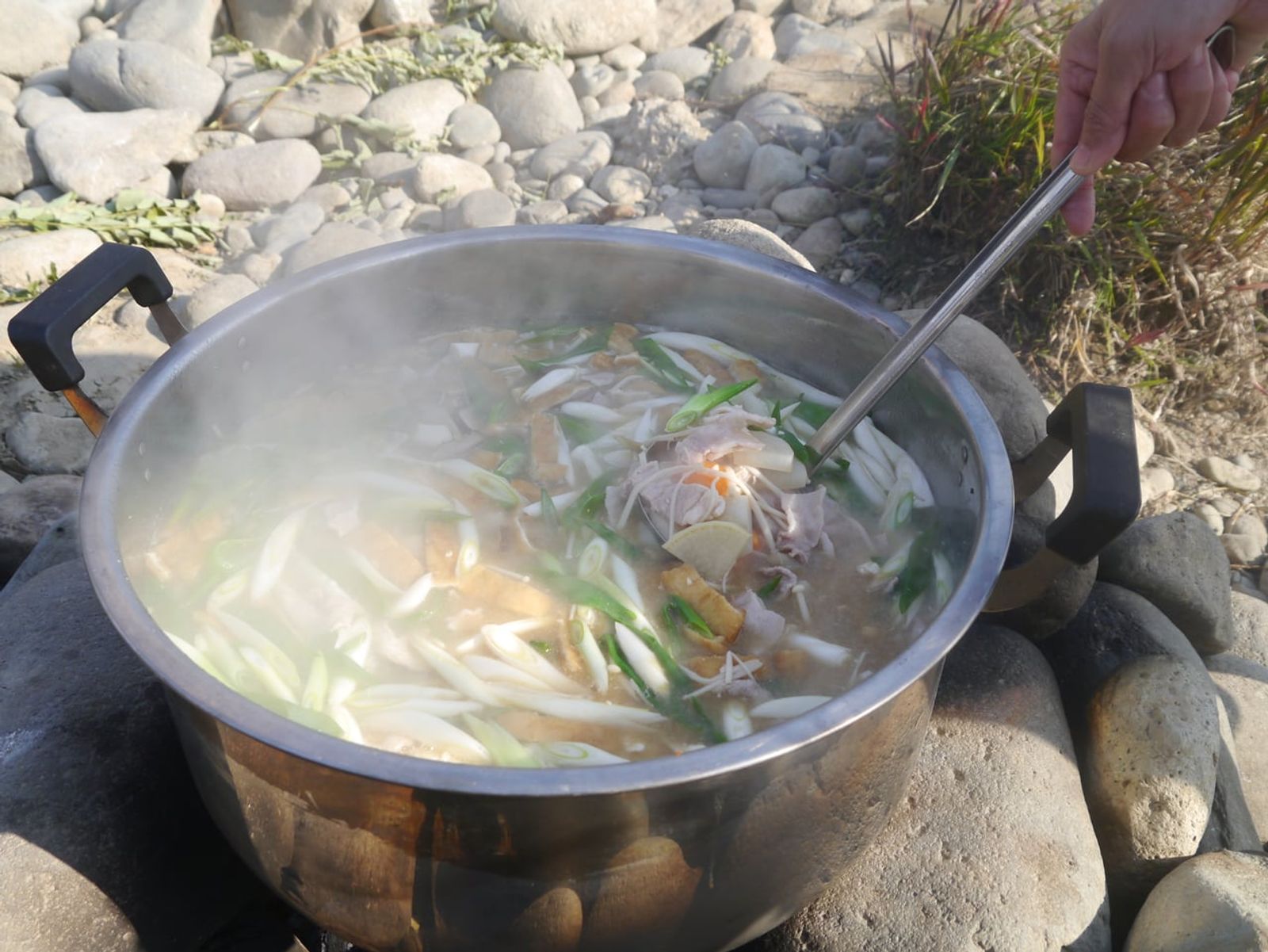
Sendai and Miyagi-style imoni · Photo: Mizu basyo / CC BY-SA 4.0 (Wikimedia Commons)
 JapanSendai
Sendai Miso: From the Date Clan's Miso Storehouse to Edo, the Story of a Bold Red Miso
Sendai miso is a salty, deep red miso made from rice koji and soybeans, so flavorful it is also called name-miso, miso you can eat straight. Here is the truth behind the famous Date Masamune anecdote, the domain's miso storehouse and its journey to Edo, and Miyagi-style imoni, an easy way for travelers to taste it.
A Salty Red Miso Made With Rice Koji
Japanese miso varies widely by region in its ingredients, color and flavor. Sendai miso is a karakuchi (saltier) red miso, or akamiso, made from rice koji and soybeans. Its strong aroma and deep savoriness mean it tastes good even eaten straight, which is why it is nicknamed name-miso, literally "licking miso". Not just any miso can use the name. Sendai miso was registered as a regional collective trademark in 2007, and only miso made in Miyagi to set standards by members of the prefecture's miso and soy sauce manufacturers' cooperative can be sold as Sendai miso. The cooperative has also held an annual judging competition for Sendai miso and soy sauce since 1952.
A Famous Anecdote, But Is It True?
One story often told about Sendai miso goes like this: in 1593, during Japan's invasion of Korea (known in Japan as the Bunroku campaign), the miso Date Masamune brought with him did not spoil even in summer, so he shared it with other commanders and it became famous. This story, however, is considered inaccurate. At the time, Masamune's castle was not in Sendai but at Iwadeyama, and the place name "Sendai" itself was given by Masamune in 1600. It makes little sense for "Sendai miso" to have become famous in 1593. Famous foods often pick up stories about famous people, so it is best to enjoy the anecdote as a tale and look at the real history separately.
Oensogura, the Domain's Own Miso Works
What is regarded as the real starting point of Sendai miso is the Oensogura (御塩噌蔵), a miso works set up below Sendai Castle in the Edo period. It belonged to the domain, but was run and operated by merchants of the castle town. In 1626, the merchant in charge of supplying the domain's miso is said to have hung a "Sendai Miso" sign in Kokubuncho, which is considered the origin of the name. Sendai miso became known in Edo (Tokyo) under the second lord, Date Tadamune. The domain's secondary residence at Oi in Edo also made miso, and its surplus was sold to Edo miso wholesalers, spreading the name "Sendai miso" through the city. The residence was even nicknamed the "miso mansion".
Becoming the Standard for Eastern Japan
After the Meiji era began, the method for making Sendai miso reportedly spread to producers in Tokyo, where it became popular. In the late Meiji period, a technician working for the army's provisions department devised a quick-brewing method that controlled koji activity through temperature, cutting fermentation from years to a few months. The big turning point came during the war. Sweet Edo amamiso, which uses a lot of rice koji, was banned as a luxury, and Sendai miso became the standard recipe for rationed miso. As a result it gained a large share of the market from the Kanto region to Tohoku. After the war, new quick-brewing methods and the spread of Shinshu miso meant it could not keep its prewar share in Kanto, but it remains the everyday miso of Miyagi homes.
An Easy Way to Taste It: Miyagi-Style Imoni
A good dish for getting to know Sendai miso is imoni, the autumn taro stew. In inland Yamagata next door it is made with beef and seasoned with soy sauce, but in Miyagi the standard is pork seasoned with miso. Taro is simmered with pork, daikon, carrot, leeks, konnyaku and so on in miso, so the same dish changes completely once you cross the prefectural border. Groups gathering by the river in autumn to cook imoni in a huge pot are part of the local scenery. If you want to take the miso itself home, look for the "Sendai miso" label at long-established miso shops in central Sendai or at station souvenir counters. Its salty, rich flavor works not only in miso soup but also as a dip for cucumber and other fresh vegetables.