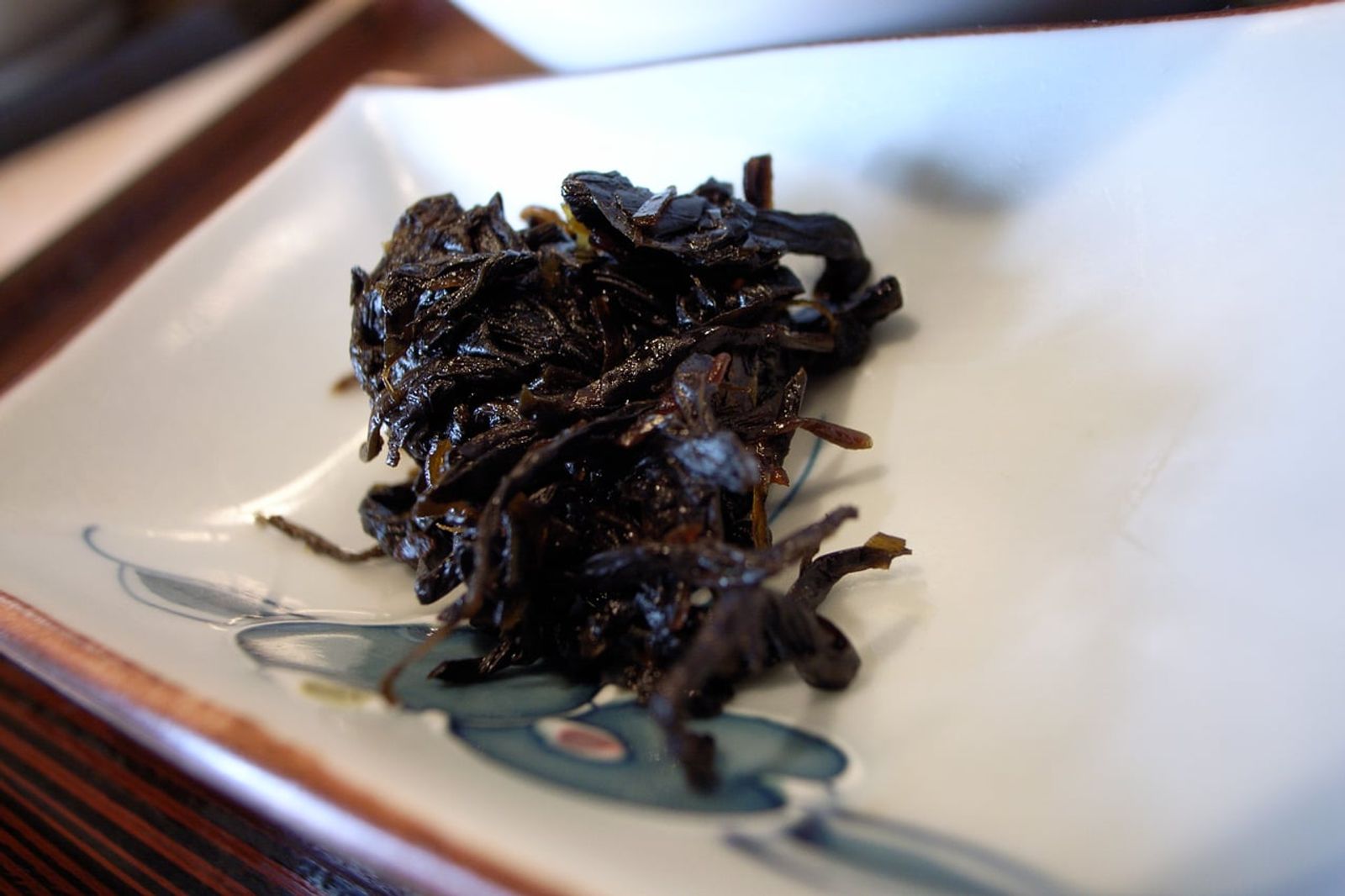
Kelp tsukudani · Photo: Jun OHWADA / CC BY 2.0 (Wikimedia Commons)
 JapanTokyo
Tsukudani: How a Tokyo Bay Fishing Island's Preserved Food Became Japan's Favorite Rice Companion
Tsukudani, small fish, shellfish or kelp simmered down hard in soy sauce and sugar, takes its name from Tsukudajima, a former island in Tokyo. Here is the story of the fishermen from Osaka who settled it, how their preserved food became an Edo specialty, and the many competing claims about who invented it.
A Food Named After a Neighborhood
Tsukudani (佃煮) is a preserved food made by simmering small fish, tiny shrimp, shellfish, kelp or vegetables in a thick mixture of sugar, soy sauce, mirin and the like until they turn sweet and salty. The basic idea is to cook it down until the seasoning soaks right in, so it keeps for a long time and just a little is enough to finish a bowl of rice. The name comes from Tsukuda (佃) in Tokyo's Chuo Ward, formerly known as Tsukudajima, because the food is said to have first been made there. Today it is a quiet neighborhood near Tsukishima Station, right next to Tsukishima with its famous monjayaki street, but in the Edo period it was a small island at the mouth of the Sumida River. Even the story of how the island came to be is fascinating.
Tsukudajima, the Island Built by Fishermen From Osaka
The heroes of Tsukudajima's story are fishermen from Tsukuda village in Settsu Province, today's Nishiyodogawa Ward in Osaka. Tokugawa Ieyasu, who had ties to the village, brought its fishermen to Edo, where they reclaimed tidal flats at the mouth of the Sumida River to build an island, naming it Tsukudajima after their home. One story says the Tsukuda fishermen ferried Ieyasu across the Kanzaki River in 1586, but tales of their bond are largely legend. The island is usually said to have been completed around 1645, and sources put the number of fishermen who moved at either 33 or 34. They brought a share of the spirit of their home village's shrine and founded Sumiyoshi Shrine as the island's guardian.
From Preserved Food to Edo Specialty
The Tsukudajima fishermen are said to have simmered small fish and shellfish in salt or soy sauce to keep as food for days when bad weather kept them ashore, and to eat on board when they went out fishing. When they caught large amounts of small fish, they began making extra to sell, and this is generally considered the beginning of tsukudani. Because it kept well and was cheap, tsukudani spread quickly among ordinary people in Edo. The sankin-kotai system helped it spread nationwide: samurai from every domain had to travel regularly between Edo and home, and they are said to have carried tsukudani back as a famous Edo souvenir, making it known across the country. In modern times, its suitability as military rations, alongside canned food, drew attention, and production grew from home kitchens into small factories.
Who Invented It? Several Competing Claims
The usual explanation is that tsukudani began as the Tsukudajima fishermen's preserved food, but there are several theories about who turned it into the product we know today. One says merchants in the late Edo period took inspiration from the island's simmered fish and began selling it under the name tsukudani; others credit merchants in Asakusa or Nihonbashi with creating today's basic style using soy sauce. Another theory traces it to small fish simmered as offerings when the Sumiyoshi deity was enshrined on the island. The many theories probably reflect how a humble fishermen's staple became a commercial product through many hands. It is most natural to see it as a flavor that the people of Edo built together.
Where to Find Tsukudani in Tokyo
To see the birthplace of tsukudani for yourself, take a short walk from Tsukishima Station to the Tsukuda area. Between the high-rise apartments, the lanes of the old fishing village and Sumiyoshi Shrine remain, and long-established tsukudani shops are still in business. It pairs well with monjayaki in neighboring Tsukishima for a day out. Around Tsukiji Outer Market, too, you can see all kinds of tsukudani piled in baskets. Ingredients range from kelp, clams, small fish and tiny shrimp to seaweed, and some regions even make unusual versions such as grasshopper tsukudani. Eating it is simple: put a little on hot white rice, tuck it into an onigiri or serve it with ochazuke. It keeps well and is light, so it is a popular gift, but each shop balances sweetness and saltiness differently, so taste before buying if you can.