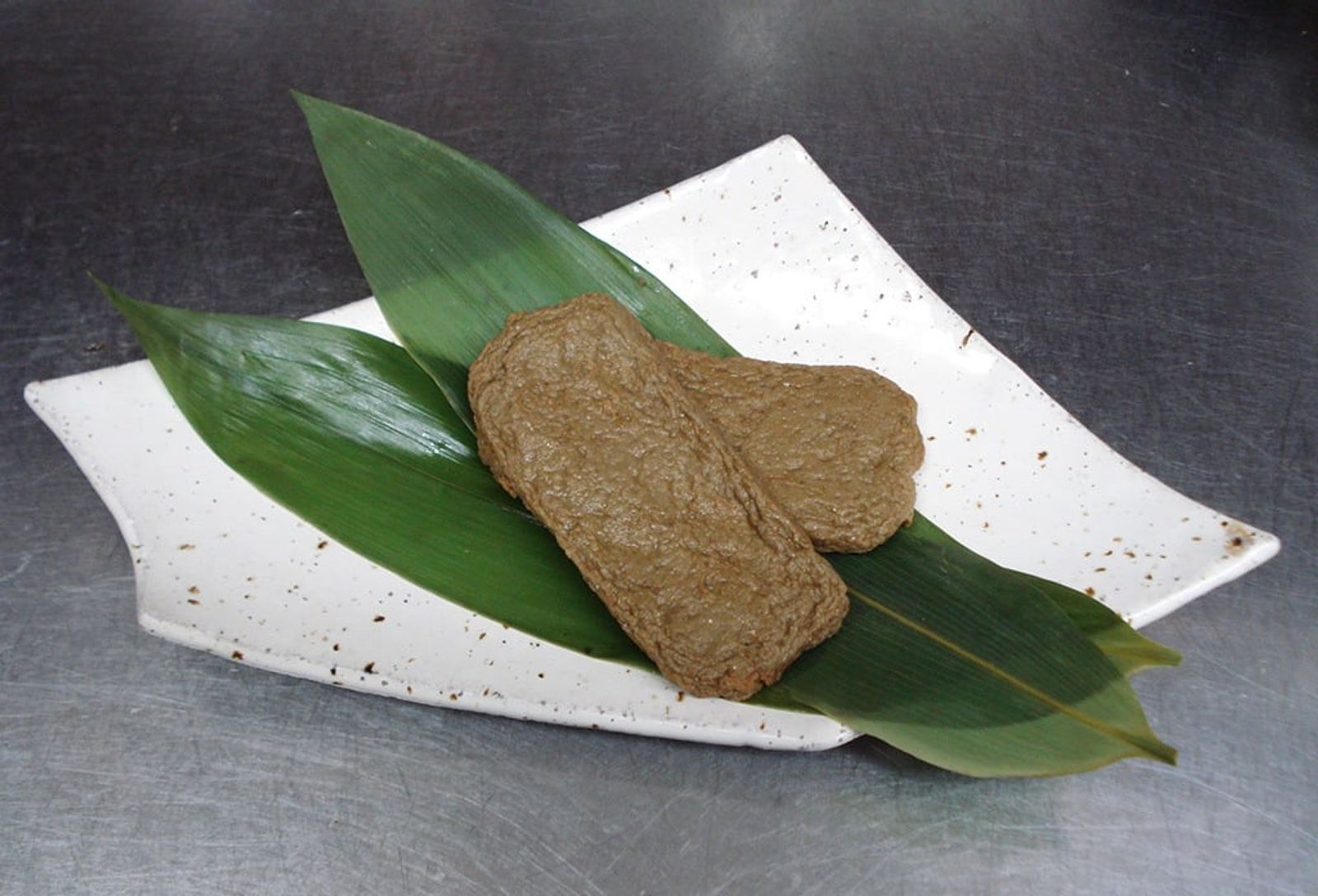
Jakoten served at a ryokan in Dogo · Photo: Koppepan / CC BY 3.0 (Wikimedia Commons)
 JapanMatsuyama
Jakoten: Ehime's Bone-In Fried Fish Cake and the Craftsmen Who Came From Sendai
Jakoten is made by grinding small fish whole, bones and skin included, then frying the paste in flat patties. Learn what the name means, its link to the Uwajima domain, why it crunches and how locals eat it.
What Jakoten Is
Jakoten (じゃこ天) is a specialty and local dish from the coast of Nanyo, southern Ehime Prefecture. It is a fish cake made by grinding small fish caught in nearby waters into a paste and deep-frying it, so technically it is a type of fried kamaboko. Locals also call it jako-tempura or kawa-tempura (skin tempura). It is usually shaped into a flat rectangle about 7 to 8 cm long and 5 cm wide. The outside is brown and the inside greyish. Unlike smooth white fish cakes, it is rustic and full of fish flavor, closer to a fish patty than to the fish cake most visitors know.
The Name: Jako From Zako
There are two theories about the word jako. One says it comes from zako (雑魚), meaning assorted small fish, which is exactly what goes into it. The other says it comes from the main ingredient, the hotaru-jako (lanternbelly), called haranbo in southern Ehime. Since the jako in hotaru-jako itself is said to derive from zako, both roads lead to the same place. The word tempura can also confuse visitors. In Uwajima and parts of western Japan, fried fish paste is called tempura, so jakoten is not battered tempura at all. According to a long-established maker in the area, the name jakoten itself only came into common use relatively recently.
Kamaboko Craftsmen From Sendai, 400 Years Ago
According to one account in the official history of Ehime Prefecture, jakoten goes back to around 1615, at the start of the Edo period. When Date Hidemune, eldest son of the Sendai warlord Date Masamune, became lord of the Uwajima domain, he brought kamaboko craftsmen with him from Sendai. Fish that could not be used for kamaboko was put to use rather than wasted, and that became jakoten. In other words, good fish went into fine white kamaboko, while small fish unsuitable for it were ground whole and fried as an everyday side dish. Jakoten took root along the southern coast around Uwajima and Yawatahama, and since around 2005 the Uwajima area has worked to promote it as a regional brand.
The Secret of the Crunch
Hotaru-jako is considered the best fish for jakoten. Only the head and innards are removed, and the fish is ground with bones and skin intact, so each bite has a distinctive gritty crunch from the finely crushed bones. That texture and the deep savory flavor are what set it apart from ordinary fish cakes. Makers may also blend in goatfish (himeji), horse mackerel, gurnard or cutlassfish, and some knead ice or starch into the paste. Because every shop uses its own mix and method, flavor and texture vary, and many locals stay loyal to one maker. Most jakoten are rectangular, though some shops make heart-shaped ones.
How Locals Eat It and Where to Buy
The classic way is to eat it freshly fried, as it is. It is also lightly grilled and eaten with grated ginger and soy sauce, and it is a favorite drinking snack, often served with local beer at izakaya in Matsuyama and beer halls in Dogo Onsen. It also goes into oden, onto udon and into Yawatahama champon, and tempura curry, with jakoten instead of meat, is a home-cooking staple in the producing areas. There is even a breaded version called jakoten katsu. Its home is Uwajima and Yawatahama in the south, but in Matsuyama you can easily buy it in the Dogo Onsen shopping street, the downtown arcades and souvenir shops at the station and airport. Some shops fry it to order so you can eat one while you stroll, and vacuum-packed jakoten is a popular gift.