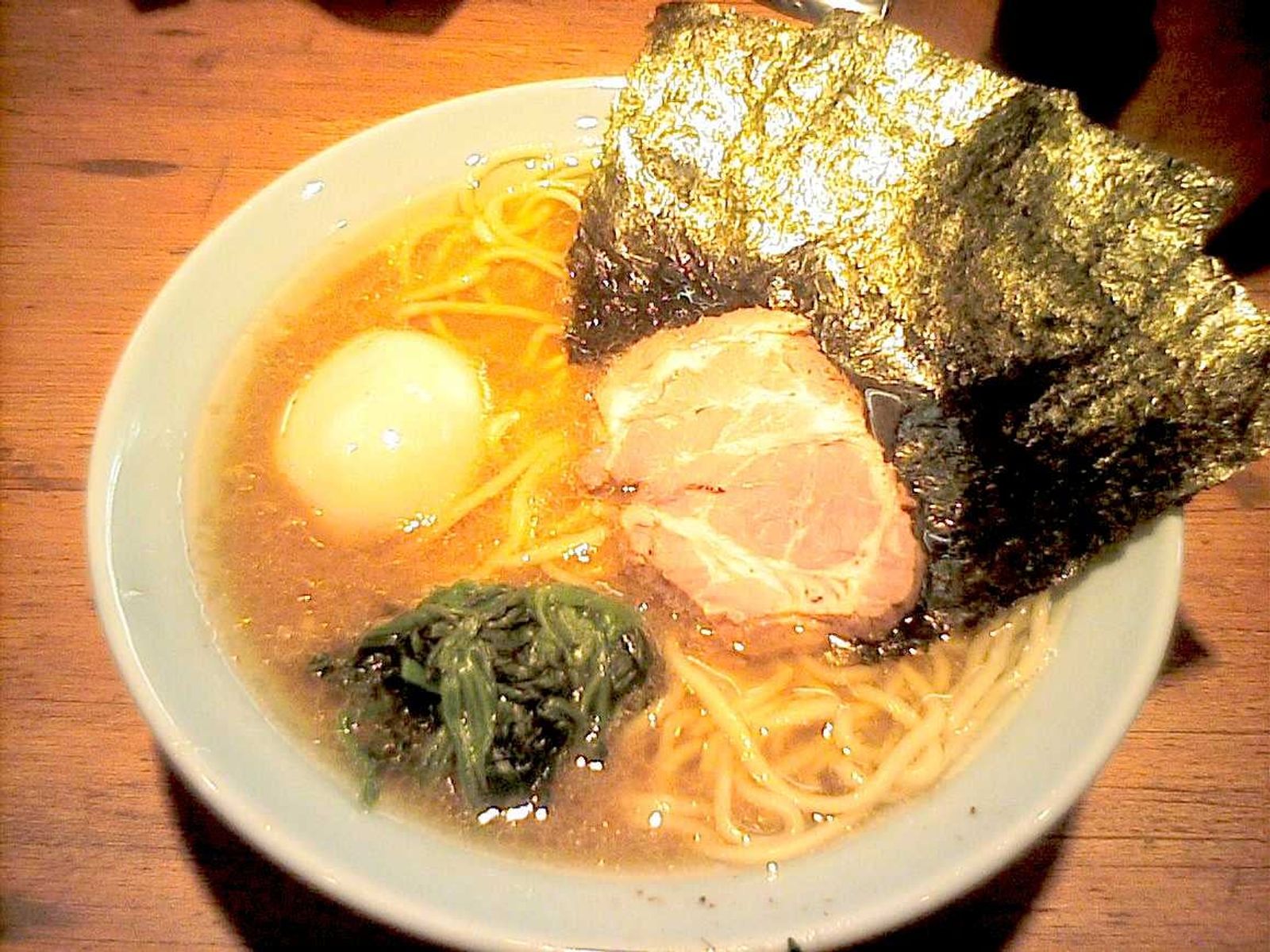
Iekei ramen with spinach and nori · Photo: Hykw-a4 (Japanese Wikipedia) / CC BY-SA 3.0 (Wikimedia Commons)
 JapanYokohama
Yokohama Iekei Ramen: The Pork-and-Soy Bowl You Customize Three Ways
Rich pork-and-soy broth, thick noodles, spinach and three big sheets of nori. Here is how iekei ramen was born in Yokohama in 1974, how to order it your way and why everyone eats it with rice.
One Bowl, Shin-Sugita, 1974
Iekei ramen traces back to a single ramen shop that opened in September 1974 in Shin-Sugita, Isogo Ward, Yokohama. It combined a Kyushu-style pork-bone broth with Tokyo-style soy sauce flavor: a pork- and chicken-bone stock mixed with a strong soy sauce tare and finished with a layer of chicken fat (chiyu), what Japanese call tonkotsu shoyu. The bowl reportedly caught on with factory workers and truck drivers. Plenty of customers wanted a filling meal, and many iekei shops still sell rice alongside the ramen today. Yokohama's official visitor site lists iekei ramen alongside Napolitan spaghetti and sanmamen as dishes born in the city.
Why "Iekei"?
Many of the shops opened by cooks who learned this style gave themselves names ending in "-ya" (家, "house"). Fans started calling the whole family of shops iekei, roughly "the house lineage." Lineage still matters to fans. Branches officially recognized by the original shop are called chokkei (direct line), and the first was recognized in 1999. From the mid-2010s large restaurant companies opened chains of their own. They have no link to the original and often use broth made in a central kitchen, so fans call them shihonkei (corporate). Shops open and close so often that an exact count is hard, but some estimates put the total at close to 2,000 nationwide, with several hundred in Kanagawa alone.
What Is in the Bowl: Thick Noodles, Spinach and Three Sheets of Nori
An iekei bowl is easy to spot. The broth is a deep brown pork-and-soy soup with chicken fat glistening on top. The noodles are medium-thick and straight, firmer and chewier than ordinary Chinese-style ramen noodles. The standard toppings are chopped green onion, blanched spinach or other leafy greens, chashu pork and three large square sheets of nori standing up along the rim. Spinach and nori together are the iekei signature, so many Japanese people hear "ramen with spinach" and think of iekei right away. The broth is rich and oily, and first-timers may find it salty. That is why the customizing in the next section matters.
How to Order: Firmness, Strength and Oil
Most iekei shops let you choose three things. Noodle firmness: katame (firm), futsu (regular) or yawarakame (soft). Flavor strength: koime (strong), futsu or usume (light). Amount of chicken fat: oome (more), futsu or sukuname (less). When you order, say them in that order, such as "katame, koime, oome," or simply "zenbu futsu" (all regular). On a first visit, try everything regular. If it tastes too salty, go lighter on flavor or oil next time. Ordering all three at the strong end is a well-known regulars' combination, but the broth gets very salty and oily, so it is not the best choice for your first bowl.
Wrap Rice in Nori, and Where to Eat It
The classic way to eat iekei is with rice. Dip a sheet of nori in the broth, wrap it around a bite of rice and eat it in one go. The rice soaks up the rich broth and tastes different from the ramen itself. This way of eating is said to have started among early regulars and then spread to other shops. Many shops also keep condiments such as minced garlic or chili bean paste on the table so you can change the flavor as you go. In Yokohama, Nishi Ward on the west side of Yokohama Station and neighboring Kanagawa Ward are known for their concentration of iekei shops. You can find iekei all over Japan now, but one bowl in its hometown will put it firmly on your list of Yokohama foods.