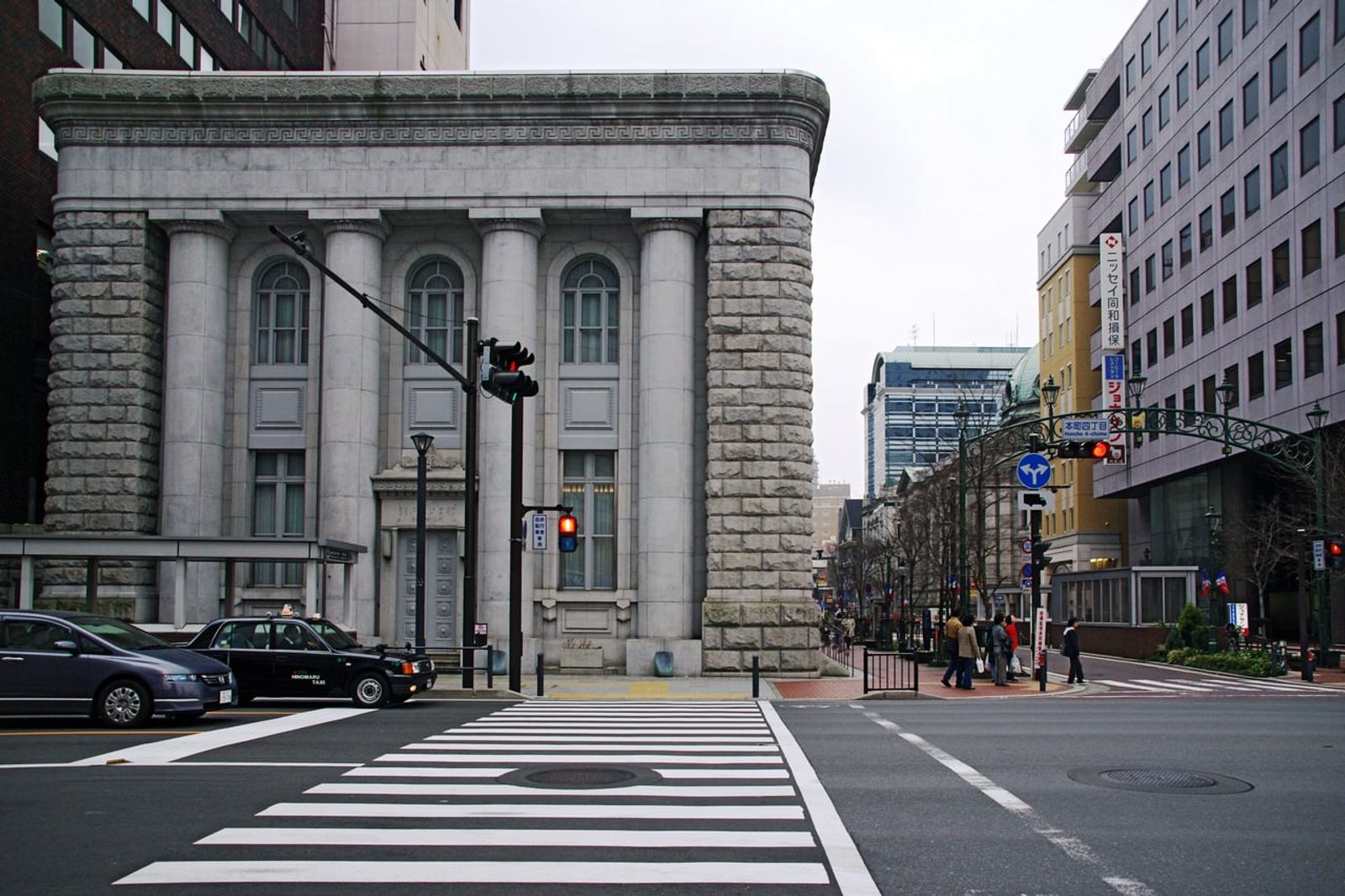
Bashamichi, Yokohama, known as the birthplace of ice cream in Japan · Photo: 663highland / CC BY 2.5 (Wikimedia Commons)
 JapanYokohama
Bashamichi's "Aisukurin": Japan's First Ice Cream for Sale, Yokohama 1869
Yokohama's Bashamichi street is known as the place where ice cream was first made and sold in Japan. From the envoys who first tasted it in America to a first shop that nearly failed because it was too expensive, plus the myth behind Japan's May 9 Ice Cream Day.
1860: A First Taste of Frozen Milk in America
Japanese people are said to have first tasted ice cream in 1860. A shogunate delegation crossed the Pacific to exchange ratification documents for the US-Japan Treaty of Amity and Commerce, and was served ice cream in America. The ship that sailed alongside them was the famous Kanrin Maru. At the time Japan had almost no habit of drinking milk, and little in the way of ice or refrigeration. A cold, sweet dish like that must have been quite a shock. One member of that mission would later start selling ice cream in Yokohama. That connection is part of why the treaty port became the starting point of ice cream in Japan.
1869: An Ice Shop on Bashamichi and "Aisukurin"
In 1869 Machida Fusazo, who had been part of that mission, opened an ice-water shop on Yokohama's Bashamichi street and made and sold "aisukurin." Yokohama's official visitor site presents this as the beginning of ice cream in Japan. He is said to have learned the method from Dejima Matsuzo, who had also been to America. The recipe was simple: milk, sugar and egg yolk, close to what we now call custard ice cream. Ice was hard to come by, and Dejima's own account mentions ice from caves at the foot of Mount Fuji and natural ice from Hakodate. The name Bashamichi, "carriage road," comes from the horse-drawn carriages foreigners drove along it after the port opened.
Too Expensive to Sell, at First
A serving of aisukurin is said to have cost 2 bu, roughly 8,000 yen in today's money. Unfamiliar and expensive, it did not sell well, and the shop lost heavily in its first year of 1869 and closed for a while. The turnaround came the next year. According to the Yokohama Enkakushi, a local history, the shop reopened in April 1870 in time for the festival of Iseyama Kotai Jingu shrine and did good business. Festival crowds tried the cold, sweet novelty, and word spread. There is also a record that Dejima Matsuzo presented aisukurin to Emperor Meiji, a sign that the new dessert was slowly finding its place in Japanese society.
May 9 "Ice Cream Day" and the Bashamichi Statue
Japan marks May 9 as Ice Cream Day, often described as the day ice cream was first made and sold in the country. In fact it was set by an ice cream industry association in the 1960s. The story that Machida's shop opened on May 9 does not appear in the Yokohama Enkakushi and has no confirmed basis, and sources even differ on whether the day was established in 1964 or 1965. On Bashamichi stands "Mother and Child of the Sun," a 1976 statue by the sculptor Hongo Shin marking the birthplace of ice cream in Japan. Inspired by milk, the key ingredient, it is said to show a mother nursing her child, and its pedestal reportedly records that Machida Fusazo opened his ice-water shop here in June 1869. There is also an account that a foreigner in the settlement opened an ice cream shop even earlier, in 1865.
Visiting Bashamichi Today
Bashamichi runs between Bashamichi Station on the Minatomirai Line and JR Kannai Station. Red-brick sidewalks, old bank buildings and gas lamps keep the feel of the port era alive, and a monument to "Japan's first gas lamps" stands on the street too, so it is fun to walk in search of other firsts. According to Yokohama's official visitor site, a dairy company now sells a modern recreation of the Meiji-era aisukurin. It is a custard style rich in milk and egg yolk, and makes an interesting comparison with today's soft-serve. A Bashamichi stroll fits nicely into a half-day route with the Red Brick Warehouse, Chinatown or the Kannai area with its historic gyunabe restaurants.