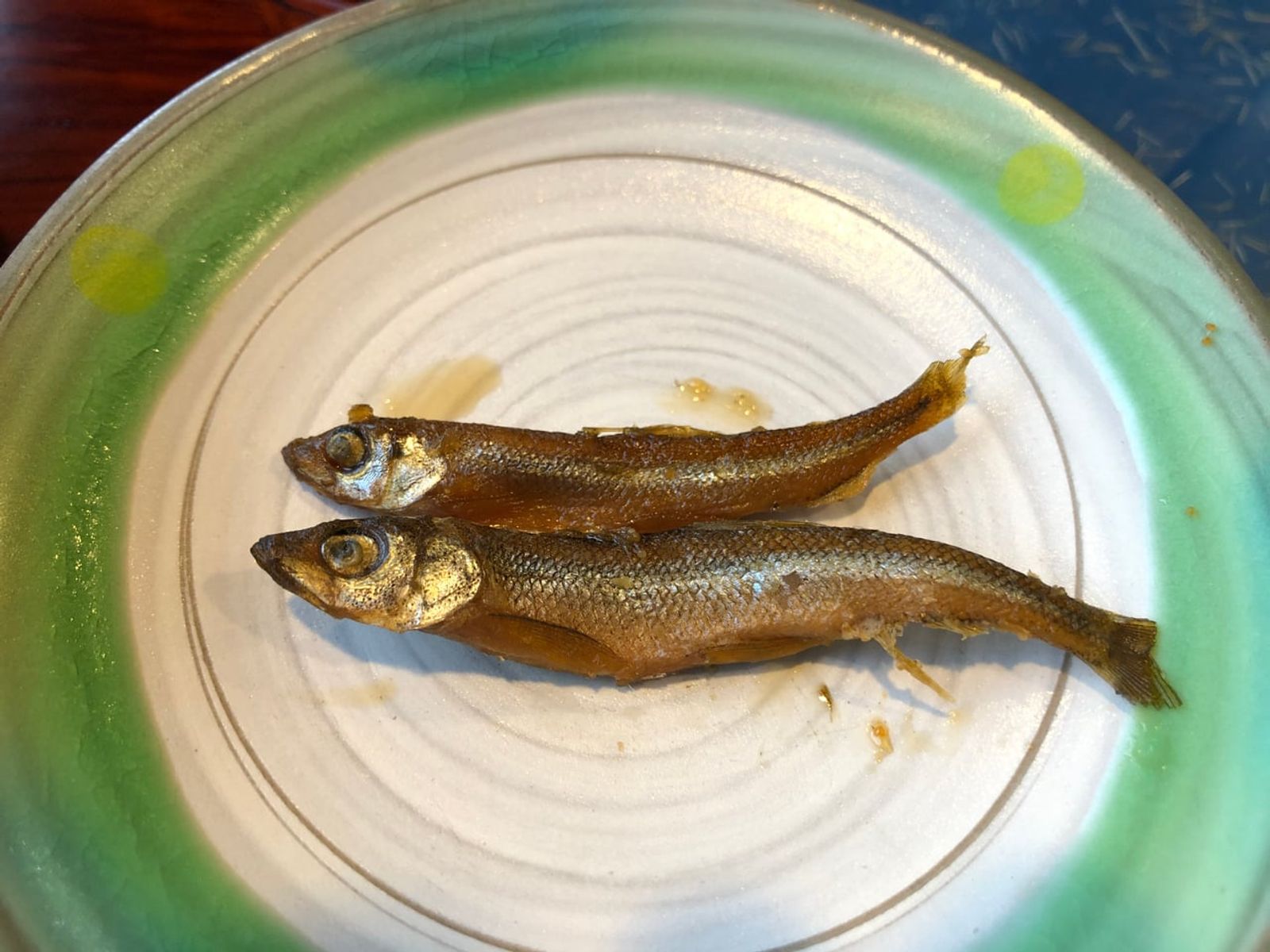
Wakasagi kanroni · Photo: Totti / CC BY-SA 4.0 (Wikimedia Commons)
 JapanHakone
Lake Ashi Wakasagi Kanroni: Hakone's Sweet-Savory Smelt, Simmered for Two Days
Lake Ashi in Hakone has raised wakasagi (pond smelt) for more than a century. From the eggs brought to the lake in 1918 to the October 1 season opening, and how kanroni is simmered a day in tea and another in sweet soy, plus when to try it.
A Volcanic Lake 724 Meters Up
Lake Ashi (Ashinoko) sits in Hakone at the western edge of Kanagawa. At 724 meters above sea level, it is a caldera lake formed by the Hakone volcano, famous for "upside-down Fuji," the reflection of Mount Fuji on its surface on clear days. Today it is a tourist spot with pirate-ship cruise boats, but it has also been known for its fishing since long ago. The lake's signature fish is wakasagi, Japanese pond smelt. The Ministry of Agriculture's regional cuisine database lists wakasagi kanroni as a local dish of Hakone: smelt from Lake Ashi, grilled, slowly simmered and glazed with starch syrup. Cooked down until sweet, salty and dry, it keeps well and has long served as a preserved food.
1918: Smelt Eggs From Kasumigaura
Lake Ashi's smelt is not native to the lake. According to the Ministry of Agriculture, wakasagi eggs were brought from Lake Kasumigaura in Ibaraki in 1918, which is when smelt fishing began here, and a stocking program to collect eggs and grow the population has continued for more than 100 years. Smelt raised in the clear water of Lake Ashi earned a reputation for flavor and became a Hakone specialty. It is now the official "town fish" of Hakone and was named one of the Kanagawa Meisan 100, the prefecture's list of traditional local products. Care for the lake continues too. Every year, around the start of the closed season, a large-scale cleanup of the lake bottom is held to protect Lake Ashi's environment.
October 1 Opening: The First Catch Goes to Hakone Shrine
On Lake Ashi, gill-net fishing for wakasagi opens every year on October 1. Local fishermen set out together that day, and the first smelt caught are blessed at Hakone Shrine on the lakeshore and then presented to the Imperial Household Agency. Wakasagi is usually thought of as a winter fish, but on Lake Ashi the catch begins around August and peaks around November. The closed season runs from mid-December to February. That means an autumn trip to Hakone is a good chance to try freshly caught smelt. In February, a Wakasagi Festival is held around the lake in step with Hakone Shrine's Setsubun rites, with local smelt dishes handed out. Small boats with anglers dropping lines are a familiar sight on the lake as well.
A Day in Tea, Another in Sweet Soy: How Kanroni Is Made
The recipe the Lake Ashi fishing cooperative gave the Ministry of Agriculture shows that kanroni takes two full days. The cleaned smelt are first grilled without seasoning and laid neatly in the bottom of a pot, then covered with bancha tea and simmered over the lowest heat for about a day. Soy sauce, sugar, sake and mirin go in next for another slow day of simmering, and starch syrup is added at the end for shine. Once done, the fish are cooled thoroughly and lifted out carefully so they keep their shape. The long cooking softens even the small bones, so you eat each fish whole, head to tail. Wakasagi is cooked many ways, including fried and as nanbanzuke in vinegar, but kanroni is the one this area has loved longest, and it is a fixture on the New Year table.
Trying Wakasagi in Hakone
During the fishing season, inns and restaurants around Lake Ashi serve kanroni and many other smelt dishes. The lakeside villages of Moto-Hakone and Hakone-machi are close to the cruise piers and Hakone Shrine, so they fit easily into a walk by the lake. Besides kanroni, restaurants offer freshly fried wakasagi tempura. Some serve a rice bowl topped with tempura of fish caught in the lake, where smelt may share the bowl with trout or bass. Kanroni keeps well, which makes it a good souvenir. The flavor is strong and sweet-salty, so try one or two over hot rice, or with green tea or sake. If soaking in hot springs is not enough of Hakone for you, taste the century-long story of this small lake fish too.