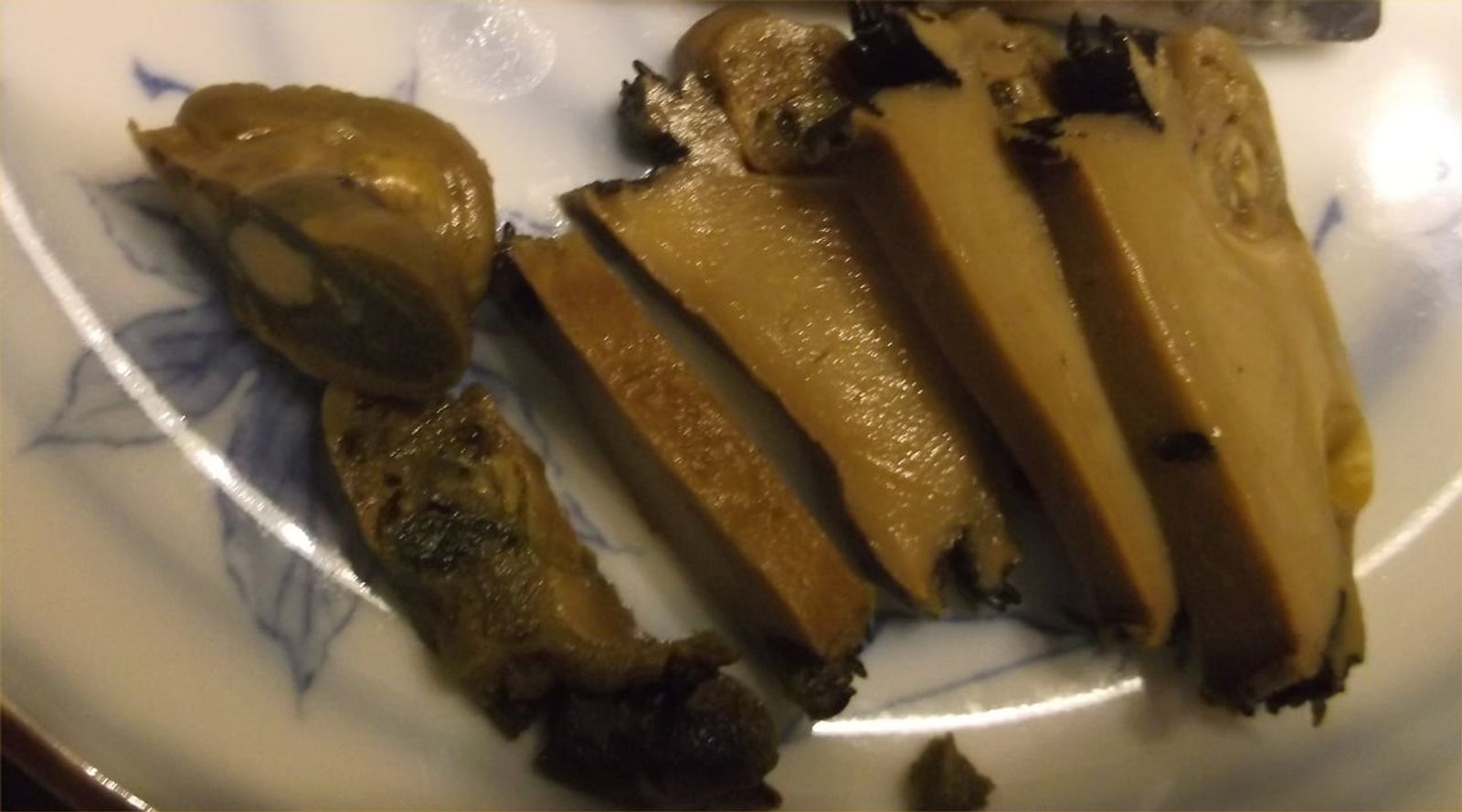
Sliced awabi no nigai, abalone simmered in soy sauce · Photo: Kentin / CC BY-SA 4.0 (Wikimedia Commons)
 JapanKawaguchiko
Awabi no Nigai: Why Landlocked Yamanashi Is Famous for Abalone
One of the specialties of mountain-ringed Yamanashi is nigai, abalone simmered in soy sauce. Here is the legend of abalone soaking up flavor on horseback over the passes, what Edo-period records say, and how to slice or grill it.
A Seafood Specialty in the Mountains
Yamanashi is one of Japan's landlocked prefectures, ringed by high mountains including Mount Fuji and the Southern Alps. Yet one of its signature specialties is, surprisingly, abalone: awabi no nigai, or simply nigai, is abalone taken out of the shell and simmered whole in a soy-based broth. The Ministry of Agriculture's "Our Regional Cuisines" lists nigai alongside hoto and Yoshida udon as a Yamanashi local food. It explains that this long-keeping food won its reputation because the flavor soaked in well over a long journey, and that it is still used at celebrations and as a gift. Yamanashi's tourism site likewise says nigai has long been treasured in Koshu, the old name for the area, where seafood was hard to come by.
The Legend of Flavor Soaked In on Horseback
There is a well-known story about how nigai began. According to Yamanashi's tourism site, Kai merchants who went to Numazu on Suruga Bay boiled freshly landed abalone on the beach and packed it into barrels of soy sauce for the trip home. As horses carried the barrels over the Gotemba, Subashiri and Kagosaka passes, the soy sauce soaked in and the abalone turned tender. The Ministry of Agriculture, however, says it began in the late Edo period, when a Numazu fish wholesaler sent abalone from the Izu Islands to Kai Province. Either way, the point is the same: seafood was preserved in soy sauce so it could survive the journey inland. The part about the horses is best taken as legend.
Nigai in the Records, and Takeda Shingen
Unlike the legend, some of nigai's history is on record. According to Japanese Wikipedia, the first written mention is in a diary from 1829, where it appears as "nigai" written in phonetic kanji. A record from 1837 shows nigai being sent as a midsummer gift, so by the late Edo period it was already a prized present. There are also stories tied to the warlord Takeda Shingen. Yamanashi's tourism site says Shingen is said to have valued abalone for feeding his troops and entertaining guests, and that abalone shells were dug up with tea bowls and chopsticks at the residence site of his uncle, the Katsunuma clan. It is not direct proof of today's nigai, but it shows a mountain region's longing for the sea.
Slice It or Grill It
Nigai is usually a whole abalone simmered in a soy-based broth and sold packed in that liquid. There are two main ways to eat it. Sashimi-style, you pour off the broth, slice the abalone thinly and eat it as is. As in the photo, the cut surface is moist and chewy, perfect with a drink. Steak-style, you grill the slices on a hot iron plate, which brings out a toasty soy aroma and lets you enjoy it warm. Some products are labeled for sashimi or for steak, so follow the directions on the package. Note that similar products made from tokobushi, a smaller relative of abalone, drop "awabi" and are called simply "nigai," so check the name when you buy.
Nigai Today, and How to Choose
Nigai remains a premium Yamanashi specialty. It is sold in long-established shops, department stores and souvenir stores around Kofu, and is often served at celebrations or given as a special gift. The Ministry of Agriculture notes that many local makers produce a wide range of products. It helps to know that, according to Japanese Wikipedia, much of the abalone used today is imported, prices are high, and some producers have begun farming abalone themselves. So check the packaging for the abalone species and origin before you buy. If a whole abalone feels like too much, look at smaller packs or other simmered seafood on the same shelf. If you pass through Kofu on a trip to Lake Kawaguchi and the Fuji Five Lakes, add this "seafood specialty from a land without sea" to your souvenir list along with wine and peaches.