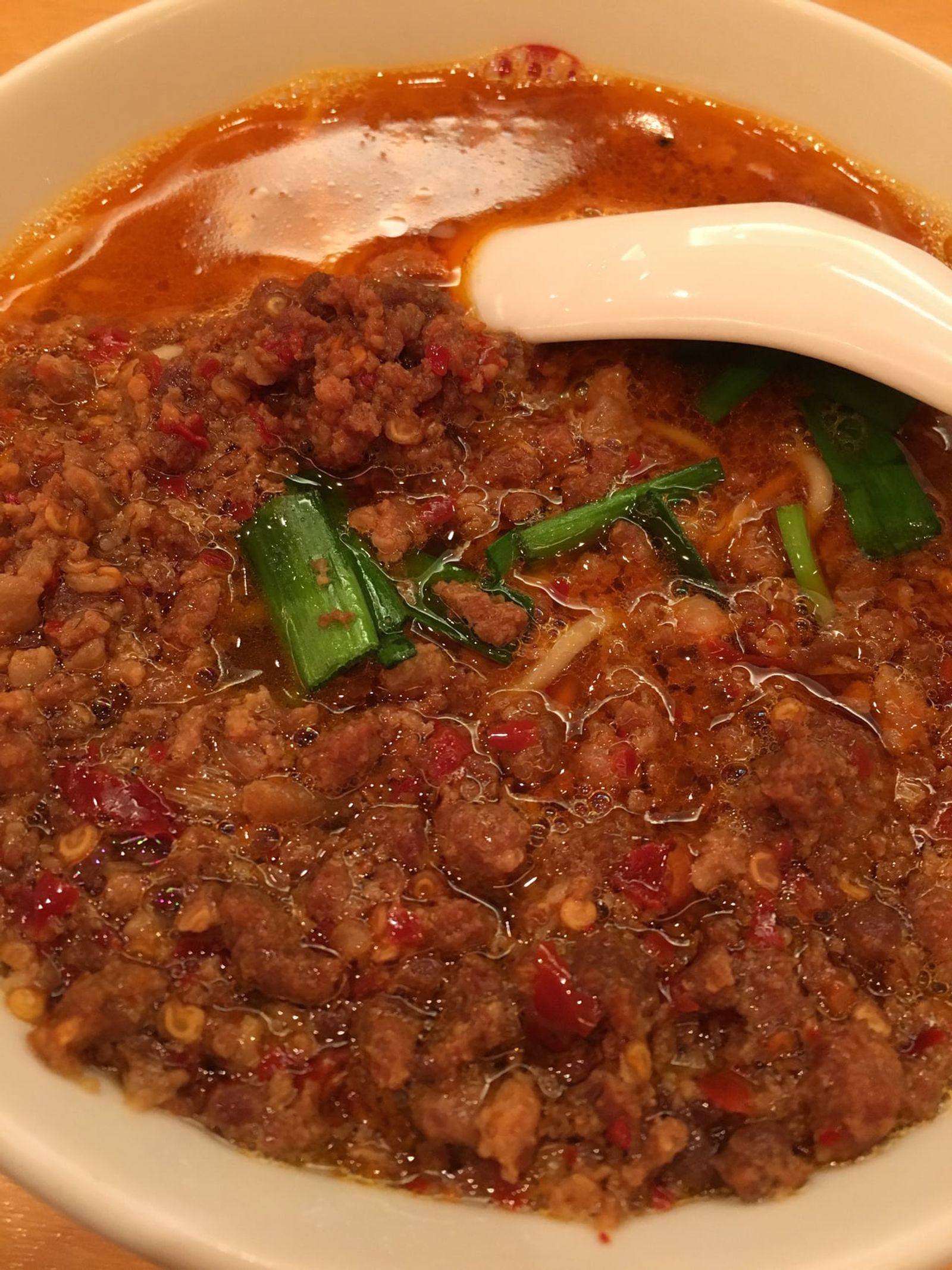
Taiwan ramen topped with chili, ground meat and garlic chives · Photo: gtknj / CC BY 2.0 (Wikimedia Commons)
 JapanNagoya
Taiwan Ramen: The Fiery Noodle Soup Born in Nagoya, Not Taiwan
It is called "Taiwan ramen," but its hometown is Nagoya. Here is how this spicy ramen was born at a Taiwanese restaurant in Nagoya in 1971 and spread to more than half the city's ramen shops, what makes it different, and how to order "American" or "Italian."
Named for Taiwan, Born in Nagoya
Among the "Nagoya meshi," the city's signature foods, the spiciest is Taiwan ramen. The name suggests it came from Taiwan, but it is actually a branch of Japanese ramen born in Nagoya, which is why travelers looking for "Taiwan ramen" in Taiwan say they rarely find the same dish. According to Japanese Wikipedia, Taiwan ramen is a Japanese noodle dish rooted in Taiwanese cooking and counted among Nagoya meshi. The basic form is soy-sauce ramen topped with ground meat stir-fried with plenty of red chili. A dish created by a Taiwan-born cook recalling the tastes of home was reshaped by Nagoya palates and has become one of the city's defining flavors.
1971, at a Taiwanese Restaurant in Imaike
According to Japanese Wikipedia, Taiwan ramen was first served in 1971 at a Taiwanese restaurant in the Imaike area of Nagoya's Chikusa Ward. The Chunichi Shimbun newspaper likewise says it began when the restaurant's Taiwan-born owner reworked danzai noodles, a dish from home. Danzai noodles are a small-bowl noodle dish from Tainan, and the original has a light, non-spicy broth. Accounts of its birth differ. A widespread story says it started as a staff meal, but there are also accounts that it was made to sell from the start. Either way, Nagoya's Taiwan ramen began when a mild noodle dish was loaded with chili.
What's In It and How It Tastes
Japanese Wikipedia sums up the basic build: a soy-flavored chicken-bone broth and thin noodles, topped with ground meat stir-fried with chili and garlic, plus bean sprouts and garlic chives. As in the photo, the red meat nearly covering the broth against the green chives is its signature look. The flavor centers on the heat and garlic spreading from the meat. As you eat, the seasoning melts into the broth and it gets hotter and richer, so the first and last bites taste quite different. Even Korean travelers used to spicy food may find the sharp heat of whole chili flakes stronger than expected, so keep water close.
How "Taiwan Minchi" Spread Across Nagoya
Once Taiwan ramen caught on, other shops quickly followed. According to Japanese Wikipedia, a 2000 survey found that more than 200 of about 380 ramen shops in Nagoya had it on the menu, and it is a common sight at neighborhood Chinese restaurants too. The chili-and-garlic ground meat, called "Taiwan minchi," spread to other dishes such as Taiwan curry and "Taiwan kishimen." Taiwan mazesoba, created in imitation of Taiwan ramen, is a soupless bowl of thick noodles mixed with Taiwan minchi, egg yolk and green onion, and it can now be found across Japan. The same spicy meat keeps Nagoya's fiery lineage going in new forms.
Choosing Your Heat: "American" or "Italian"
There is a fun bit of lingo for ordering Taiwan ramen in Nagoya. Some shops name spice levels after coffee: "American," like weak American coffee, means milder, while "Italian," evoking strong espresso, means much hotter than normal — about twice as hot, according to some sources. Not every shop uses these terms, and heat levels vary. Many diners say even "American" is plenty spicy, so start mild on your first try. The broth splashes easily, so take care with light-colored clothes. You will find it at Chinese restaurants around Imaike and Nagoya Station, and comparing it with Taiwan mazesoba is fun too.