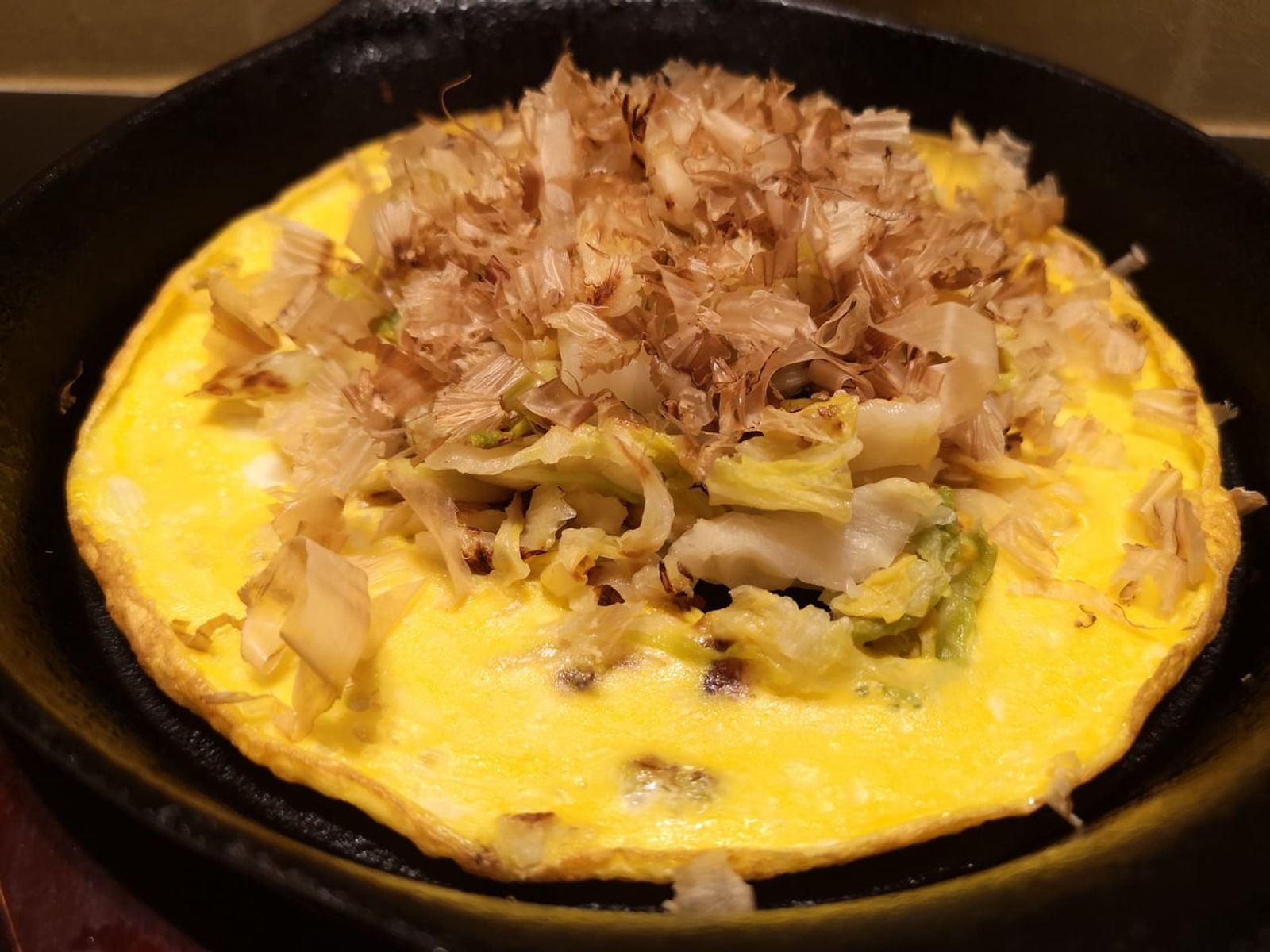
Tsukemono steak: pickled napa cabbage fried and bound with egg · Photo: 漱石の猫 / CC BY-SA 4.0 (Wikimedia Commons)
 JapanTakayama
Hida's Pickle Culture and Tsukemono Steak: From Red Turnips to Pickles Sizzled With Egg
To get through snowbound winters, people in Hida pickled vegetables, and even sour old pickles were fried or simmered rather than thrown away. Here is the story of Hida's red turnip pickles, nitakumoji, and the izakaya favorite tsukemono steak.
Food Stores for a Snowbound Winter
The Hida region, home to Takayama, is deep in the mountains and snowbound in winter. The Ministry of Agriculture's local cuisine guide explains that in Hida, pickles (tsukemono) were a precious food and an indispensable side dish through the snowy, bitterly cold winters. The ministry also describes an old early-winter scene. Each November, to prepare for the long winter and make a year's worth of pickles, people gathered for "naarai," washing huge amounts of turnips and other vegetables, a sight said to announce the arrival of winter. It resembles Korea's kimjang kimchi-making season, so Korean travelers may find it especially familiar.
Red Turnip Pickles and Hida Benikabu
The symbol of Hida pickling is akakabu-zuke, vivid red pickled turnip. According to the Ministry of Agriculture, it uses Hida beni-kabu, a red turnip born in 1918 when a red mutant plant was found among Hachiga turnips. The method is simple. Washed turnips are packed tightly into a barrel of brine with salt sprinkled between layers, then weighted with a stone and left at room temperature. In about two months they ferment and mature, and the red pigment in the skin seeps into the white flesh. It is said to be a traditional method dating back to the Edo period, devised to save salt, which was precious in the mountains.
Waste Nothing, Even Sour Pickles: Nitakumoji
Pickles made in winter grow sour by spring. Rather than throw them away, Hida people turned them into a side dish called nitakumoji. According to the Ministry of Agriculture, salted turnip greens are soaked to remove salt, cut into pieces about 3 cm long, fried in oil and simmered with seasonings until dry, then finished over high heat with sesame oil and white sesame seeds. "Kumoji" was a word used at the Heian-period imperial court for pickles. One theory says that pickled stems, kukizuke, were called "ku-moji" after their first syllable, and simmering them gave "ni-ta-kumoji." Today you can try it at some inns in Hida, and packaged versions are sold at local specialty and souvenir shops.
Where Tsukemono Steak Came From
A staple at Hida izakaya is tsukemono steak, or "tsukesute" for short. Despite the name, there is no meat in it. According to Japanese Wikipedia, pickles are fried in oil until golden, seasoned with soy sauce or miso, and bound with beaten egg, then topped as you like with bonito flakes, red pickled ginger and shichimi chili. Red turnip pickles were once common, but napa cabbage pickles are said to be more usual now. There are two views on its origin. One says it began when frozen winter pickles were warmed on a magnolia (hoba) leaf over the irori hearth. The other, a food researcher's guess, holds that since no old records mention it, restaurants created it after Japan's high-growth era made eggs cheap.
Enjoying It in Takayama and Taking Some Home
Tsukemono steak is so common that Japanese Wikipedia says most izakaya in the Hida region serve it. Order it with local sake on a Takayama evening and it often arrives sizzling on an iron plate or small pan, as in the photo. Tangy pickles, mellow egg and bonito flakes make it good with drinks or rice. Hida pickles also make good souvenirs. The Ministry of Agriculture says red turnip pickles are sold at pickle shops and souvenir stores around Hida and Takayama. There are also packaged kits for making tsukemono steak at home: just fry and bind with egg. Pickles packed in liquid may fall under carry-on rules, so check baggage regulations in advance.