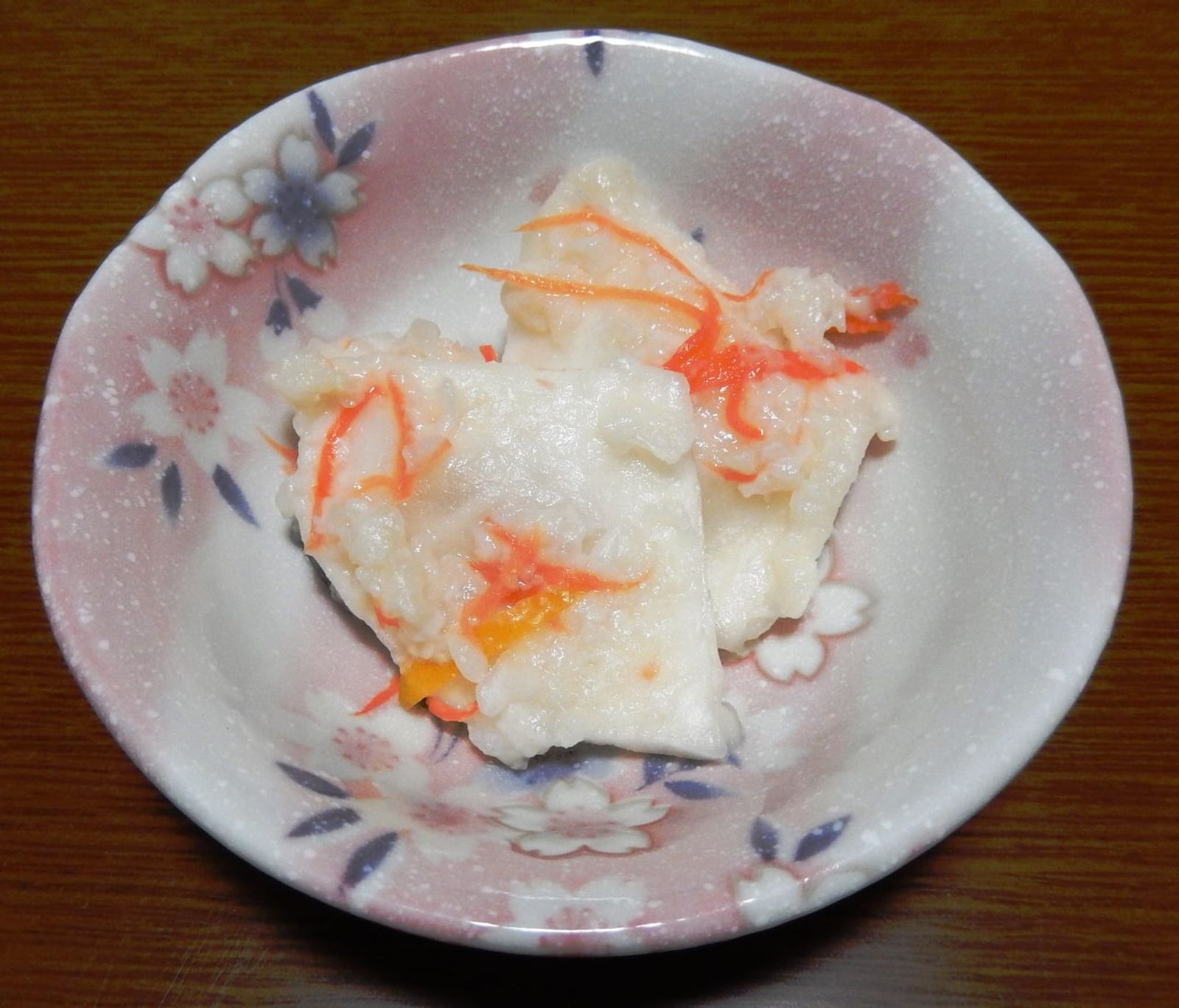
Kaburazushi · Photo: Ttaakkaco / CC BY-SA 4.0 (Wikimedia Commons)
 JapanKanazawa
Kaburazushi: Kanazawa's Winter Ferment of Turnip and Yellowtail, Made Without Rice Vinegar
It is called sushi, yet there is no vinegared rice: slices of salted turnip sandwich yellowtail and ferment in rice koji. Here is how kaburazushi, Ishikawa's must-have New Year food, began, how it is made and how to enjoy it.
Sushi Without the Rice? What Kaburazushi Really Is
Kaburazushi is a winter food made all over Ishikawa Prefecture. Thick rounds of salted turnip (kabura) are slit open, a slice of salted yellowtail (buri) is tucked inside, and the whole thing is left to mature in rice koji. Despite the word sushi in its name, it belongs to a different family from the sushi most people know. No vinegared rice is used. Instead it is a kind of narezushi, the old style in which fish and grain ferment together to create sourness and depth. One bite brings crisp turnip, rich yellowtail, the gentle sweetness of koji and a light fermented tang all at once. Japan's Ministry of Agriculture lists kaburazushi as one of Ishikawa's signature local dishes, and it is still a fixture on the New Year table.
A Fisherman's New Year Dish or a Lord's Treat? Competing Origin Stories
Nobody knows for certain when or how kaburazushi began, and sources offer several theories. One says fishermen in Kanaiwa, a port district of Kanazawa, started eating it as a New Year ritual food, praying for big catches and safety at sea. Another says it was served to a lord of the Maeda family, rulers of the Kaga domain, at a hot spring inn during a healing visit. There is also a story that yellowtail was so expensive that ordinary people could barely afford it, so they tucked thin slices into turnip to get at least a taste. Whatever the truth, it was being eaten by the Edo period at the latest. What helped it spread was a custom among fishmongers and greengrocers, who made it by hand and brought it as a gift when they paid year-end visits to their regular customers.
Forty Days of Salted Fish: How It Is Made
Kaburazushi takes time. Following the method described by Japan's Ministry of Agriculture, it goes like this. First the yellowtail is cut, heavily salted and left for about 40 days. The turnips are sliced into rounds, salted and left for about a week. Separately, koji, cooked rice and warm water are mixed and kept warm overnight until they turn into something like amazake, a sweet rice drink. Then turnip and yellowtail are layered alternately, topped with carrot, chili, yuzu peel and the koji mixture, weighed down with a stone and left for seven to ten days. The flavor changes a great deal with the turnip variety, how far the fermentation goes and how much salt is used, and every area and household has its own recipe. That is why one kaburazushi can taste bright and fresh while another has a deep, funky edge.
When to Eat It: Year's End, When Winter Yellowtail Arrives
Kaburazushi season runs from early winter to New Year. Off the Ishikawa coast, set-net fishing for yellowtail peaks in early winter, bringing in fatty, top-quality fish, and kaburazushi is made to match. As the year draws to a close it starts appearing in shops, and it has become a standard part of the New Year spread. Eating it is simple. Once it has matured, you eat it as it is, with no soy sauce or other seasoning. The koji clinging to the outside is usually eaten too, and it is sliced into pieces to go with sake or alongside other New Year dishes. Because it is a fermented food, it grows more sour with time. If you buy it as a gift or souvenir, check the storage instructions and best-before date on the package and eat it soon.
The Everyday Cousin, Daikonzushi, and Tips for Trying It in Kanazawa
In Ishikawa homes, people also eat daikonzushi, made with easier-to-find herring and daikon radish instead of pricey yellowtail. The method is similar, but the pairing of radish and herring makes it humbler, closer to an everyday side dish than the festive kaburazushi. If you see both side by side in a shop, trying them together is a fun comparison. Travelers can most easily find kaburazushi in winter around Kanazawa's markets, at souvenir counters near the station and in department store food halls. Neighboring prefectures have similar fermented foods, but turnip stuffed with yellowtail is seen as a winter sight of Ishikawa, centered on Kanazawa. Add it to your list of Kanazawa winter flavors alongside Kanazawa oden and jibuni.