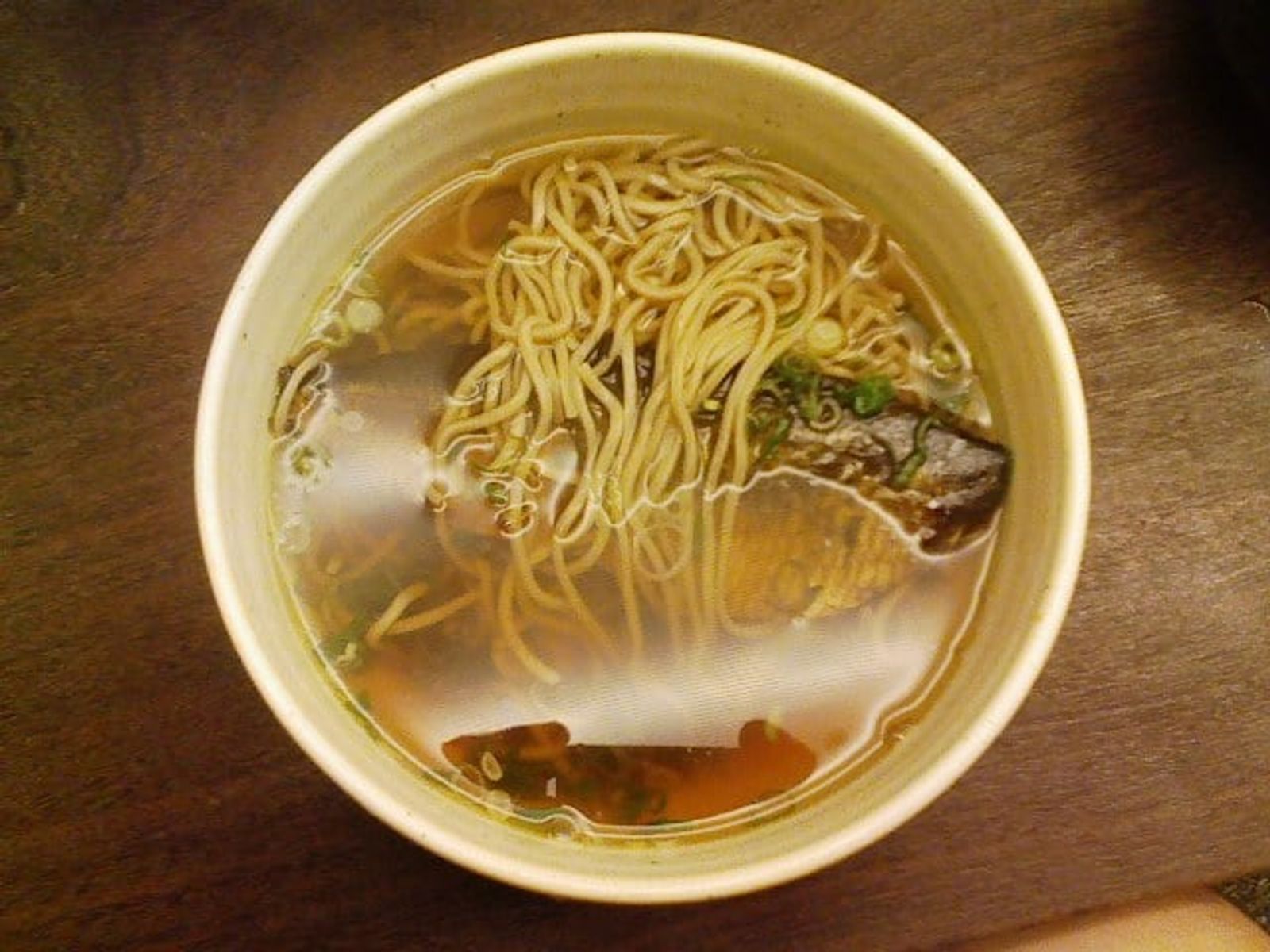
Nishin soba in Kyoto · Photo: rhosoi / CC BY 2.0 (Wikimedia Commons)
 JapanKyoto
Nishin Soba: How Hokkaido Herring Became Kyoto's Signature Soba
A whole piece of sweet-savory simmered herring on a bowl of hot soba. Here is how landlocked Kyoto became a herring town, from the Kitamaebune trading ships and dried migaki nishin to the dish's birth in 1882 and how to enjoy it.
What Nishin Soba Is: Hot Soba Topped With Simmered Herring
Nishin soba is a bowl of hot soba in broth topped with a whole piece of nishin no kanroni, dried herring simmered until sweet and savory. It is counted among the signature dishes of both Kyoto and Hokkaido. The Kyoto version uses a clear broth made from bonito flakes and kombu, seasoned with light usukuchi soy sauce, so its color is pale, and it is topped with green onion such as Kyoto's own Kujo negi. As you eat, the sweetness and richness of the herring slowly melt into the clean broth, so the soup tastes deeper with every mouthful. The herring is simmered long enough that even the bones turn soft, so there is no need to worry about them. Many soba shops across Kyoto still list nishin soba on their menus, making it a familiar bowl for locals and travelers alike.
Why Landlocked Kyoto Eats Herring: Kitamaebune Ships and Migaki Nishin
Herring (nishin) is not caught off Kyoto. From the Edo period, the great herring fisheries were in Hokkaido, then called Ezochi. So how did Kyoto become a home of herring dishes? The key is the kitamaebune, merchant ships that linked Hokkaido, Tohoku and Hokuriku with Kyoto and Osaka and carried herring among their cargo. MAFF explains that the kitamaebune trade, from the mid-Edo period to the early 1900s, played a big part in bringing herring into Kyoto's diet. The herring traveled as migaki nishin, gutted and dried. This long-keeping dried fish came from Wakasa Bay along the Saba Kaido ("Mackerel Road") into Kyoto, where it found a place in home cooking and in soba.
1882: A Bowl Born at a Soba Shop Beside a Theater
Nishin soba became an established dish in Kyoto in the Meiji era. The best-known story says that in 1882 (Meiji 15) a soba shop beside the Minamiza kabuki theater in Shijo began serving simmered herring on hot soba. That account, however, rests mainly on the shop's own tradition, and Kyoto households were simmering herring well before then. Even so, many people still picture the area around Shijo Bridge, Gion and Shijo, where the Minamiza stands, when they think of nishin soba. Meanwhile, in Esashi, Hokkaido, a recipe handed down in an old local merchant family is also said to be the original. It is hard to say which came first, and both places proudly promote nishin soba as a local specialty.
How the Herring Is Simmered, and How Kyoto Differs From Hokkaido
What makes or breaks nishin soba is the simmered herring. MAFF outlines the basic steps: soak the dried migaki nishin overnight in rice-rinsing water (or water with rice bran) to soften it, remove the harsh taste with sake and water, then simmer it with soy sauce and sugar. Because dried herring is used, it can be made all year round. Nishin soba also differs quite a bit between Hokkaido and Kyoto. The Hokkaido style uses dark soy sauce, giving a deeper-colored, stronger broth topped with white leek, and in Esashi many shops add shredded nori. The Kyoto style has a pale broth topped with green onion such as Kujo negi. If you visit both, compare the broth color and the onions. You will see at a glance how one dish changes from region to region.
When and Where: Even as Kyoto's New Year's Eve Soba
Nishin soba is available all year, but for Kyoto people it is also a favorite toshikoshi soba, the noodles eaten on New Year's Eve. In summer, some places serve hiyashi nishin soba made with chilled soba. Simmered herring is used in Kyoto home cooking beyond soba, too. Nishin nasu, herring simmered with eggplant, and nishin no konmaki, herring rolled in kombu and simmered, are classics, and the simmered fish is also eaten on its own as a side dish. Buying a piece of simmered herring from a deli around the city's markets and enjoying it back at your lodging is another way to try it. The area around Shijo Bridge and Gion is a good place to look. But nishin soba is a common menu item at neighborhood soba shops all over Kyoto, so trying a simple bowl at a place a little off the tourist path is also highly recommended.