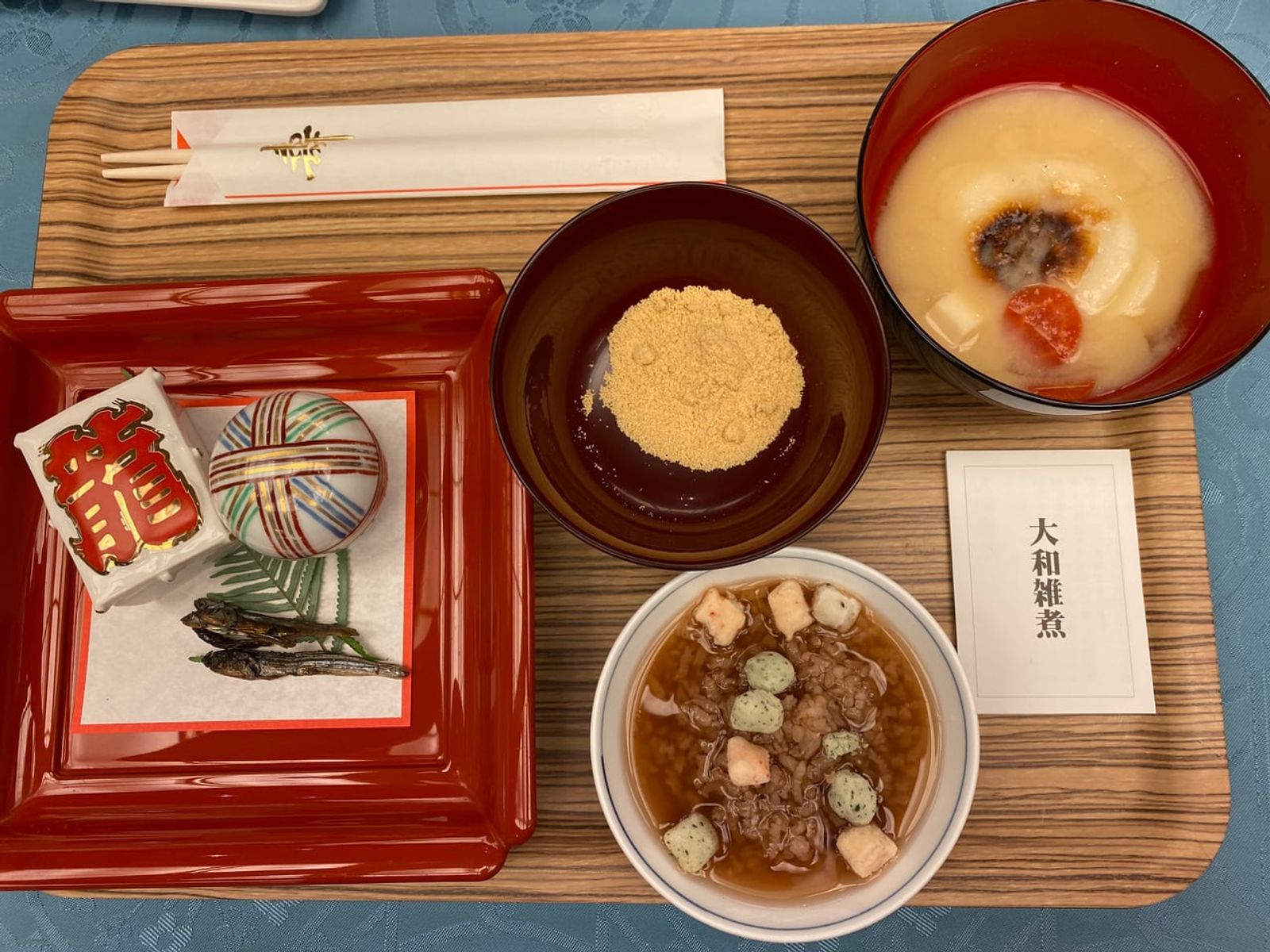
A Nara New Year tray: Yamato zoni and chagayu (bottom bowl) · Photo: 沢庵師匠 / CC0 (Wikimedia Commons)
 JapanNara
Nara's Chagayu (Okaisan): Tea Rice Porridge, Breakfast of the Old Yamato Province
A light, thin porridge of leftover rice simmered in roasted tea. Chagayu, which Nara people fondly call okaisan and once ate every morning, even appears in the 1,200-year-old meal records of Todaiji Temple's Omizutori rite. Here is its story and how to try it.
What Chagayu Is: A Thin Porridge Cooked in Roasted Tea
Chagayu is rice porridge simmered in brewed hojicha (roasted green tea). In Nara it goes by the affectionate name okaisan: okai is a polite word for porridge, with the friendly -san added, a sign of how close it was to daily life. MAFF's guide to regional cuisine calls chagayu a classic everyday food of Nara, noting the saying "mornings in Yamato begin with chagayu." Yamato is the old name for the area that is now Nara Prefecture. Unlike white rice porridge, chagayu is a clear, tea-colored broth with grains of rice floating in it, and it slips down smoothly without stickiness. It carries a gentle toasty aroma and is lightly salted for a clean taste, a welcome bowl for travelers who find a heavy breakfast too much.
A 1,200-Year Record: Todaiji's Omizutori and Chagayu
Chagayu's history is tied to Nara's great temples. Shuni-e at Todaiji's Nigatsudo hall, better known as Omizutori, is said to have been held every year since 752. Records of the meals served to the monks taking part mention dishes called gecha (agecha) and gobo. Gecha is rice cooked in hojicha with the liquid drained off, and gobo is a soupy chagayu. Based on such records, chagayu is thought to have been eaten in the Yamato region for more than 1,200 years. MAFF also notes the tradition that in the early 9th century the monk Kobo Daishi (Kukai) brought tea seeds back from Tang China and planted them at a temple in what is now Uda City, Nara, marking the beginning of tea growing in Japan.
Why Chagayu Every Day? From the Great Buddha Theory to Using Up Rice
There are several theories about why the people of Nara came to eat chagayu so regularly. One says it began when the Great Buddha of Nara was being built under Emperor Shomu, and households ate porridge to save rice and support the project. MAFF gives a more down-to-earth reason: many Yamato households cooked rice in the evening, and chagayu spread as a way to eat the cold leftovers warm the next morning. To make it more filling, people added sweet potato, pumpkin, taro, chestnuts or kakimochi (thin dried rice cakes). In 1954 there was even a call to "abolish chagayu," on the grounds that salty, piping-hot porridge was bad for the stomach. Today, few households still make it every morning.
How It Is Made, and 'Yamato's Tea Porridge, Kyoto's White Porridge'
MAFF's basic recipe (for 10) uses 1 go (about 180 ml) of rice, 30 g of hojicha, 5 cups of water and 1 teaspoon of salt. Brew the tea, add the rice or cooked rice and the salt, and simmer to the thickness you like, turning it only now and then, since too much stirring makes it sticky. The tea goes into a cotton tea bag; in Yamazoe Village, bamboo tea baskets are still used. There are two styles: irekayu, made with leftover cooked rice, and agecha-gayu, cooked from raw rice. A Kansai saying runs "Yamato's tea porridge, Kyoto's white porridge, Kawachi's dorogui," contrasting Nara's light chagayu with the porridges of its neighbors. The custom is also found in Wakayama and the Iga area of Mie, where it is likewise called okaisan.
Trying It on Your Trip: Hotel Breakfasts and Restaurants in Nara
You rarely see families making it every morning now, but chagayu can still be enjoyed at hotel breakfasts and restaurants around Nara Prefecture. If you stay in Nara, check whether chagayu is on the breakfast menu. Some local-cuisine restaurants around Nara Park and the old Naramachi district also serve chagayu set meals or breakfasts and lunches that come with it. Salty sides such as umeboshi pickled plums or narazuke, vegetables pickled in sake lees, bring out the gentle flavor of the porridge. Adding grilled kakimochi or steamed sweet potato is the traditional Nara home style. As in the photo, at New Year it may appear alongside Yamato zoni, Nara's own rice-cake soup. A warm bowl with the soft aroma of roasted tea is a very Nara breakfast, settling your stomach before an early walk to Todaiji or Kasuga Taisha.