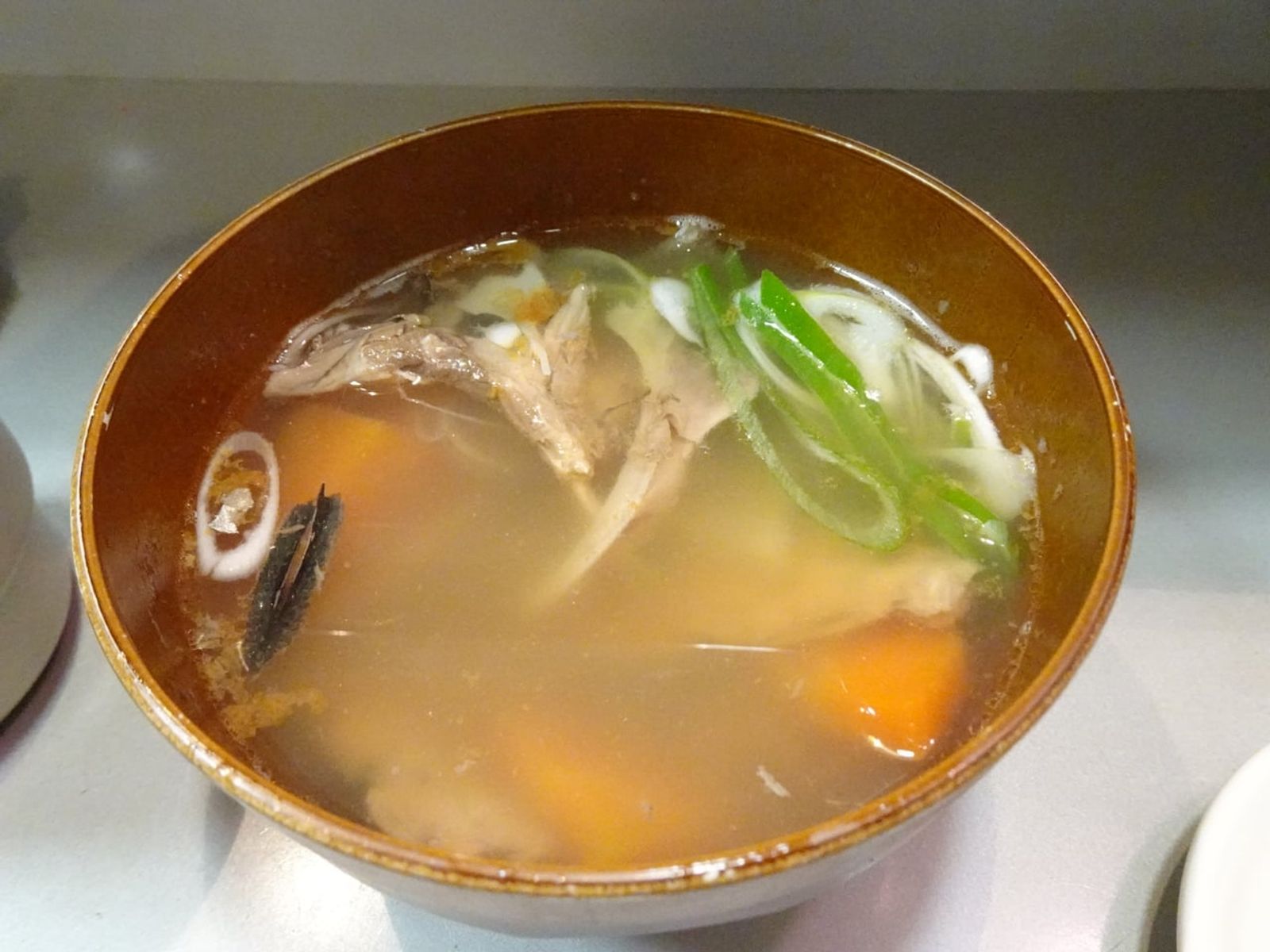
Senba-jiru with mackerel bones, daikon and green onion · Photo: RuinDig/Yuki Uchida / CC BY 4.0 (Wikimedia Commons)
 JapanOsaka
Senba-jiru: The Mackerel and Daikon Soup of Osaka's Thrifty Merchant Quarter
A humble soup of daikon simmered in broth from mackerel heads and bones carries the Osaka merchant ideal of shimatsu, using everything and wasting nothing. Here is the story of the Senba district, the soup it gave its name to, and how to try it today.
What Kind of Place Was Senba?
Senba is an old name for the district of today's Chuo Ward in Osaka, the dense block of office buildings between Yodoyabashi and Honmachi. Ringed by canals, it was for centuries where wholesalers clustered, and the Ministry of Agriculture describes it as the center of Osaka commerce from the Meiji through the Taisho era. A big Senba shop housed not only the owner's family but also live-in apprentices (decchi) and clerks. Feeding so many people every day meant plain meals, and fish reportedly appeared on the table only about twice a month. Senba-jiru was born in kitchens like these. Japanese Wikipedia likewise introduces it as a dish that came from Senba, Osaka's wholesale quarter.
A Soup of Shimatsu: Heads and Bones Become Broth
When a precious fish came in, the flesh became a side dish and the leftover head, backbone and trimmings were simmered into a broth for daikon. That, according to the ministry, is how senba-jiru began. Cheap, quick and warming, it became an everyday staple in the busy wholesale streets. Osaka people call this make-it-last attitude shimatsu. It is not stinginess but a positive idea of using things properly to the very end, and it was seen as a merchant's virtue. The ministry calls senba-jiru "a very Osaka dish of shimatsu that uses even the fish bones and scraps without waste". Japanese Wikipedia adds that the bones are essential; fillets alone will not give the flavor.
What Goes In: Salted Mackerel, Daikon and Kombu
The main ingredients are salted mackerel (shio-saba) and daikon. The basic method is to start the mackerel head and bones in cold water with kombu, add daikon, season with salt once it is tender and finish with green onion. Originally the saltiness of the fish and its broth were enjoyed as they were, so little extra seasoning was used. Kombu is also the backbone of Osaka cooking. Osaka, which received large amounts of Hokkaido kelp via the Edo-period Kitamaebune trade route, is known for its deep kombu broth culture, and senba-jiru can be seen as that broth with the savory depth of fish layered on top. Japanese Wikipedia notes it was traditionally finished with pepper, and that grated ginger tames the fishiness and warms you in winter. Today many cooks use fresh mackerel fillets or add a little vinegar or soy sauce at the end.
When and Where to Try It
Senba-jiru is eaten year-round, but it is especially popular in autumn, when mackerel is in season, and in winter, when you crave something hot. It is everyday home food rather than a showpiece tourist dish, so in Osaka it is something you have to seek out. The ministry notes that besides homes, it is still served at set-meal diners and restaurants around the city. Look for "船場汁" on the soup menu at lunch diners for office workers around Honmachi, Kitahama and Yodoyabashi, the old Senba area, or at long-established Japanese restaurants. It also turns up as a local dish on school lunch menus, such as at junior high schools in Sakai.
Tips for Enjoying It
Senba-jiru is lighter than you might expect: a clear broth with just a sheen of mackerel oil. Take the first sip plain to taste how kombu and mackerel come together. Then stir in the grated ginger or yuzu peel that often comes with it and the aroma lifts right away. The ministry's recipe, too, finishes the bowl with grated ginger, shredded green onion and yuzu peel. Pieces often still have bones, so eat slowly. The daikon, soaked through with broth, is the other star of the bowl. Versions vary: some made with fresh mackerel are less salty, others darkened with soy sauce. It is fun to taste it with Osaka's long love of mackerel in mind, the same love that produced battera, the city's pressed mackerel sushi.