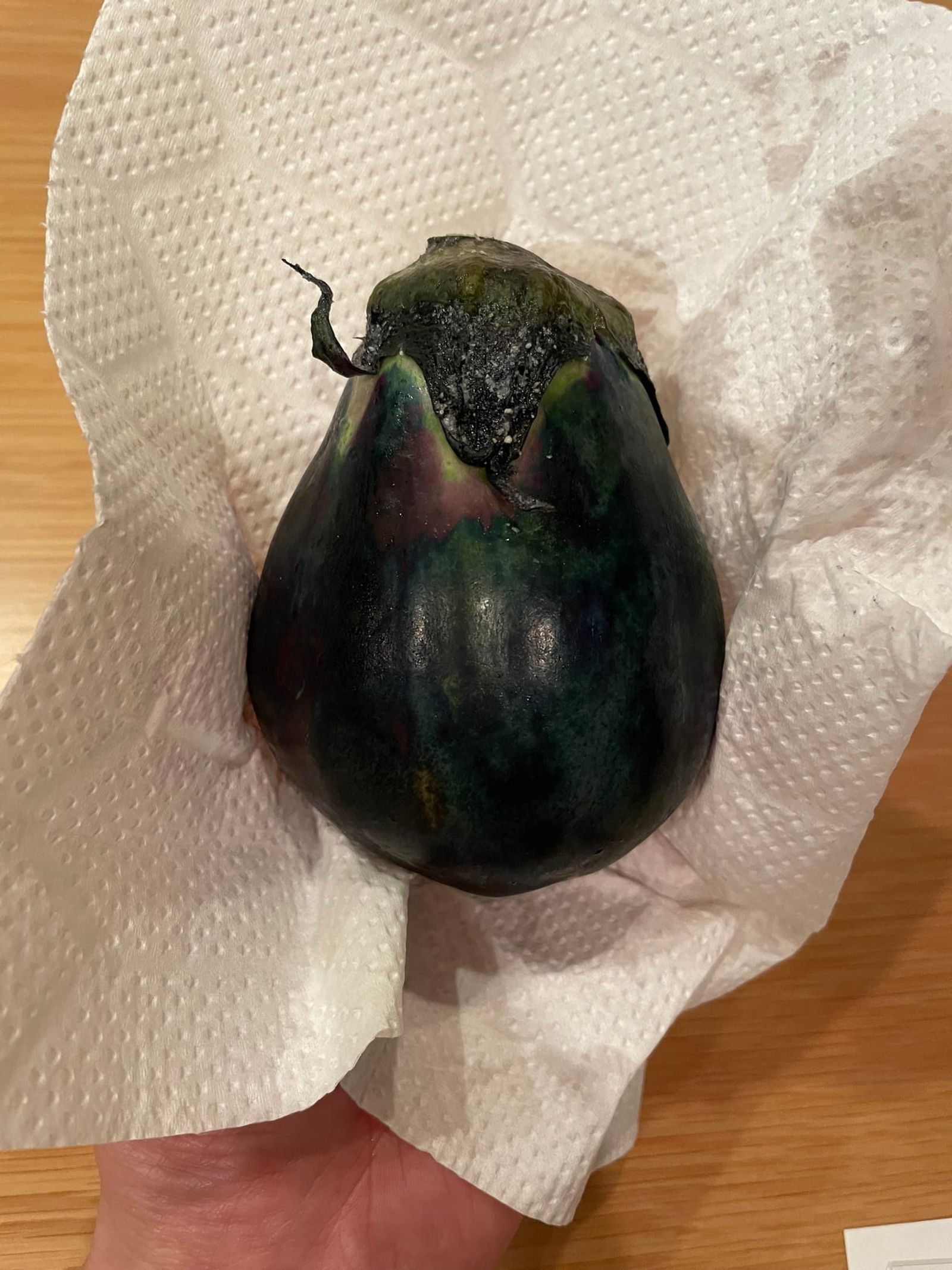
A round mizunasu pickled in rice bran · Photo: Saichi31 / CC0 (Wikimedia Commons)
 JapanOsaka
Senshu Mizunasu: The Juicy "Water Eggplant" Pickles of Southern Osaka
An eggplant so juicy it drips when squeezed and so mild you can eat it raw. Here is the history and season of mizunasu from the Senshu area just south of Kansai Airport, and why locals tear it by hand.
An Eggplant That Drips Water
Mizunasu, literally "water eggplant", is a group of eggplant varieties, and those grown in the Senshu area of southern Osaka Prefecture are known as Senshu mizunasu. They are rounder and more bulb-shaped at the bottom than ordinary eggplants, and so full of water that they drip when squeezed, hence the name. Eggplant is normally too astringent to eat raw, but mizunasu has almost no bitterness and a gentle sweetness, so you can eat it as is. The Ministry of Agriculture's "Our Regional Cuisines" lists Senshu mizunasu asazuke (light pickles) as the very first Osaka entry, explaining that its thin, soft skin makes pickling the most common way to eat it.
From a Medieval Text to the Airport Era
Some trace mizunasu to "sawa-nasu", mentioned in the Muromachi-period text Teikin Orai. Sources differ on its birthplace: one theory points to the Sawa area of today's Kaizuka City, while Osaka Prefecture's own material names Kaminogo in Izumisano. Serious cultivation is thought to date from the early Edo period. For a long time mizunasu was eaten almost only locally. Farmers are said to have planted it along paddy ridges and picked one to quench their thirst while working in the summer heat. Its thin skin bruised easily in transit, and pickling turned the skin brown and unappealing. The ministry explains that it gained attention as an Osaka specialty after Kansai International Airport opened in 1994. According to Japanese Wikipedia, most mizunasu sold today belong to postwar strains whose skin turns fully purple.
Season and Growing Area
Senshu mizunasu is grown across the Senshu area of southern Osaka near Kansai Airport, in places such as Kaizuka and Izumisano. Japanese Wikipedia notes that it does best in fields that both drain well and hold moisture. According to the ministry, harvest runs roughly from April to November, with summer as the peak; field-grown crops are at their height from June to September. According to Wikipedia, the fruit is so delicate that even a leaf brushing against it in the wind leaves a scar, so farmers strip the leaves around each fruit and put up windbreak nets on gusty days. All that handwork is one reason it is treated as a premium vegetable outside the area.
Why You Tear It by Hand Instead of Slicing
In Senshu, mizunasu is lightly pickled for anywhere from a day to a few days in a rice-bran bed (nukadoko) or pickling liquid. The fun part is how you eat it. The ministry suggests cutting off the stem just before eating, making a small slit, then tearing the eggplant lengthwise by hand for better flavor and texture. People say the rough torn surface holds juice and seasoning better than a clean knife cut, and splitting along the fibers keeps it crisp yet juicy. Eat it as is, or add a little bonito flakes, sesame or soy sauce. Longer-pickled ones are desalted and simmered sweetly with tiny shrimp into a side dish called jako-goko, which Wikipedia says even appears in school lunches.
How Travelers Can Try It
Mizunasu pickles often appear on the "today's specials" board at Osaka izakaya around summer. Look for mizunasu or mizunasu no asazuke on the menu; some places serve it torn by hand just as tradition suggests. It is especially good with a cold beer. To take some home, souvenir shops at Kansai Airport and big stations like Shin-Osaka and Namba, as well as department store food halls, sell whole eggplants packed in pickling liquid. They need refrigeration and have a short shelf life, so buy them just before you fly and check the storage instructions on the pack. Farm stands in the Senshu area also sell fresh mizunasu in season, so you can try it raw like a salad.