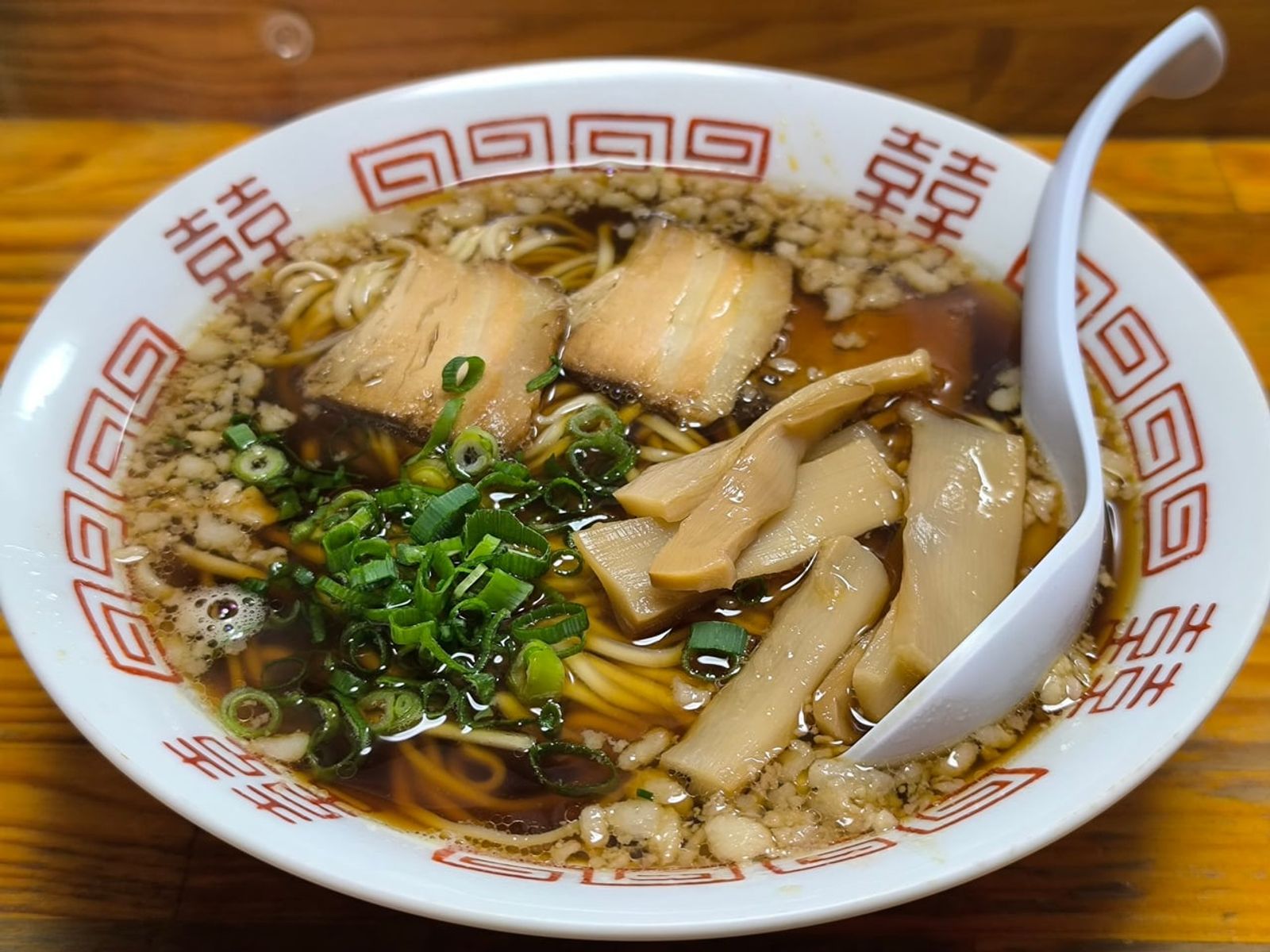
Onomichi ramen with back fat floating on soy broth · Photo: Misei sen / CC BY-SA 4.0 (Wikimedia Commons)
 JapanHiroshima
Onomichi Ramen: Soy Broth Dotted With Pork Back Fat From a Hillside Port Town
Ramen from Onomichi in eastern Hiroshima Prefecture is known for a clear soy broth scattered with minced pork back fat and flat noodles. Here are its two origin stories from street stalls, what makes it distinctive, and how to fit a bowl into a walk around this hillside town.
What Kind of Town Is Onomichi?
Onomichi is a port town on the Seto Inland Sea in the Bingo region of eastern Hiroshima Prefecture. Houses and temples crowd up the slopes on the narrow strip between sea and hills, earning it the nickname "town of slopes", and it is well known as the starting point for cycling the Shimanami Kaido across the islands to Shikoku. From Hiroshima city it takes a little over an hour by shinkansen and local train. Its signature dish is Onomichi ramen, which Japanese Wikipedia describes as the local ramen of the Bingo region centered on Onomichi City. Hiroshima may be better known for oysters, conger eel rice and okonomiyaki, but Onomichi ramen is famous enough nationwide to be sold as instant cup noodles. According to a local tourism association representative quoted in a government publicity magazine, ramen here goes back about 90 years.
Two Origin Stories, Both From Street Stalls
There are two theories about how Onomichi ramen began. According to Japanese Wikipedia, some sources say a man from Fujian, China, settled in Onomichi in 1928 and sold noodles from a street cart, while others trace it to chuka soba served at a stall in 1947 by a man from Taiwan. The same tourism association representative says that in the 1930s the broth was a cloudy one made from beef and pork bones, though this detail is not confirmed elsewhere. Sources agree that today's style took shape at postwar food stalls. The postwar stall developed a distinctive chuka soba with sautéed pork back fat in a soy broth and house-made flat noodles, and that taste spread to other shops in town to become the prototype of today's Onomichi ramen. That shop closed in 2019, but shops that say they carry on its flavor are still in business.
The Flavor: Back Fat, Soy, Flat Noodles and Small Fish
The basic Onomichi bowl is a clear soy broth with minced pork back fat (seabura) floating on top and flat, wide noodles (hirauchi-men). Back fat may sound heavy, but scattered in small bits it adds sweetness and richness and acts as a lid that keeps the broth hot. The broad noodles soak up the soup and slurp down easily. A second lineage appeared in the 1990s. According to Japanese Wikipedia, a seafood processor in neighboring Fukuyama began selling a souvenir Onomichi ramen with chicken broth and small Seto Inland Sea sardines (hirako iwashi), and as more shops served this style, "Onomichi ramen" now often refers to it. Still, shops vary a lot: some use pork bone and seafood broth with thin noodles, and some long-established places skip the back fat entirely and simply call it "chuka soba".
Where to Eat: Around the Station and Shopping Arcade
Onomichi ramen shops cluster in the long shopping arcade running east along the waterfront from JR Onomichi Station and in the lanes around it. Everything is walkable from the station, so a bowl slots neatly into a stroll through the slopes and temples. Popular shops often have long lunchtime lines, so going around 11 a.m. or in the late afternoon makes things easier. Many people come back for a bowl after cycling the Shimanami Kaido. The gourmet map published by the Onomichi Chamber of Commerce and Industry even lists ramen and Chinese restaurants as their own category, showing how central ramen is to visiting the town. If you have no time to stop in Onomichi, you can buy souvenir packs of Onomichi ramen at Hiroshima Station or highway service areas and try it at home.
Tips for Enjoying a Bowl
When your bowl arrives, start with a sip of broth. Drunk together with the floating back fat, the soy saltiness gives way to sweetness, and at shops that use small-fish stock you will catch a gentle hint of the sea. The fat is usually spread through the whole bowl, so just lift it up with the noodles. Standard toppings are chashu pork, menma (seasoned bamboo shoots) and green onion, with some shops adding a soft-boiled egg or nori. A few old-school shops offer "tempura chuka", topped with a vegetable fritter. Many customers order gyoza on the side. Some places let you choose how much back fat you want; if it is your first time, start with the regular amount. Onomichi ramen tends to feel lighter than a heavy tonkotsu, so it makes an easy bowl in the middle of a walk.