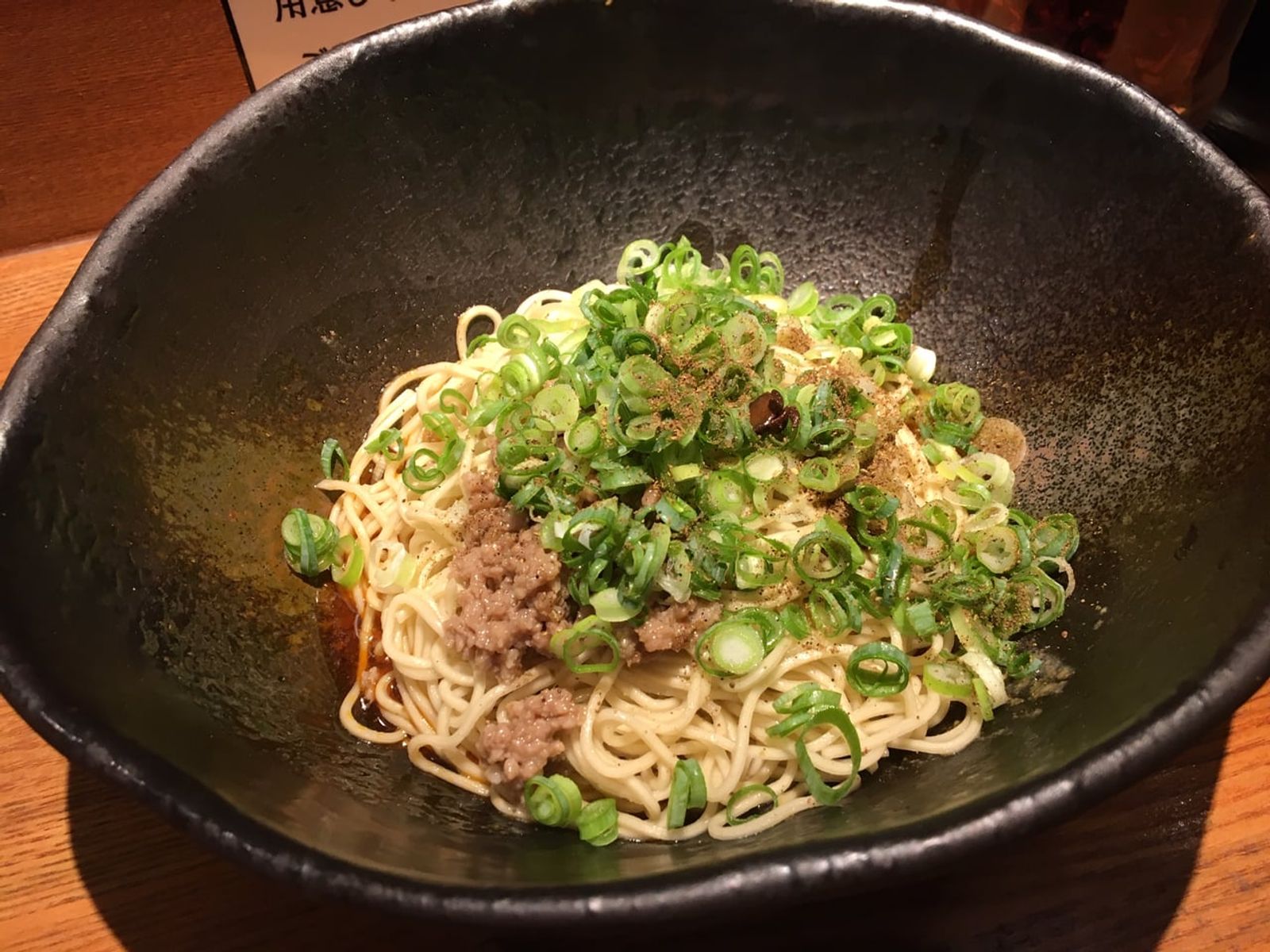
Hiroshima-style soupless tantanmen with green onion, minced meat and Sichuan pepper · Photo: Cork screw / CC BY-SA 4.0 (Wikimedia Commons)
 JapanHiroshima
Hiroshima Soupless Tantanmen: Numbing Sansho and Noodles You Finish by Mixing 30 Times
Hiroshima's soupless tantanmen, a local soul food, is all about the tingling heat of Sichuan pepper rather than sesame. Here is how it began in Hiroshima in 2001, how it differs from the Tokyo style, how to mix it, and the rice you add to finish the sauce.
A New Soul Food Made in Hiroshima
The tantanmen most people eat in Japan is noodles in a soup enriched with sesame paste. That version was adapted for Japanese tastes in the 1950s by a Sichuan-born chef who came to Japan; in Sichuan itself, dandan noodles are usually eaten dry and mixed. Hiroshima took that original style and developed it in its own way into "Hiroshima-style shirunashi (soupless) tantanmen". The Hiroshima prefectural site "Hiroshima Lab" says soupless tantanmen started in Hiroshima and has now become a nationwide craze. Japanese Wikipedia describes three types in Japan: the Tokyo style with sesame and dried shrimp, the Chengdu style faithful to the original, and the Hiroshima style. In Hiroshima it is recognized as a soul food, with many specialists across the city; around 2018 it was said there were more than 25 dedicated shops and over 200 places serving it in the prefecture.
2001: Born in a Struggling Ramen Shop
According to Japanese Wikipedia, the originator of Hiroshima-style soupless tantanmen is a shop that opened in Naka Ward, Hiroshima City, in 2001. It began as a ramen shop so short of customers it was close to closing, until the owner joined a cooking class where a Chinese exchange student taught how to make soupless tantanmen and was struck by the taste. He then traveled to Sichuan, ate his way through the local versions, and converted his ramen shop into a soupless tantanmen specialist. A second boom came around 2010. A Tokyo-born shop owner who fell for the dish on a trip to Hiroshima moved there, and when he published a detailed recipe, new shops piled in, creating "Hiroshima, city of soupless tantanmen". Wikipedia notes that three leading shops are called the "big three" of the Hiroshima style.
The Star Is Sichuan Pepper, Not Sesame
While ordinary soup tantanmen is built around rich sesame, the Hiroshima style puts the tingling ma (numbing) sensation of Sichuan pepper center stage. Wikipedia describes it as chili heat plus the numbing of Sichuan pepper, with a sharp aroma rising into your nose that is nothing like the Japanese sansho sprinkled on eel. The prefectural site also describes chili oil and chili heat layered with the tingle of sansho. Some shops use no sesame paste at all. Recipes vary, but the usual bowl is piled with Kannon negi, the sweet, tender Hiroshima green onion used widely in local cooking including okonomiyaki, with medium-thin noodles made with little kansui (alkaline salts) and an onsen egg on top. Many shops let you choose the amount of Sichuan pepper or the spice level, and some keep extra pepper on the table. Not everyone likes the numbing sensation, so start with the regular level the first time.
How to Eat It: Mix at Least 30 Times
When your soupless tantanmen arrives, do not dig in yet; mix it first. The spicy sauce pools at the bottom of the bowl while green onion, minced meat and pepper sit on top, so eating it as served means the flavors never meet. The prefectural site also advises mixing well straight away so the sauce from the bottom and the sansho on top coat the noodles evenly. Wikipedia says the rule is to mix it doggedly, 20 or 30 times, before eating: the dish arrives unfinished and is completed by the customer. The goal is to keep mixing until no sauce is left at the bottom and everything is coated. Mix while the noodles are hot so the sauce clings, which means taking your photo quickly before you start. Breaking the onsen egg and stirring it in partway through softens the heat and makes it easier to eat.
Finish With "Tantan Rice"
Once the noodles are gone, a little spicy sauce and minced meat remain at the bottom of the bowl. Adding white rice and mixing it in is the classic Hiroshima finish, "tantan gohan" (tantan rice). The prefectural site, which calls it "tantan rice", notes that some people order the dish mainly for this. According to Wikipedia, the habit was not invented by a shop owner but started spontaneously among customers. That is why many shops sell a small bowl of rice cheaply on the side, and some offer noodle-and-rice sets. Ordering rice together with your noodles means you can enjoy every last drop of sauce. Many people save the onsen egg for the rice. Specialist shops are concentrated around Naka Ward in central Hiroshima, so make it your third Hiroshima taste after okonomiyaki and oysters.