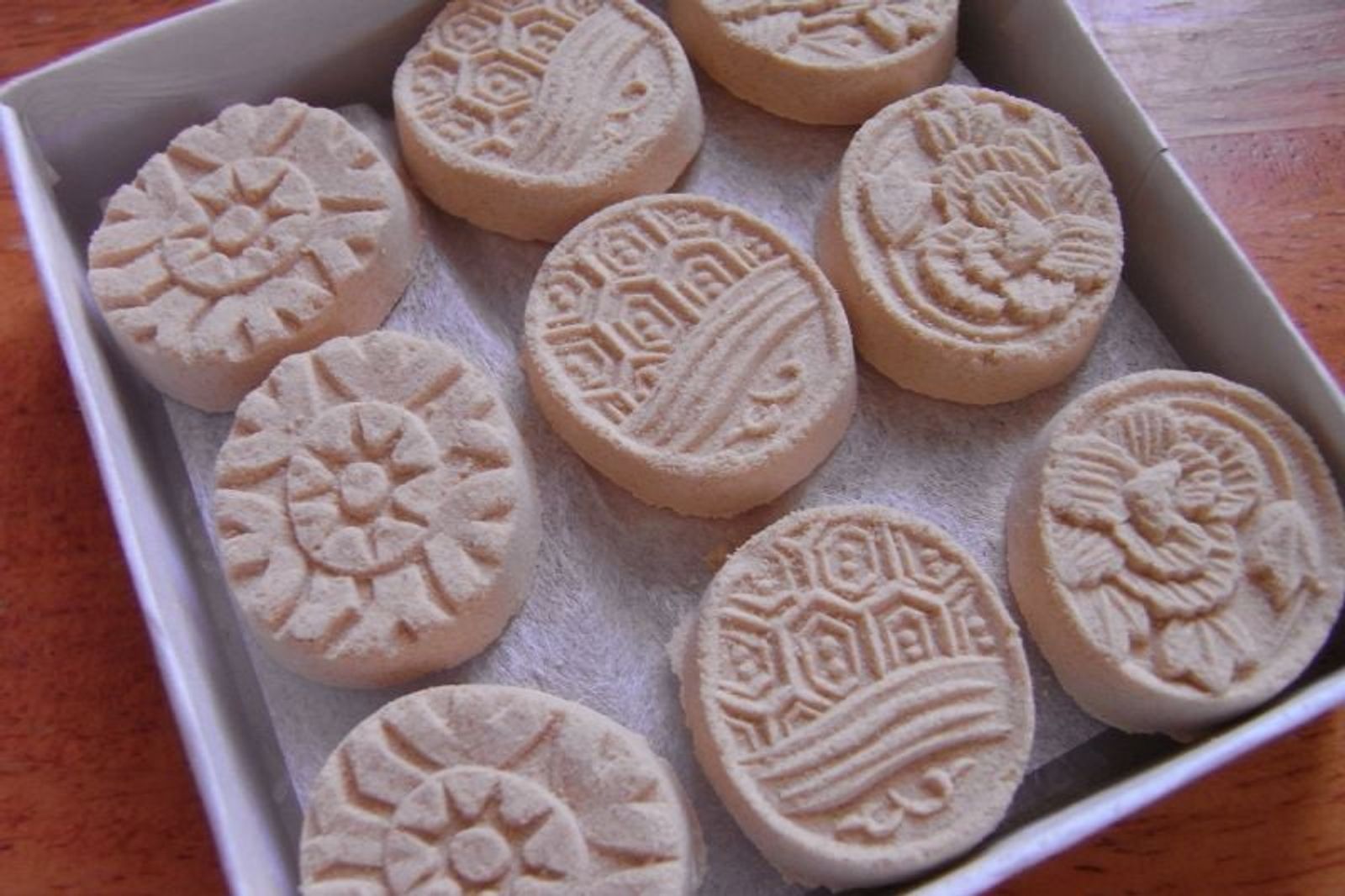
Higashi dry sweets pressed from wasanbon · Photo: iwaryo from Tokyo, Japan / CC BY 2.0 (Wikimedia Commons)
 JapanTakamatsu
Wasanbon: The Melt-in-Your-Mouth Sugar the Takamatsu Domain Nurtured, 200 Years of Pressing and Kneading
Wasanbon is a pale, fine sugar that dissolves the moment it touches your tongue. It took root in eastern Kagawa when the Edo-period Takamatsu domain set out to make its own sugar. Here is how it began, how it is made and how to taste it on your trip.
What Kind of Sugar Wasanbon Is
Wasanbon (和三盆) is a premium sugar made with traditional Japanese methods. According to Kagawa's tourism guide, it has been produced for more than 200 years mainly in eastern Shikoku, in Kagawa and Tokushima. Within Kagawa, the heart of production is the east, around today's Higashikagawa City. Unlike ordinary white sugar, wasanbon is a pale ivory color with extremely fine grains that melt away as soon as they touch your tongue. Its sweetness is gentle rather than sharp, with a soft lingering flavor, which is why it has long been prized for tea ceremony sweets. Walk into a souvenir shop or wagashi store in Takamatsu and you will almost certainly see small wasanbon sweets on display: the end result of Kagawa's sugar history.
The Takamatsu Domain's Sugar Project
Until the mid-Edo period, sugar in Japan was mostly imported or came as dark brown sugar from Satsuma (Kagoshima). When the eighth shogun, Tokugawa Yoshimune, encouraged sugarcane growing and sugar making, domains across Japan tried their hand at it. According to Kagawa's official product promotion site, Matsudaira Yoritaka, fifth lord of the Takamatsu domain, put the domain physician Ikeda Genjo in charge of sugar research. Seedlings were brought in from Satsuma, but at first they yielded only a soft brown sugar that could not be sold; the challenge was to remove the molasses and produce white sugar. Yoritaka is said to have looked to sugar to rebuild the domain's finances. In time, Edo-period Sanuki became known for its 'three whites': salt, sugar and cotton.
Sakiyama Shukei and the Birth of Wasanbon
The research passed to Ikeda's pupil, Sakiyama Shukei (向山周慶), a doctor from Minato in Shirotori village, Okawa District, in today's Higashikagawa. He is said to have succeeded in making white sugar in 1803, presenting it to the domain lord and reporting his success at Yoritaka's grave. Sources differ somewhat on when the method was established and on exactly who contributed what. With the domain actively encouraging production, wasanbon making spread as a major industry of eastern Sanuki. Some sources say Sanuki led the country in sugar output in the late Edo period, though they differ on when: some point to the Tenpo era, others to the Kaei and Ansei eras around 1850. Sugar makers carrying on the old methods still operate around Higashikagawa, so a technique more than 200 years old remains very much alive.
Pressing and Kneading, Again and Again
Kagawa's product promotion site describes one sugar maker's process. The raw material is a thin, slender sugarcane called chikuto, grown in eastern Kagawa and harvested in December before the frost. The juice is pressed, boiled down in a kettle, skimmed and cooled to form crystals. The key steps come next. The sugar is wrapped in cloth, placed in a pressing box called an oshibune and weighed down with stones for a full day and night to squeeze out molasses. It is then taken out and kneaded by hand on a board with small amounts of water, a step called togi. That producer repeats pressing and kneading five times. The name is widely explained as coming from kneading the sugar three times (san) on a tray (bon).
Tasting Wasanbon on Your Trip
The most direct way to taste wasanbon is higashi, small dry sweets pressed in wooden molds. Wasanbon is packed into molds carved with flowers, waves or seasonal motifs and tapped out, and the patterned pieces melt on your tongue. With matcha, the bitterness and the gentle sweetness balance beautifully. Kagawa's tourism guide also introduces wasanbon sweet-making experiences in the Takamatsu area, where you press your own sweets into molds. Mix the sugar, press it into the mold and turn it out onto a board: simple enough for anyone. Besides higashi, you can buy wasanbon as loose sugar. Producers recommend it in coffee or tea, or in simmered dishes and jams, where it brings out the ingredients. It absorbs moisture easily, so keep it sealed once opened.