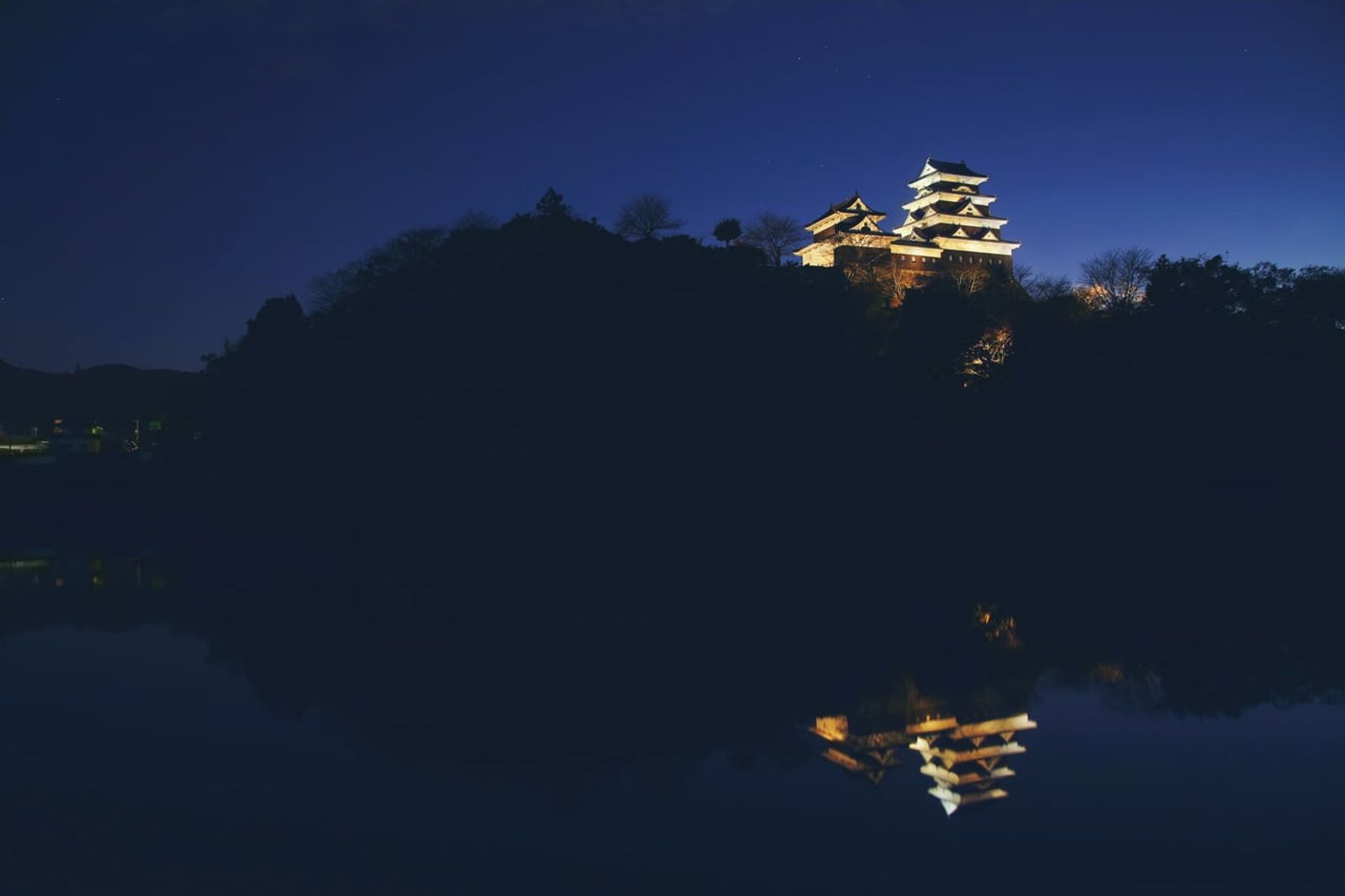
Ozu Castle reflected in the Hiji River at dusk · Photo: Mimumama / CC BY-SA 4.0 (Wikimedia Commons)
 JapanMatsuyama
Imotaki: Ehime's Autumn Custom of Sharing a Taro Hot Pot by the River Under the Moon
From late summer into autumn, people gather on Ehime's riverbanks around pots of taro and chicken. Here is the story of imotaki, said to have started in Ozu, what goes in the pot and tips for travelers who want to join in.
Imotaki Is Both a Dish and an Event
Imotaki (いもたき, 芋炊き) is an Ehime hot pot built around taro, simmered with chicken, thick fried tofu (namaage), shiitake and more in a sweet-savory soy broth. The recipe in the agriculture ministry's regional food archive also adds chewy shiratama dumplings. But imotaki is more than the name of a dish. In Ehime the word also means the gathering itself: spreading out on a riverbank in autumn, sitting around the pot, eating and drinking while watching the moon. The ministry notes these events are held across the prefecture, at a dozen or so places centered on the southern Nanyo region. If you are exploring Ehime from Matsuyama, it is a seasonal local scene worth knowing about.
A 350-Year Story That Began in Ozu
According to the agriculture ministry, imotaki is said to have originated in Ozu, southwest of Matsuyama. Its roots are traced back more than 350 years to when the Kato family ruled the Ozu domain, though sources differ on the exact starting year. The story begins with a traditional observance called okomori, in which people gathered to spend the night together. A hot pot was served, and each person brought taro, a local specialty, which is said to be how imotaki began. Because taro multiplies from mother corm to child to grandchild, it is considered a lucky symbol of a flourishing family and was used in celebration dishes too. The spirit of everyone bringing food to share in one pot lives on in imotaki gatherings today.
How Ozu's Riverside Imotaki Became a Tourist Event
Ozu's imotaki became an official city tourism event in 1966 (Showa 41). At its peak, this custom of tasting taro by the river under the moon reportedly drew more than 70,000 people a year. Ozu has held imotaki on the Hiji River banks from late summer into autumn, generally starting in late August or early September and running to mid or late October. According to the agriculture ministry, for about a month when it overlaps with Ozu's famous cormorant fishing, you can sit around the pot while looking at the illuminated Garyu Sanso villa on the bluff above the river. Imotaki is held in other parts of Ehime as well and has become a mid-autumn tradition across the prefecture. Dates, venues and booking methods can change each year, so check announcements from Ozu City or its tourism association first.
What Goes in the Pot
The agriculture ministry's four-serving recipe calls for 300 g chicken, 400 g taro, one sheet of fried tofu, four shiitake and 100 g shiratama flour, with five cups of dashi, seasoned sweet and savory with sugar, mirin, soy sauce and sake. The taro is peeled and parboiled in salted water; the chicken is stir-fried in oil, the taro and tofu added, then the broth poured in and simmered. When the taro is tender, the dumplings go in, the pot is seasoned and everything is eaten with its broth. The most important point is to cook the taro until it practically melts in your mouth. Ingredients and seasoning vary by area and household: some add konjac, and some are known to add small octopus (iidako). Finishing the leftover broth with udon is another common pleasure.
Imotaki Tips for Travelers
Timing matters if you want to enjoy imotaki properly. If you visit Ehime from late summer to autumn, especially in September and October, look up riverside imotaki schedules in Ozu and elsewhere in advance. Some years have offered imotaki by the single bowl so small groups can join easily, but formats and booking methods can change, so check the announcements first. Even if you miss the events, there are other chances to taste it. In autumn it may appear as a seasonal dish at Ehime restaurants or in hotel meals, and since it is also made at home and in school lunches, it is sometimes served at local events. Riverbanks can get chilly at night, so bring a jacket. The steaming pot, the moon on the water and the voices of people sharing one pot are the real flavor of imotaki.