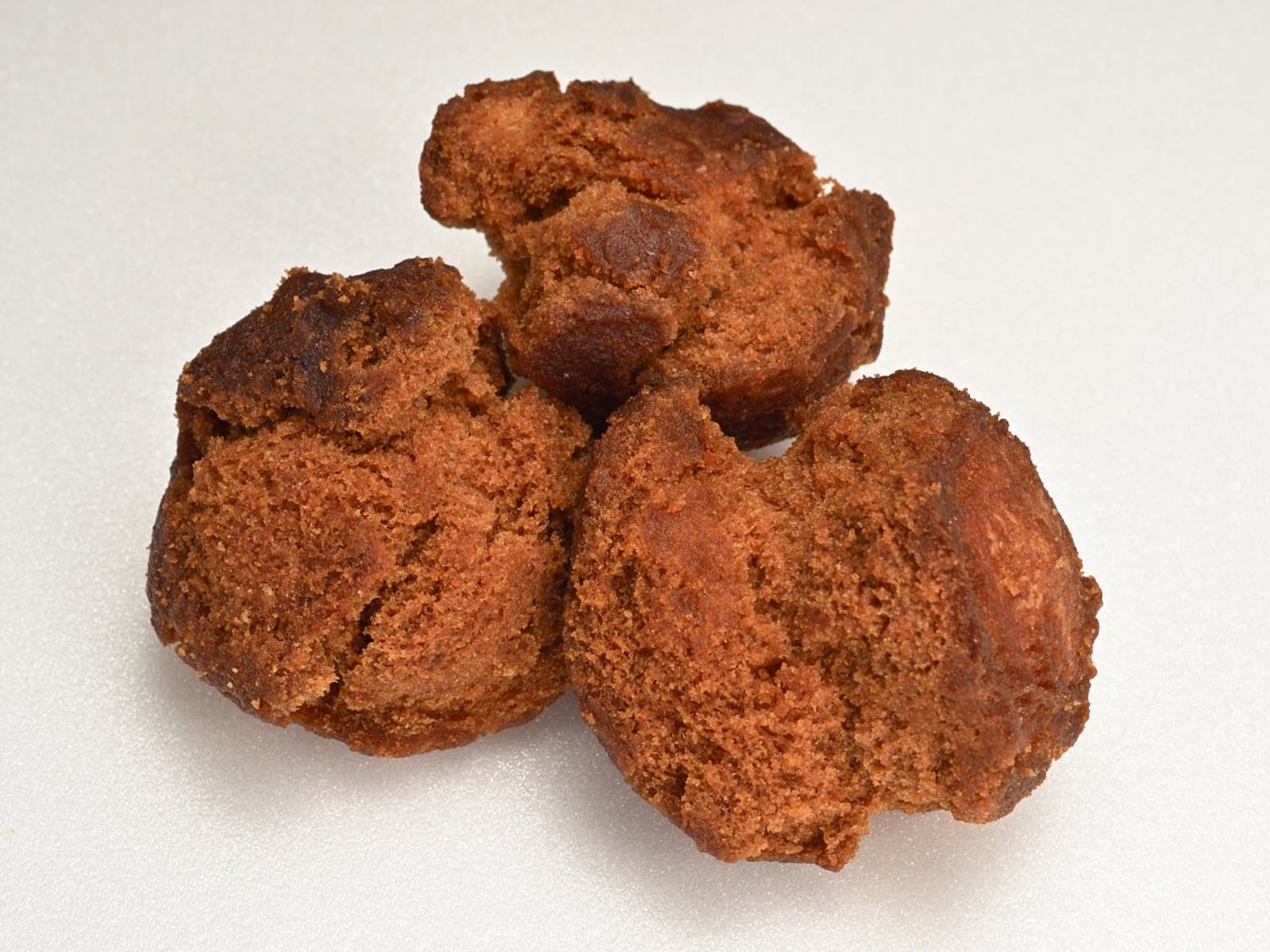
Brown sugar sata andagi · Photo: Ocdp / CC0 (Wikimedia Commons)
 JapanOkinawa
Sata Andagi: Okinawa's Doughnut That Splits Open Like a Flower, From Its Name to Picking a Good One
Crisp outside and dense inside, the round fried sweet called sata andagi is counted as Okinawa's most popular snack. Here is what the name means, its link to a Chinese pastry, the 'smile' that forms as it fries, the varieties and how to enjoy it.
What the Name Means
Sata andagi (サーターアンダーギー, also written サーターアンダギー) is an Okinawan-language name. It is commonly explained as 'sata' meaning sugar, 'anda' meaning oil and 'agi' meaning fried, so together it means 'something sweetened and fried in oil'. The agriculture ministry likewise notes that 'andagi' refers to fried batter. Each one is a ball a little bigger than a ping-pong ball, deep brown and crisp outside, dense and substantial inside. On the mainland it is often called an 'Okinawan doughnut', but rather than the airy texture of a ring doughnut it feels like tightly packed cake, so even one is filling. The ministry describes it as the most popular sweet in the prefecture.
A Sweet From China?
The agriculture ministry says sata andagi is thought to have come from China and resembles Chinese pastries such as kaikouxiao (开口笑, literally 'open-mouthed laugh') and kaikouqiu. There is no clear documentary evidence of a direct transmission, though, so it is best understood as a theory based on the resemblance. The background lies in Ryukyu confectionery as a whole. According to the same source, sweets of the Ryukyu Kingdom developed under Chinese influence and mix Chinese and Japanese elements; with the skill of confectioners added, sweets suited to Okinawa's hot climate emerged. That is why so many are fried or baked to keep well, and why such sweets were indispensable at celebrations and rituals. Sata andagi belongs to that tradition.
The 'Smile' That Forms in the Fryer
Sata andagi's defining feature is its shape. Drop a ball of dough into the oil and it slowly rises, rolls over on its own as it swells, and then splits open on one side. The agriculture ministry compares the result to a blooming tulip. Many also say the split looks like a laughing open mouth, which is why it is often described as a lucky sweet fit for celebrations. The secret is low heat. The method in the ministry's archive lowers the dough gently into oil at a fairly low 150 to 160°C and fries it for four to five minutes. At higher temperatures the outside sets too fast, leaving the inside raw or preventing a nice split. Doneness is checked with a bamboo skewer: if no raw dough clings to it, it is ready.
Ingredients and Varieties
The ingredients are simple. The agriculture ministry's batch of about 15 uses two eggs, 130 g of brown sugar (or granulated sugar), 230 to 250 g of cake flour, baking powder and a little vegetable oil. Mix the sugar into the eggs until thick without whipping in air, add the sifted flour, then the oil, and mix well for two or three minutes until glossy. With lightly wet hands, roll balls about 2 cm across and fry. Brown sugar gives a darker color and richer flavor; white sugar gives a lighter color and cleaner taste. There are many variations: nmukuji andagi made with purple sweet potato (beni-imo), shiro andagi made without sugar, and colorful versions mixed with steamed and mashed purple yam, pumpkin or carrot, which are popular in the prefecture.
Enjoying Sata Andagi as a Traveler
Sata andagi is easy to find anywhere in Okinawa. In the arcades around Naha's markets and at tourist-spot stalls they are often sold singly, perfect as a snack while you walk. Try to get them freshly fried, when the crisp crust and warm center are at their best. When buying them as souvenirs, mix flavors such as brown sugar, white sugar and purple yam to compare. They keep relatively well for a fried sweet, but the taste suffers as the oil oxidizes, so eat them soon. If they have gone hard after a day or two, a quick warm-up in a toaster oven brings back the crunch. Since they are quite dense, they go nicely with warm sanpin-cha (jasmine tea) or coffee.