Hakata Mizutaki
 JapanFukuoka
Hakata Mizutaki: How a Nagasaki Chicken Pot Became Fukuoka's Signature Hot Pot
Hakata mizutaki is bone-in chicken simmered in a milky white chicken broth. Here is how it came from Nagasaki, why you taste the soup first, and how to finish the pot.
A Chicken Pot That Came From Nagasaki
Mizutaki (水炊き) is a chicken hot pot counted among the signature local dishes of Fukuoka Prefecture, but its roots are said to lie in neighbouring Nagasaki. A cookbook from 1643, Ryori Monogatari, already lists a chicken mizutaki among its "southern barbarian" dishes, and it remained a home dish in Nagasaki until the end of the Edo period. Japan's farm ministry describes it the same way: a Chinese-style chicken dish spread in Nagasaki, the port foreign ships used, and picked up elements of Western soup and Japanese cooking until it became something uniquely Fukuoka. The Hakata style we know today is said to date from around 1905, when a cook from Nagasaki opened a mizutaki restaurant in Hakata.
The Secret of the Milky Broth
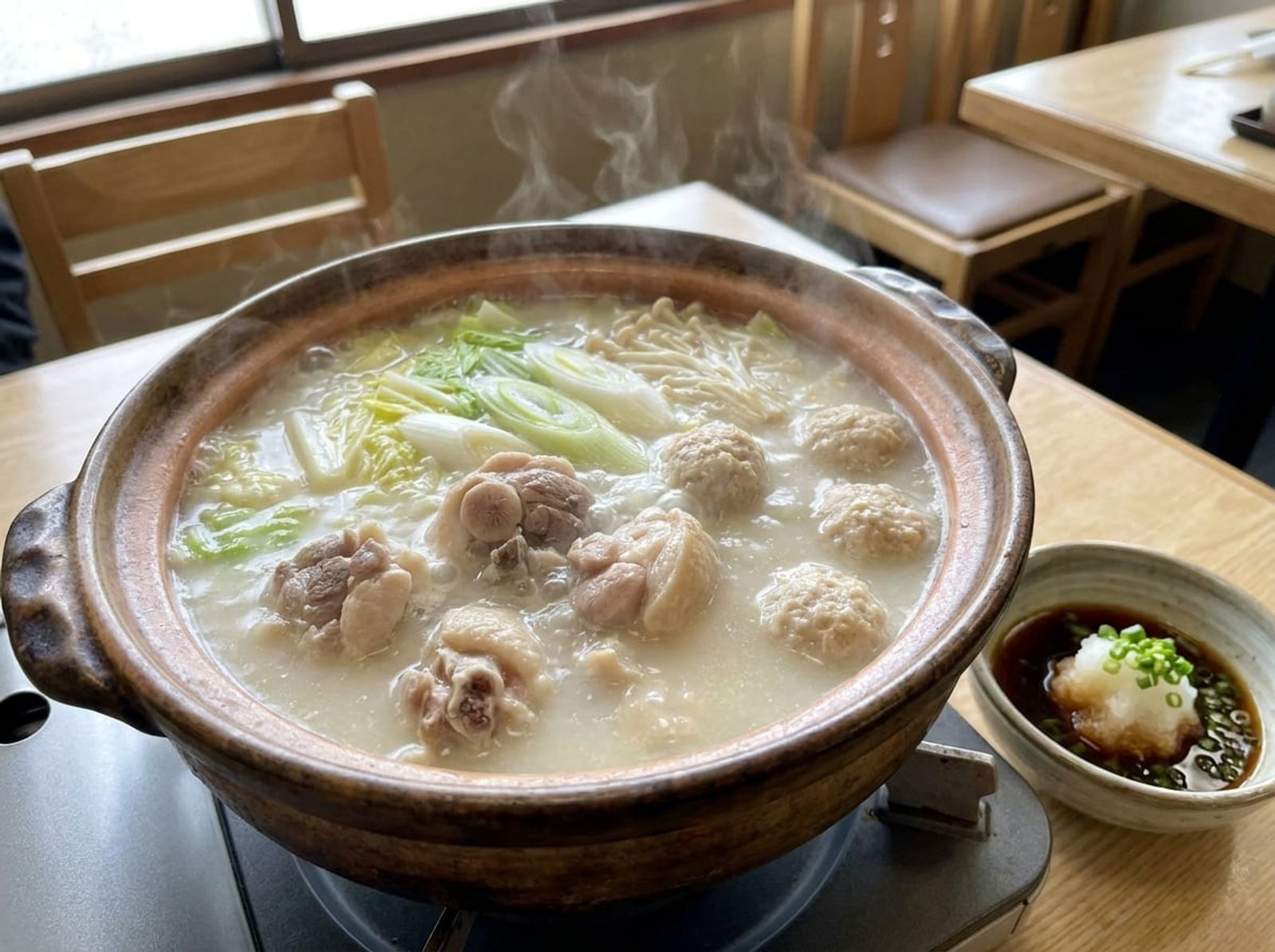
The defining feature of Hakata mizutaki is its cloudy white chicken broth. Bone-in chicken, mostly thigh, is simmered for a long time until the stock turns milky. Restaurants often use a carefully made stock prepared separately, and the farm ministry also describes a home method of making a clear stock and a cloudy one and combining them. The broth itself is usually left almost unseasoned; flavour comes from dipping sauces such as ponzu, daidai citrus juice or yuzu kosho. Cabbage is preferred over napa cabbage because it releases less water and keeps the broth from getting thin. Unlike the Kansai style, where ingredients go into plain water flavoured with kombu, the Kyushu style starts by building a chicken broth.
Soup First, Then the Chicken
If it is your first mizutaki, it helps to know the order. Fukuoka Prefecture's official tourism site suggests ladling out some broth before any ingredients go in and tasting it with just a pinch of salt. After that, the usual flow is to eat the chicken first and add the vegetables and tofu later. Cooked ingredients are dipped in ponzu. The farm ministry lists condiments such as momiji-oroshi (grated daikon with chilli), grated ginger, green onion and yuzu. At some restaurants the staff take charge of the pot and add things in order for you, so on a first visit you can simply follow their lead. Because the broth is unseasoned, you taste the deep chicken flavour all the way through.
Finish With Rice or Noodles
Once the ingredients are gone, the remaining broth becomes the base for a finishing course. The most common is zosui, rice simmered in the broth, but chanpon noodles or udon are also popular. Japanese Wikipedia notes that Kyushu tends to favour noodles for the finish and mentions a variation called jigoku-daki that ends with somen. The farm ministry also mentions adding mochi. Mizutaki is closely tied to Hakata's summer festival as well. According to the farm ministry, mizutaki is always eaten at the naorai, the gathering after the Hakata Gion Yamakasa festival, and it is said the custom may have begun because the men who carry the festival floats chose chicken to build their strength.
Where and How to Enjoy It
Fukuoka has many long-established mizutaki restaurants, and the farm ministry notes that casual places aimed at younger diners are on the rise too. They are easy to find around Hakata Station and in busy districts such as Nakasu and Tenjin, and the dish is also cooked at home and served in school lunches. The ministry adds that Hakata Jidori, a local chicken brand Fukuoka Prefecture developed in 1999, suits the dish well. As a hot pot it is best shared with others, and since the broth takes time to develop, it is a meal to enjoy slowly. Other regions have dishes called mizutaki, but these days a restaurant menu that says mizutaki usually means the Hakata style. It is especially popular in winter but available all year.