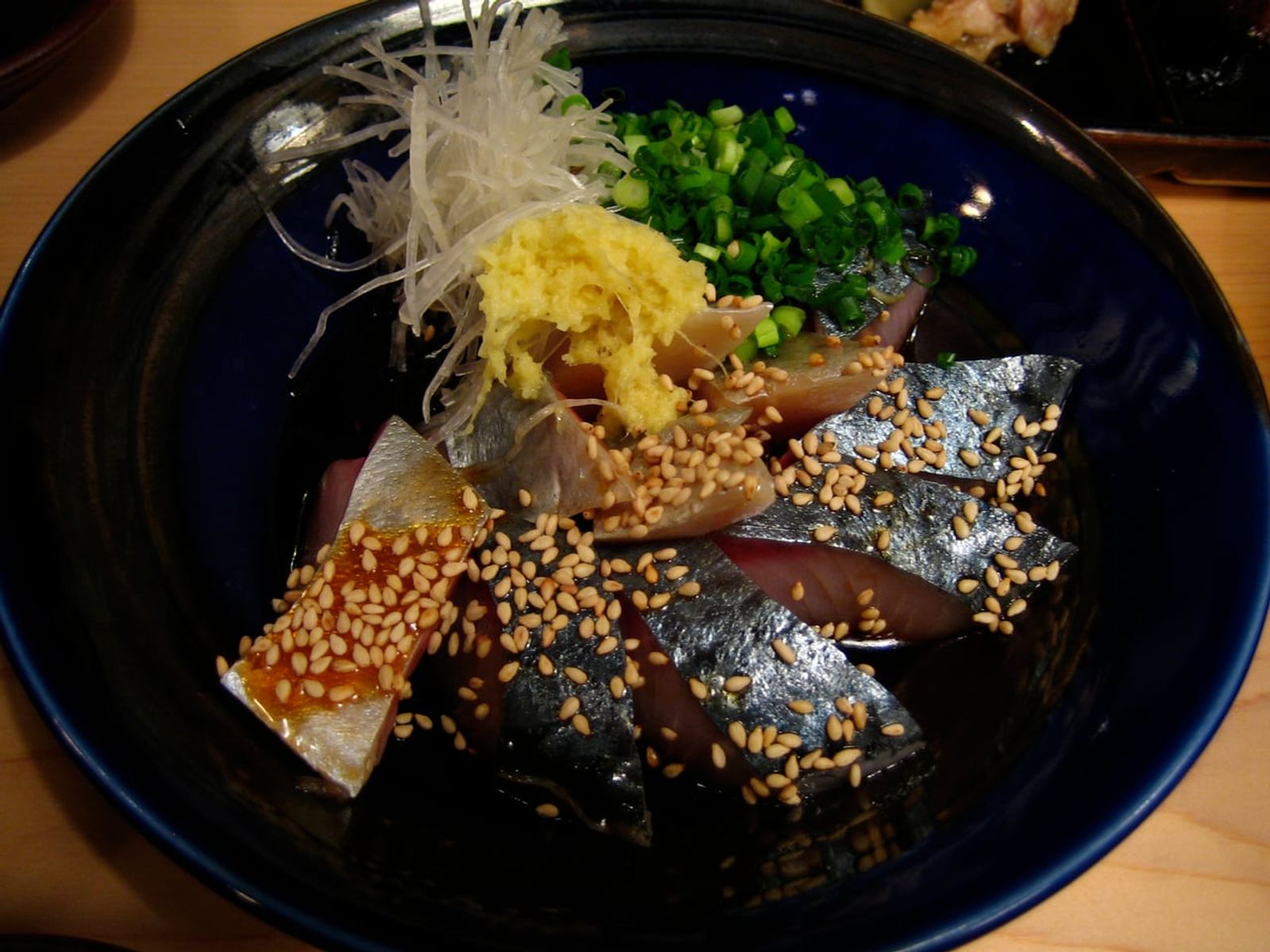
Goma saba topped with plenty of sesame · Photo: ayustety from Tokyo, Japan / CC BY-SA 2.0 (Wikimedia Commons)
 JapanFukuoka
Hakata Goma Saba: Sesame-Dressed Raw Mackerel From the City That Eats It Fresh
Mackerel spoils quickly, so most of Japan never ate it raw, but Hakata has long enjoyed it as sashimi. Here is the story of goma saba, mackerel tossed in sesame soy sauce, how to eat it over rice or as ochazuke, and how to enjoy it safely.
A City That Eats Mackerel Raw
Mackerel spoils so fast that Japanese has a saying that it "rots even while alive," so in most of Japan it has been salted, pickled in vinegar, grilled or simmered. Japan's farm ministry, in its regional food database, explains that because Fukuoka and Hakata land very fresh seafood, mackerel, which was not eaten raw in most of the country, has long been eaten as sashimi in Hakata. The classic way to eat that raw mackerel is goma saba (ごまさば): mackerel sashimi tossed in a dressing of soy sauce, toasted sesame seeds and mirin. It is a common menu item at izakaya and restaurants across Hakata, and a dish that only makes sense in a port city with the fish market close by.
The "Goma" in the Name Is Sesame
Japan also has a species of mackerel called gomasaba (ゴマサバ, blue mackerel), which makes the name easy to misread. In the dish, though, "goma" does not refer to the fish species but to the sesame seeds that go generously into the dressing. Food guides make the same point, and the farm ministry's recipe simply lists "mackerel." The dressing is basically soy sauce mixed with toasted sesame seeds and mirin, and some cooks grind the sesame for extra nuttiness. According to the farm ministry, this way of dressing raw fish in soy sauce spread from the late Edo period to the early Meiji era, when soy sauce became widely available to ordinary households.
How It Is Made
The farm ministry's method is simple. The mackerel is filleted into three pieces, skinned and sliced a little thinner than ordinary sashimi, then tossed in a dressing of soy sauce, toasted sesame and mirin. Some places toss it right before serving rather than leaving it to marinate, to keep the firm texture and rich fat of the fish. Once plated, it is often topped with chopped green onion, shredded ginger or nori. With so few ingredients, everything depends on how fresh the mackerel is, which is why in Hakata it became a restaurant dish made with that day's catch. Some places apply the same method to other fish, but the original is always mackerel.
Over Rice, Then as Ochazuke
Goma saba is excellent with drinks, but the basic way the farm ministry describes is on top of hot, freshly cooked rice, where the sesame soy sauce soaks in and turns it into a kind of mackerel rice bowl. The other pleasure is ochazuke. Put goma saba over rice, add wasabi and crumbled nori, then pour over hot bancha tea; the fish turns lightly opaque and the tea becomes a nutty broth. In Hakata izakaya, many people start with it as a drinking snack and finish by asking for rice and tea to turn the rest into ochazuke. Some places list "goma saba ochazuke" as its own item, so look for it as a way to end the meal.
Best Season and Eating It Safely
Mackerel is caught all year, but the farm ministry says it carries more fat from autumn to early spring, when the sea cools. If you visit Hakata in that season, goma saba is well worth ordering. As with any raw fish, there are things to keep in mind. The same source warns that mackerel that is not fresh carries a risk of food poisoning, and that anisakis parasites, which mackerel can carry, are not killed just by marinating, so freezing the fish once before preparing it is recommended. As a traveller, it is safer to order it at a restaurant used to handling fish than to make it yourself. If your stomach is sensitive, grilled or simmered mackerel is a good alternative.