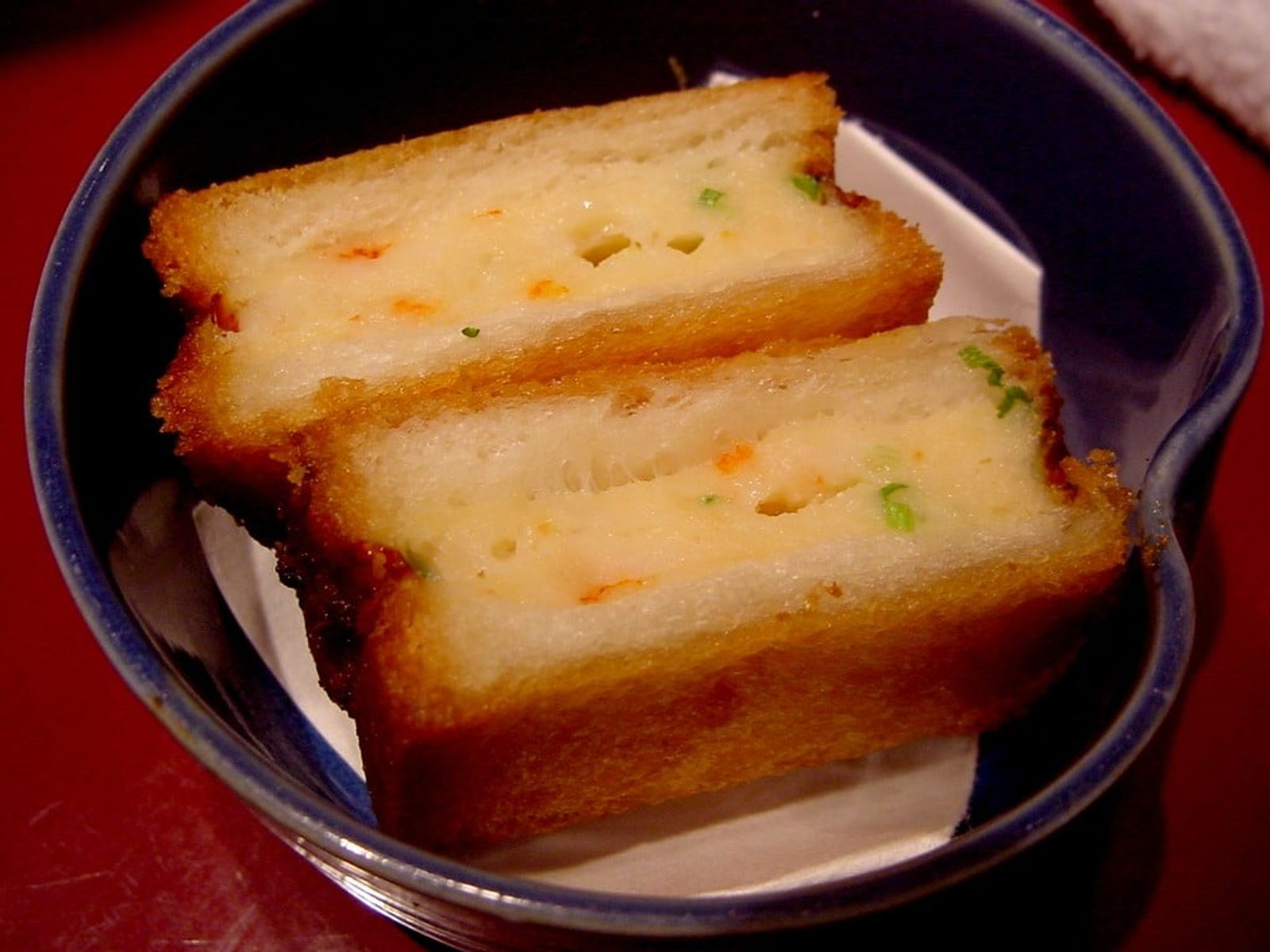
Hatoshi served as part of shippoku cuisine · Photo: Hhaithait / CC BY-SA 3.0 (Wikimedia Commons)
 JapanNagasaki
Hatoshi: Nagasaki's Shrimp Toast From the Shippoku Banquet Table
Hatoshi, shrimp paste sandwiched in white bread and deep-fried, arrived from Qing China in the Meiji era and became a Nagasaki favourite. Here is what the name means, its link to shippoku cuisine, how it is made and how to enjoy it today.
What the Name "Hatoshi" Means
Hatoshi (ハトシ) is shrimp paste sandwiched between two slices of white bread and deep-fried. The name comes from the Chinese 蝦多士; according to Japan's farm ministry, ha (蝦) means shrimp and toshi (多士) means bread, that is, toast. Japanese Wikipedia explains that the "多士" in the Cantonese name is a transliteration of the English word "toast." In other words, hatoshi simply means "shrimp toast." According to Japanese Wikipedia, the dish was already being made in Guangzhou in the late 19th century and reached Nagasaki from Qing China in the Meiji era. Nagasaki had traded with China for centuries and had an established Chinese community, which is how a dish like this could arrive early and take root.
At the Round Table of Shippoku Cuisine
The farm ministry says hatoshi was first served as one dish within shippoku (卓袱) cuisine. Shippoku is a banquet style that developed in Nagasaki: unlike traditional Japanese meals served on individual trays, dishes are set out on large platters on a round table and everyone helps themselves. Because it mixes Japanese, Chinese and Western (mainly Dutch) influences, it is also called "wakaran" (和華蘭) cuisine. According to Japanese Wikipedia, a shippoku meal begins with ohire, a clear soup with sea bream meat and fin, and etiquette says the toast comes only after everyone has finished it, followed by the platters. Among those platters, alongside dishes like the braised pork tobani (東坡煮), was hatoshi. You can still try it at ryotei restaurants that serve shippoku.
How It Is Made: Steamed, Then Fried
The farm ministry's recipe shows that hatoshi takes more work than you might think. Onion is finely chopped, fried until translucent and cooled. Half the shrimp and squid is ground to a paste and seasoned with salt, pepper and mayonnaise, and the other half is coarsely chopped by knife and mixed in, along with the onion and chilli powder. The mixture is spread on a slice of bread, topped with another, wrapped in cling film and steamed for about eight minutes. Steaming first cooks the filling through and keeps the bread from soaking up too much oil. It is then fried at 180°C until golden and cut into easy-to-eat pieces. Mixing ground and chopped shrimp gives a filling that is soft yet still has a springy bite.
From Home Kitchens to Shops, and New Shapes
From its place on the shippoku table, hatoshi later spread into ordinary homes and restaurants. The farm ministry says it has become so familiar that it is sold at shopfronts around the city. Because it takes effort to make, though, fewer people cook it at home, and more people eat it at restaurants or buy it to take away. Around the city you can find variations such as "hatoshi rolls," and its selection as a furusato nozei (hometown tax) gift has begun to make it known nationwide. Japanese Wikipedia also notes a related Nagasaki dish, ajisai-age, in which shrimp paste is rolled into balls, coated in little cubes of bread and fried until it looks like a hydrangea flower.
Trying It in Nagasaki, and Its Cousins Abroad
There are two main ways for visitors to try hatoshi: as one dish in a formal shippoku course, or as a snack bought at Chinese restaurants and shopfront stalls around the city. Freshly fried, it is crisp outside and full of shrimp flavour inside, so eat it warm if you can. It is fairly rich, so it is good for sharing. Shrimp toast has relatives across Asia. Japanese Wikipedia lists Vietnam's banh mi chien tom made with baguette, Thailand's khanom pang na kung, Laos's khanom pang kung and Taiwan's cylindrical shrimp toast rolls among similar dishes. What makes hatoshi special is that the same dish that started in Guangzhou found its place in Nagasaki inside the unique banquet culture of shippoku.